
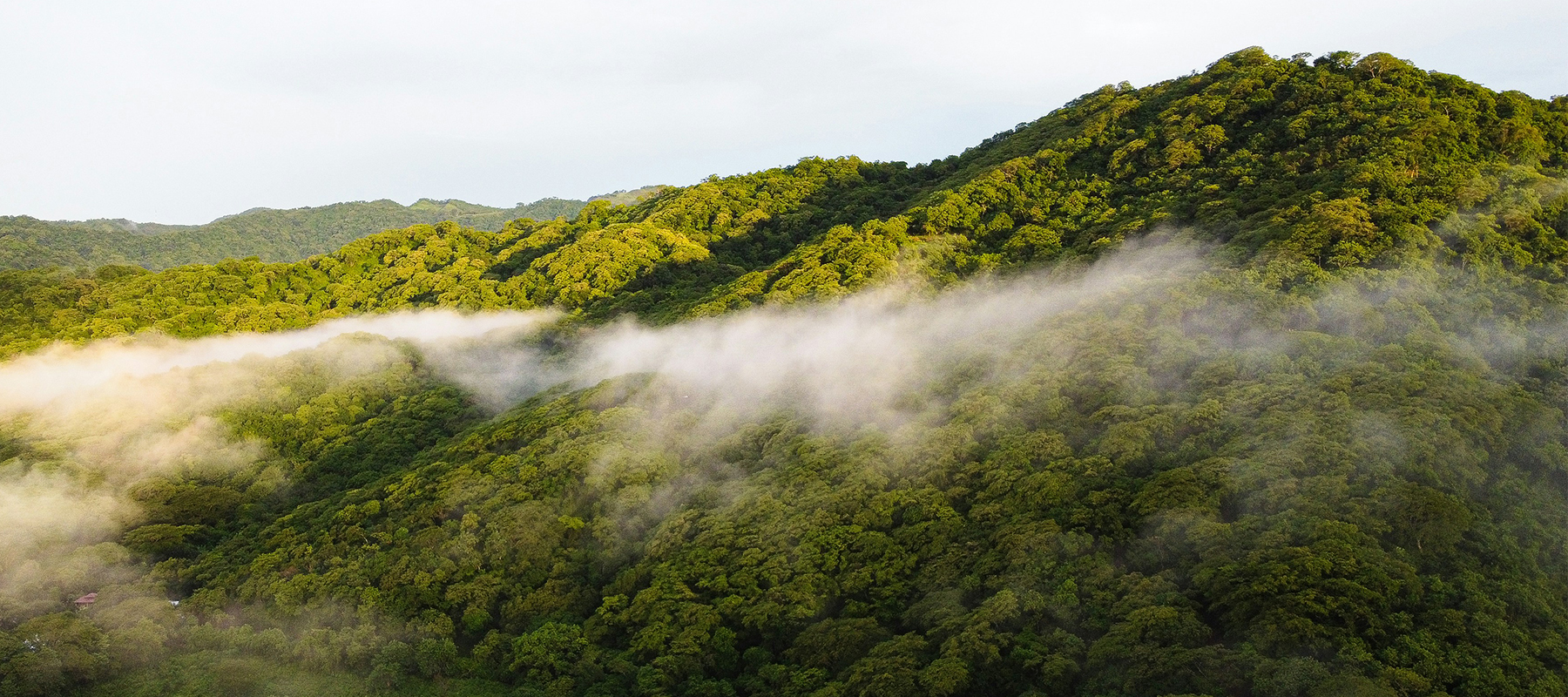

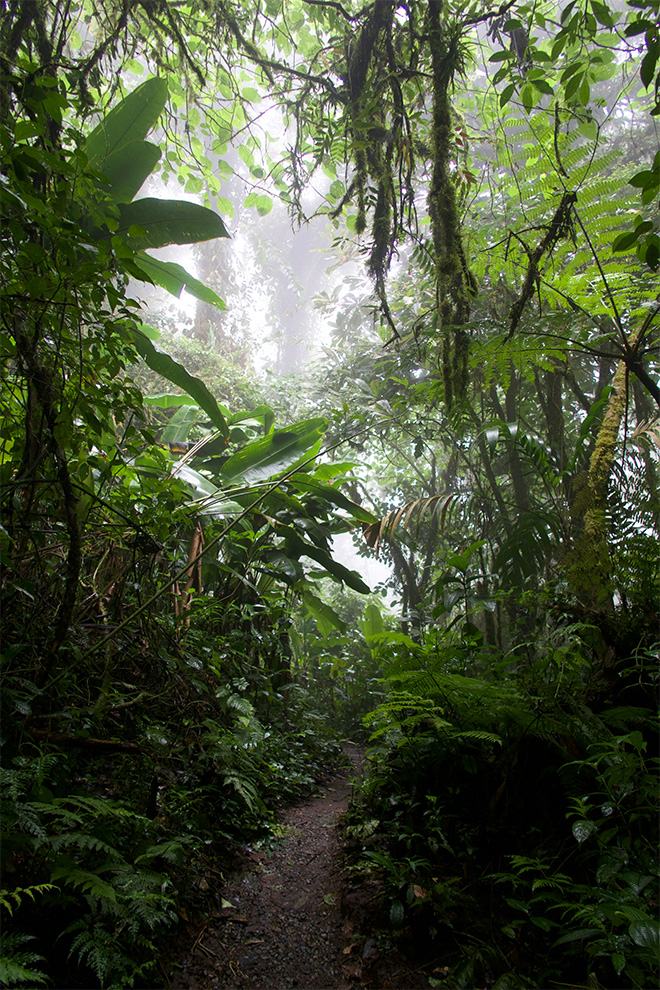
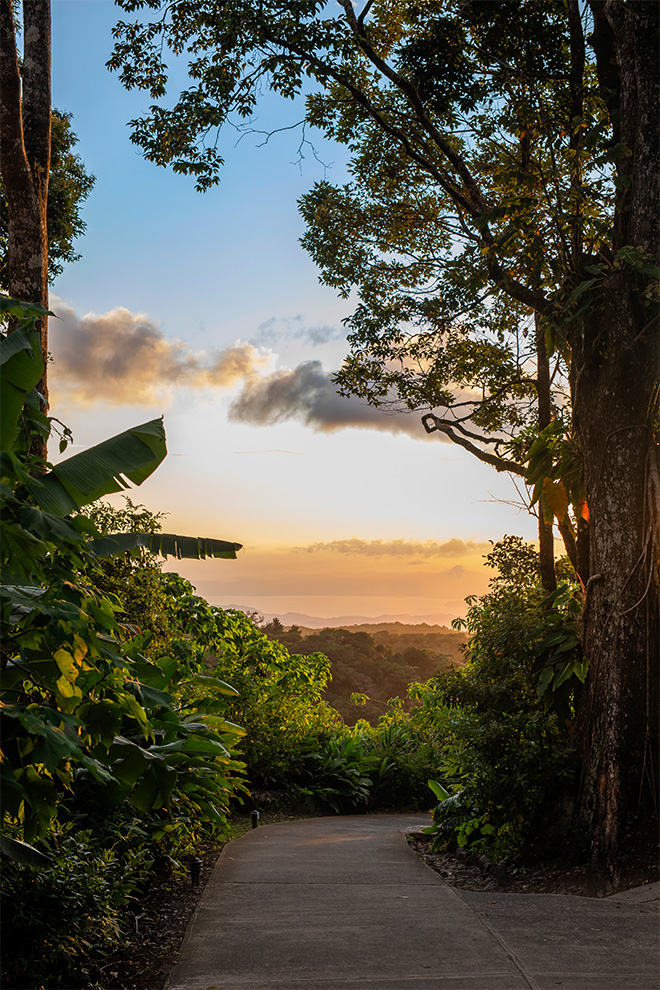
Out of nowhere, a stark yet melodic chirp punctuates the dense moss-heavy virgin forest, halting me in my tracks with its hypnotic, unadulterated beauty. I later discover it was likely the song of a black-faced solitaire, a bird that’s rare to see, yet glorious to the ears. And just one of many curiously wonderful sounds resonating out from my solo hike through Costa Rica’s Monteverde cloud forest.
The previous day...
…after café-hopping and roaming through the fruit and vegetable markets of the country’s boisterous capital, San José, I’d hopped on a four-dollar public bus to make the four-and-a-half-hour journey to Monteverde. Winding high into the country’s heartland, tackling hairpin bends akin to those found in Bolivia, I am excited at the prospect of a complete immersion into one of the planet’s most biodiverse regions, a place where iridescent hummingbirds outnumber people and the largest number of orchids in the entire world can be found. Over 500 species, no less.

Having travelled solo...
…for close to 20 years, hiking is often my sticking point. Torn between being completely off-grid in the remotest of wilderness and being aware that, as a solo female, I should practise extra caution, I resent how solo hiking as a woman can switch from pure present-in-the-moment joy to fear in mere seconds. Yet, in the echoey forests of Costa Rica, where humidity stands at 100 per cent and mist snakes delicately through tightly clenched ferns, waiting to unfurl at any moment, I feel safe, at peace and protected.
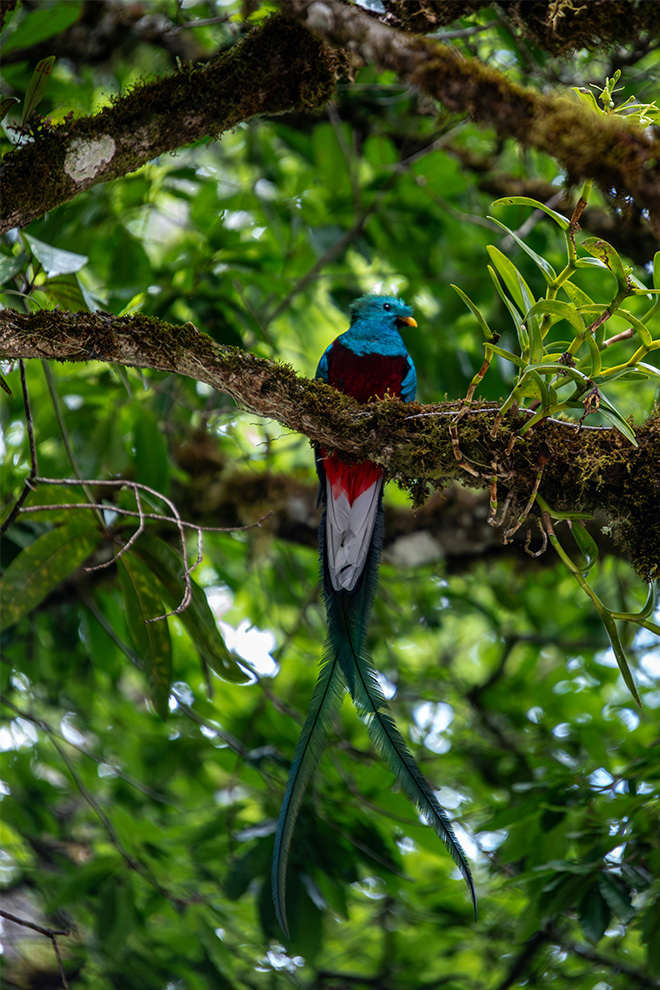
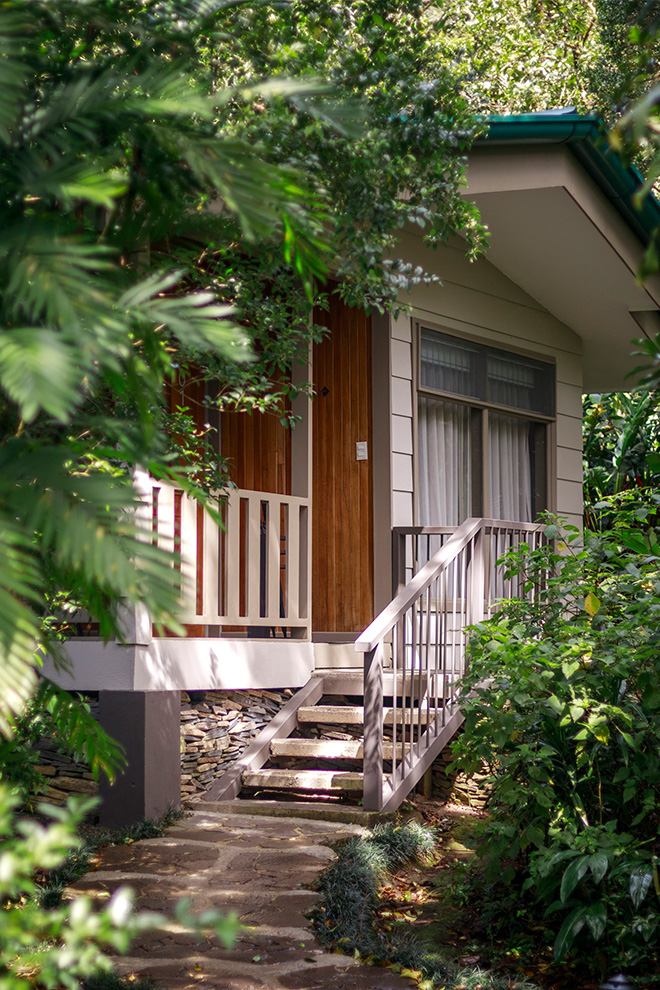
Home to over 2,500 plant species, haunting lichen-covered ancient trees, the continental divide and its unique weather patterns, as well as the elusive resplendent quetzal, 50 plus types of bat and flowers that resemble oversized brightly painted pouts, it’s a unique place to say the least. And the same, too, can be said for Senda Monteverde, my lodgings for three nights. Unlike the majority of hotels that bandy around greenwashed phrases all too often, Senda is a Considerate Collection bolthole that does as much for the environment as it does for its guests. Located in pleasingly close proximity to the entrance of Costa Rica’s cloud forest reserve, the property houses just 28 bedrooms and suites, each encased in nature and fashioned thoughtfully.
Simple in decor, yet flawless in execution, the hotel utilises solar power for water heating, has a meticulous recycling programme (along with a no plastic policy), biodegradable cleaning products and an on-site wood shop where hotel furniture is crafted or repaired. Sustainability in an ecosystem this rare is not only desired but imperative, something that the hotel knows all too well.
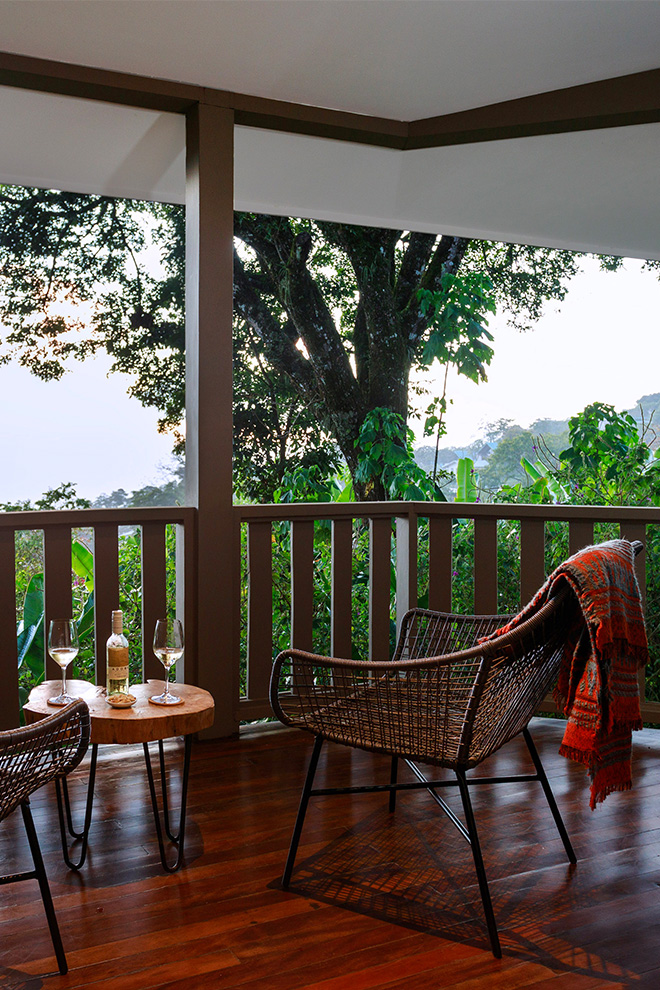
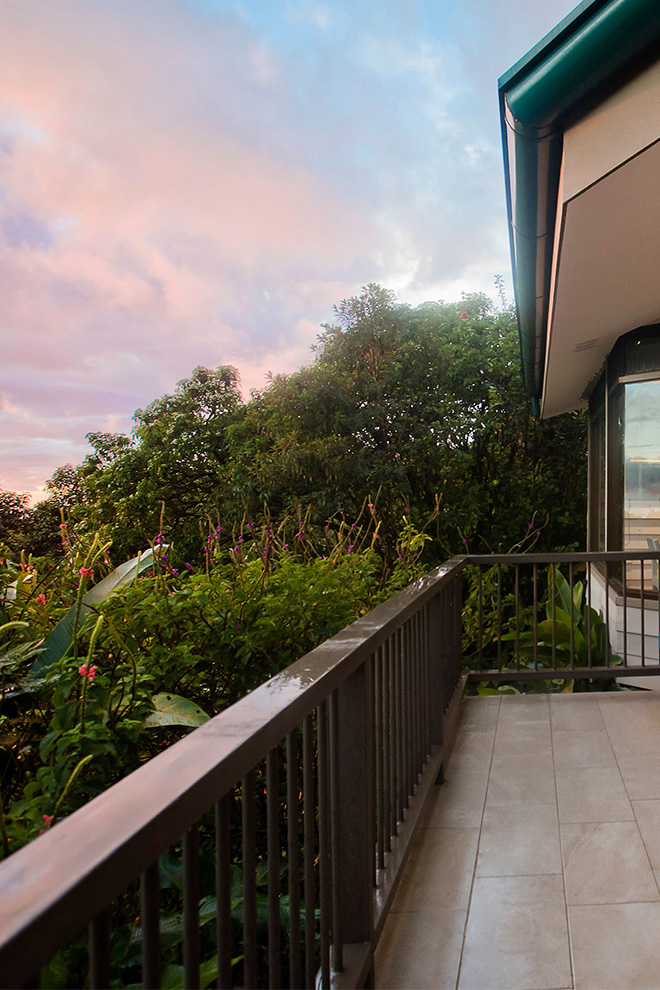
Save for the bold strokes of orange and acid green paint popping out from a solitary painting depicting bird-of-paradise and calla lily blooms, my suite features serene tones and a floor-to-ceiling sheet of glass from where the natural world outside almost threatens to creep right into bed with me. Mimicking the aforementioned painting with shocks of colours so vivid, the flora and greenery surrounding the bedroom ensure I awake daily filled with utter joy.


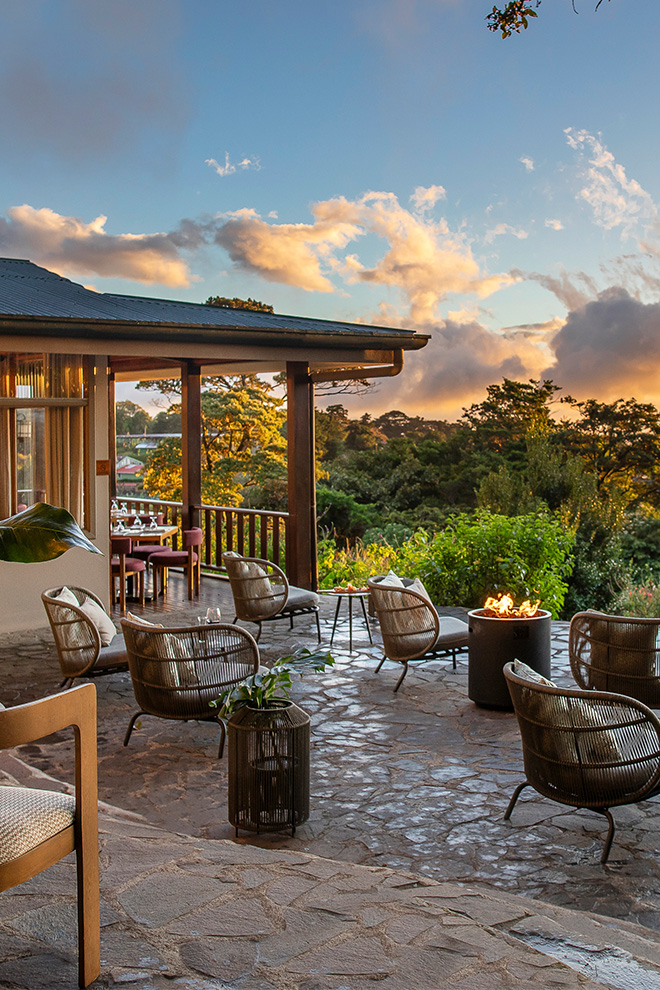
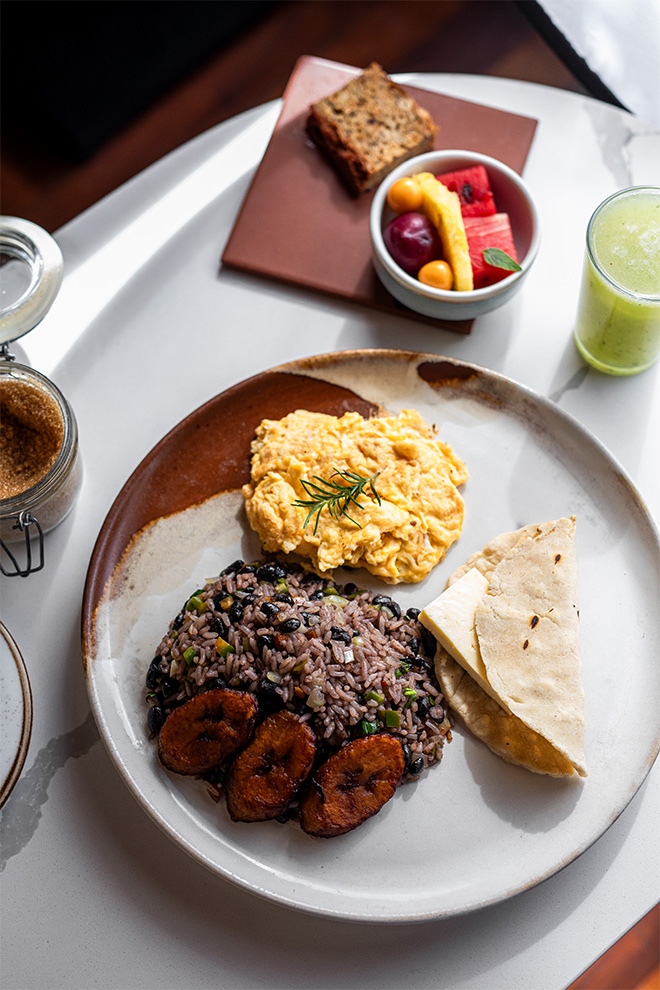
And my joy only escalated each time I sit down at El Sapo, the hotel’s restaurant, to a breakfast of homemade banana bread, Costa Rican coffee, and breakfast bagels (brought in from the nearby bakery) filled with locally smoked trout as opposed to the imported smoked salmon that adorns many a menu. I soon discover that many of the ingredients used at Senda Monteverde are locally sourced, with an array of herbs and salads grown on site within their very own kitchen nursery. And a quick stroll around the hotel’s gardens reveals all manner of tropical fruit trees from banana to strangler fig, surrounded by plenty of dainty hummingbirds to admire, dangling like jewels from the shrubbery.
In a nod to the country’s indigenous culture, including tribes like the Bribri who live in harmony with nature, Senda Monteverde enlisted the expertise of Costa Rican chef Pablo Bonilla (who spent time learning the Bribri culinary traditions) to bring the typical flavours and techniques back to the hotel’s menu. During mealtimes, I sample cassava and citrus chicken served in a banana flower petal plucked straight from the hotel’s garden, and steaming bowls of corn soup — particularly comforting after being caught in heavy rain showers. Everything at El Sapo is about minimising waste, championing local farmers and utilising hyper-local ingredients — as it should be in an ecosystem so special.
As I slip into a slow rhythm...
…that includes one-on-one yoga sessions on the hotel’s terrace, lingering breakfasts and magical birdwatching, I return to the cloud forest each day to get acquainted with a new trail. From Sendero Camino’s almost impenetrable canopy, where beams of sunlight jut through leaves in linear lines, to Sendero El Puente and its hanging crimson bridge, which magnifies the sounds of the jungle even further, each captivates in a myriad ways.
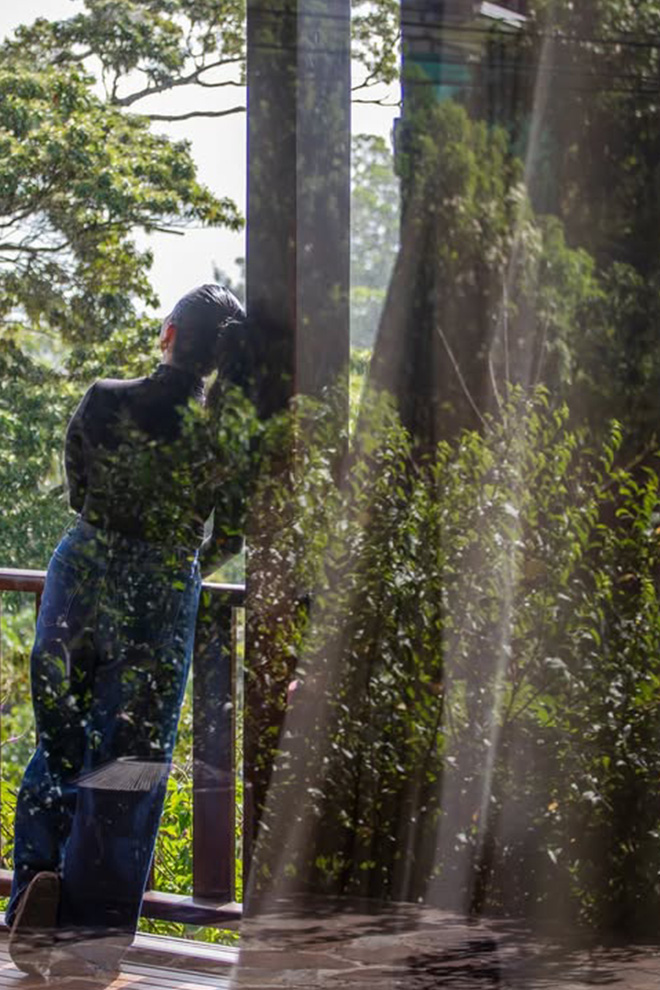
During afternoons, I leave the dense clouds of the forest, heavy with precipitation, to seek out majestic living ficus root bridges hidden in nearby countryside, or visit Don Juan, the genteel head honcho of the local coffee plantation. Some hours, I simply watch insects and birds from my bedroom veranda or trace the paths through the Aguiti Wildlife Reserve, hidden amongst the wilds at the back of the hotel, all the while not believing my luck at being surrounded by such beauty. Luxury comes in all forms, yet for me, this quiet hum of nature and the abundance of the natural world will always be the pinnacle. For moments of quiet reflection and sheer wonder, Costa Rica’s cloud forests never fail to put on a good show.
Share this article
Latest stories

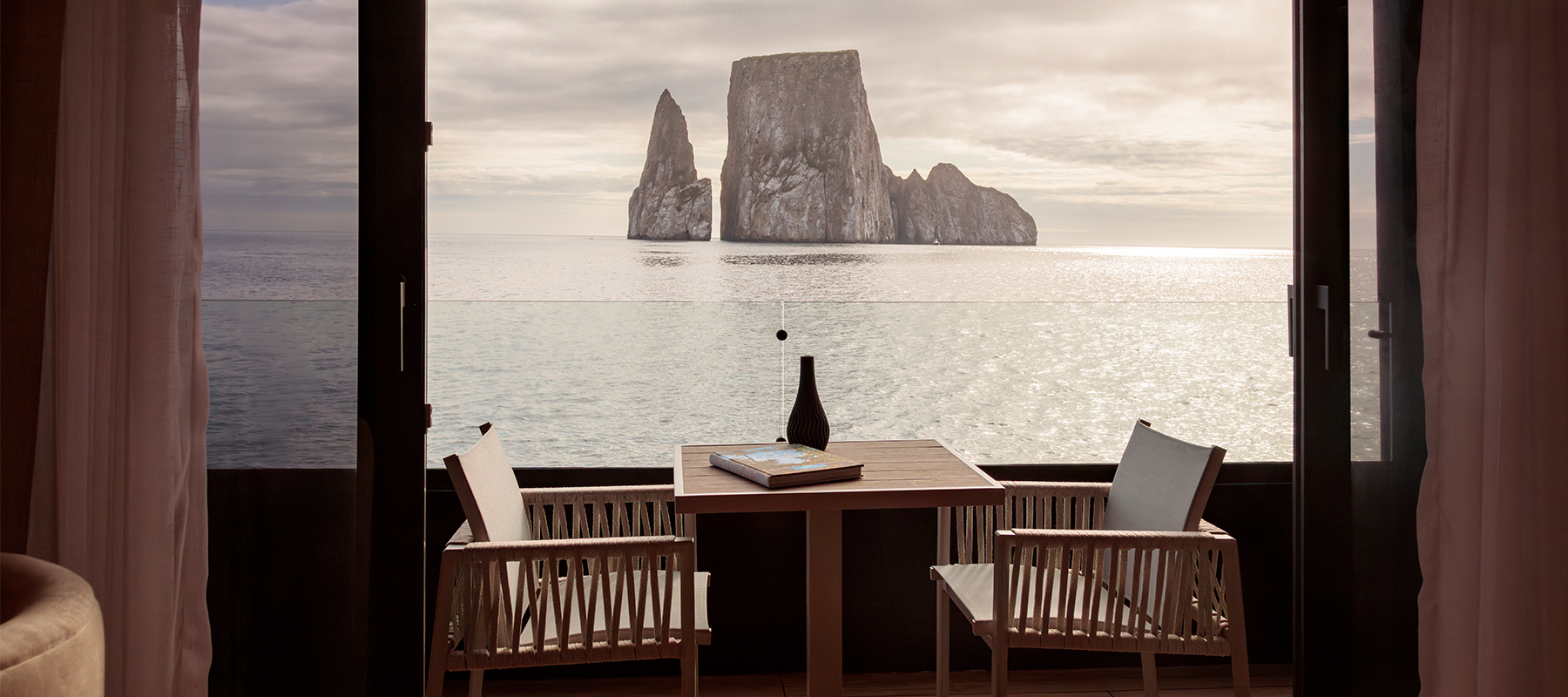
From a dark sky reserve to a tropical catamaran cruise: top boutique stays for March
These hotels play with scale in different ways. Some reduce it — a monastery with 13 rooms, a handful of villas on a vast lake, fewer than 20 guests at sea. Others expand it, offering wide horizons, open water, long sightlines or vertical city views. The result is a collection
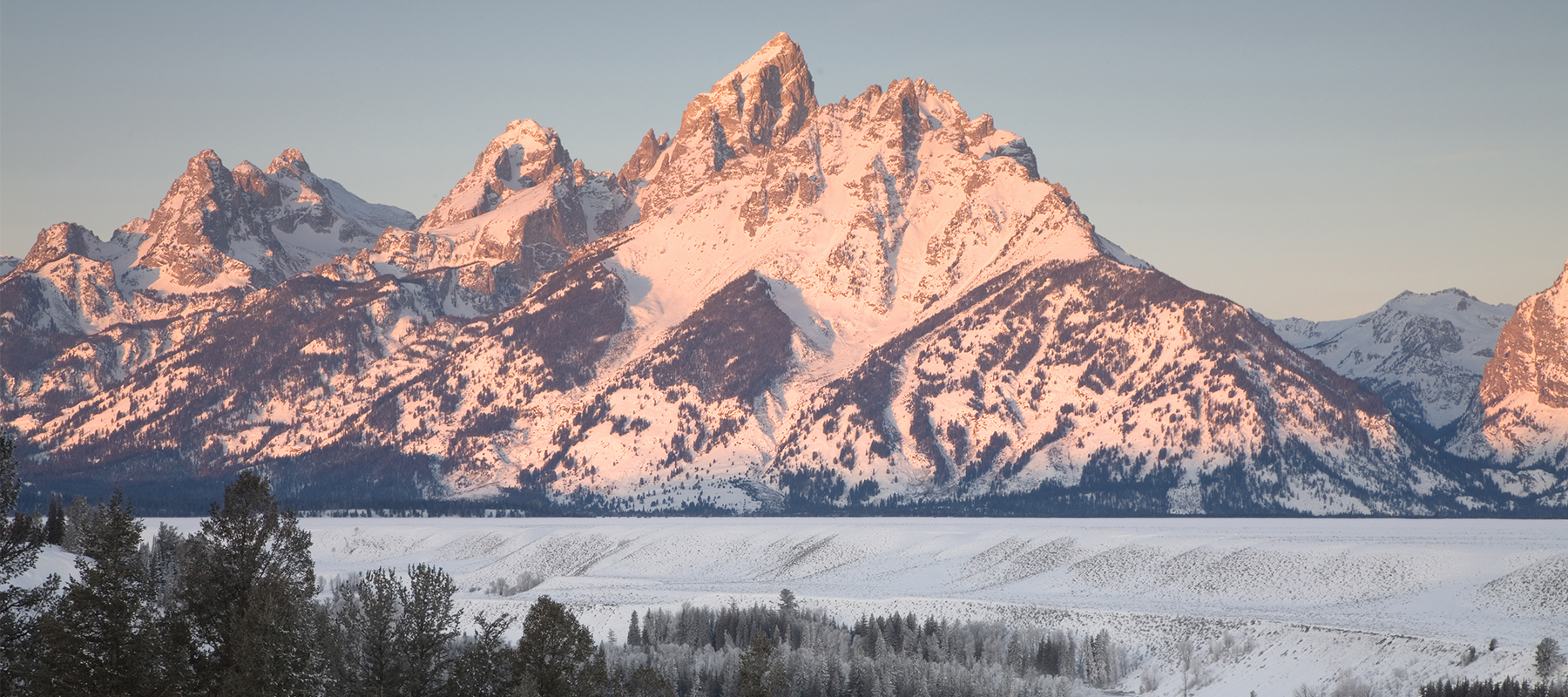
A beloved Jackson Hole lodge reopens for ski season: plus, US mountain hotel top picks
With ski season reaching its peak, discover a revived haven of lofty luxury within the majestic mountain ranges of Teton County, western Wyoming, as a rustic mountain retreat begins a new chapter. The scent of freshly baked cookies still lingers. So does the feeling of being warmly welcomed into someone’s
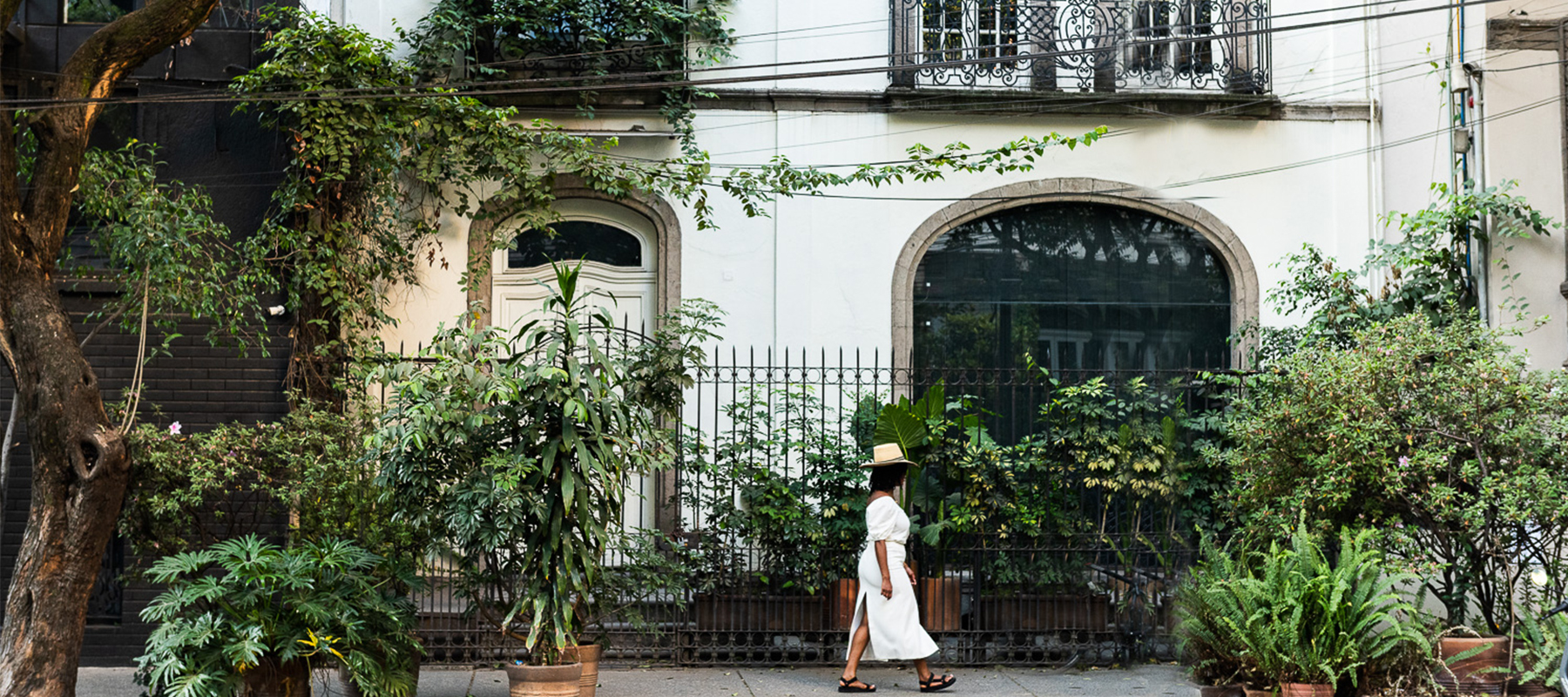
A pocket guide to Roma Norte: Mexico City’s most creative district
Full of characterful, colourful neighbourhoods where culture and cuisine thrive, Mexico City is a magnet for creatives to reside and visit. Condesa remains the go-to for Art Deco architecture and buzzy brunch spots. The bohemian enclave of Coyoacán has long been a refuge for artists. Burgeoning Juárez brings in a
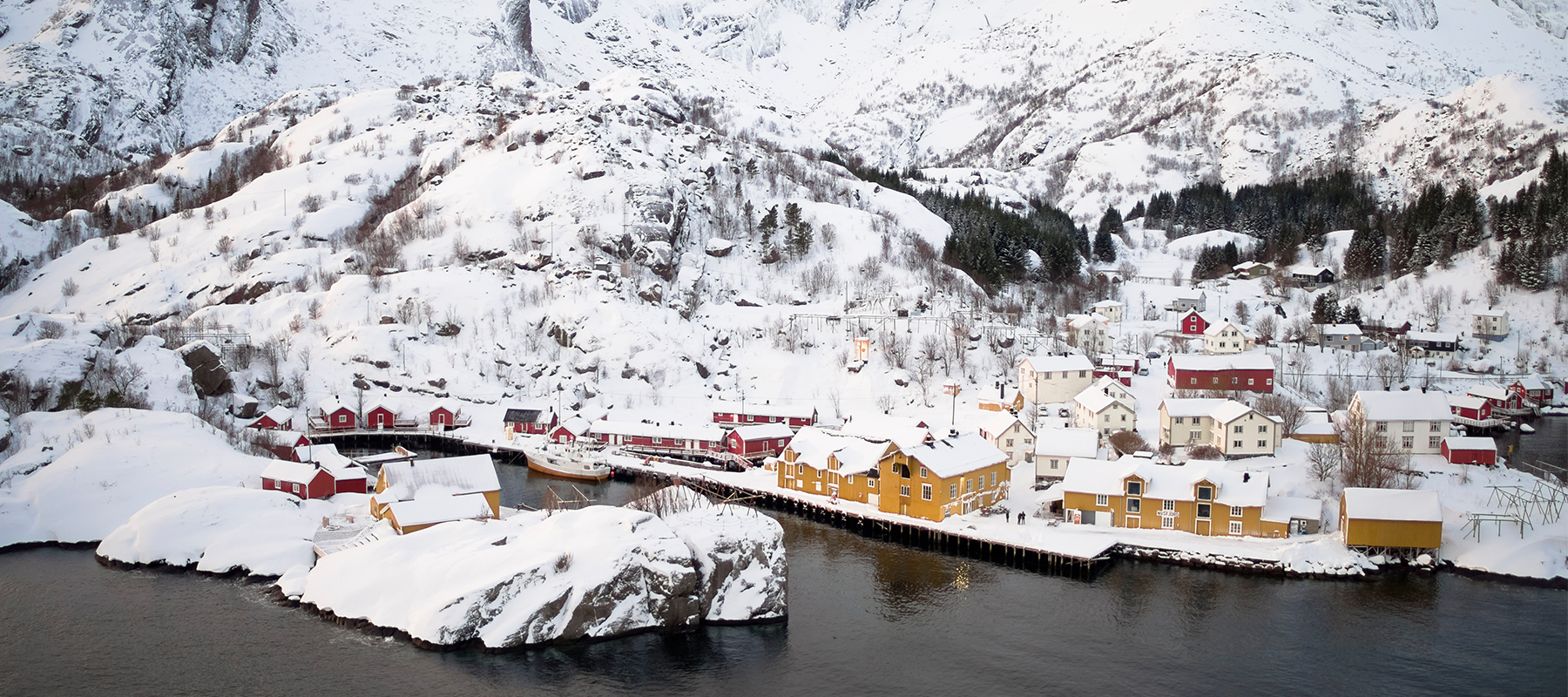
Northern delights: a ‘coolcation’ itinerary across Norway & Iceland
As the train begins its slow, corkscrewing descent into Norway’s Flåm Valley, snow is softening mountain peaks into meringue-like folds. Outside the window, waterfalls freeze mid-cascade, as forests stand still under crystal light. The Flåm Railway — a staggering feat of engineering — feels like a portal into another season,