
Vicentine Coast
Tucked deep within the Vicentine Coast Natural Park on Portugal’s southern shores, Praia do Canal Nature Retreat is an off-trail sanctuary near Aljezur that invites you to slow down, tune in to nature’s rhythms and experience a remoteness that’s now a rarity along this Atlantic stretch. Reaching it is half the experience, involving a drive through cork oak groves and past whitewashed villages, the air growing cooler and more pine-scented the closer you get to the sea. The retreat’s low-slung terracotta structures emerge organically from the landscape like a kasbah in a green desert, turf-topped roofs blending with surrounding wild flora.


an alternative Algarve
Inside, the palette is pulled from the land with soothing shades of olive and stone, while natural materials like wood, cork and terracotta carry the scent of sun and soil. Rooms open onto garden terraces or Atlantic-view balconies, where mornings arrive with birdsong and the distant hum of waves below the cliffs. The surrounding parkland invites exploration, whether by foot, 4×4 or mountain bike. Off-road trails weave through dense eucalyptus forest to the coastline, where surfers ride the rolling breaks at Arrifana Beach and sea birds nest on cliffs that fall dramatically into the Atlantic. Along the way, the fragrance of wild rosemary drifts through open windows, as glimpses of the ocean flash between pine trunks.
Afterwards, aromatic treatments at the Esteva Spa unfold with local herbs and essential oils, followed by time in the bio sauna and icy plunge pool, not forgetting the warm indoor pool bathed in natural light. Wellness, like everything at Praia do Canal, is strongly grounded in a sense of place.
Comporta: dunes, rice fields & Atlantic calm
A few hours north, the landscape changes. Dunes give way to mirrored paddies and golden plains that stretch out under skies filled with white storks. The laidback village of Comporta lies at the coastal edge of Alentejo, moving at a frequency all its own. Its beauty is cinematic: wooden boardwalks cutting across rice fields, pine trees bent in the sea breeze and, occasionally, a horseback rider trotting through the dunes like a scene from a Western.


Rizotherapy
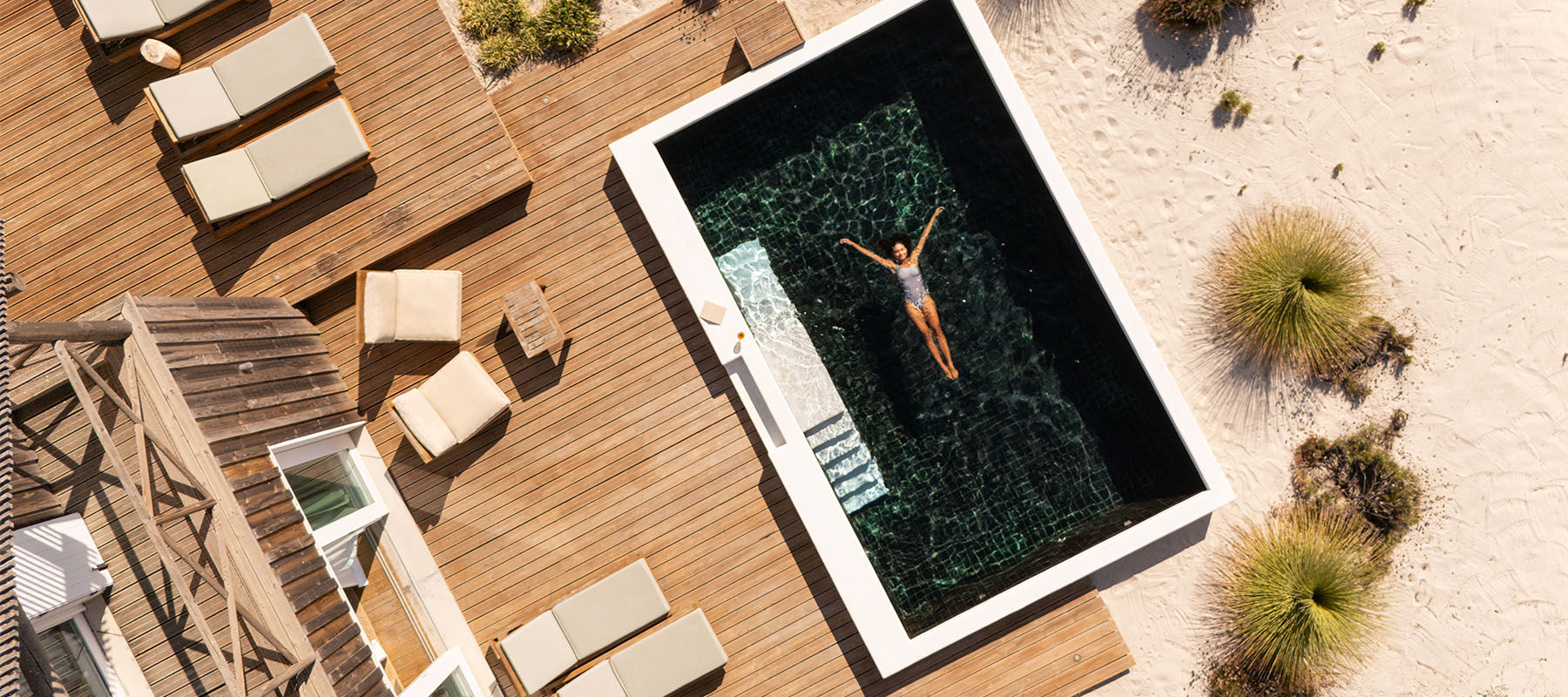
At Quinta da Comporta – Wellness Boutique Resort, owner and renowned Portuguese architect Miguel Câncio Martins has created a design that reflects that same duality: rustic yet refined. Built around a former rice barn, the Wellbeing Collection resort’s airy cabanas, reed-lined walkways and natural materials echo the surrounding farmland. The pace here is deliberately slow. Mornings begin with yoga in a pavilion facing the fields, while afternoons drift by at the Oryza Spa, where rice — grown just metres from the treatment rooms — forms the basis of signature ‘rizo therapy’ rituals. Horseback rides with Cavalos na Areia guides take guests over sandy trails and down to the beach, where Lusitano horses power through surf under the wide Atlantic sky. Back at the resort, float in an infinity pool that appears to melt into the emerald fields, the air alive with the sound of cicadas and the scent of fig trees and distant wood smoke.
Amoreiras: Mulberry Shade & Quiet Squares
Once in Lisbon, instead of flying straight home, linger a little longer in the capital’s Amoreiras district, which offers a quieter, more residential rhythm to the bustle of the centre. Once the heart of the city’s 18th-century silk industry, it remains defined by its cobbled lanes and mulberry trees (amoreiras), together with neoclassical façades that bear the marks of a once-thriving artisanal community.
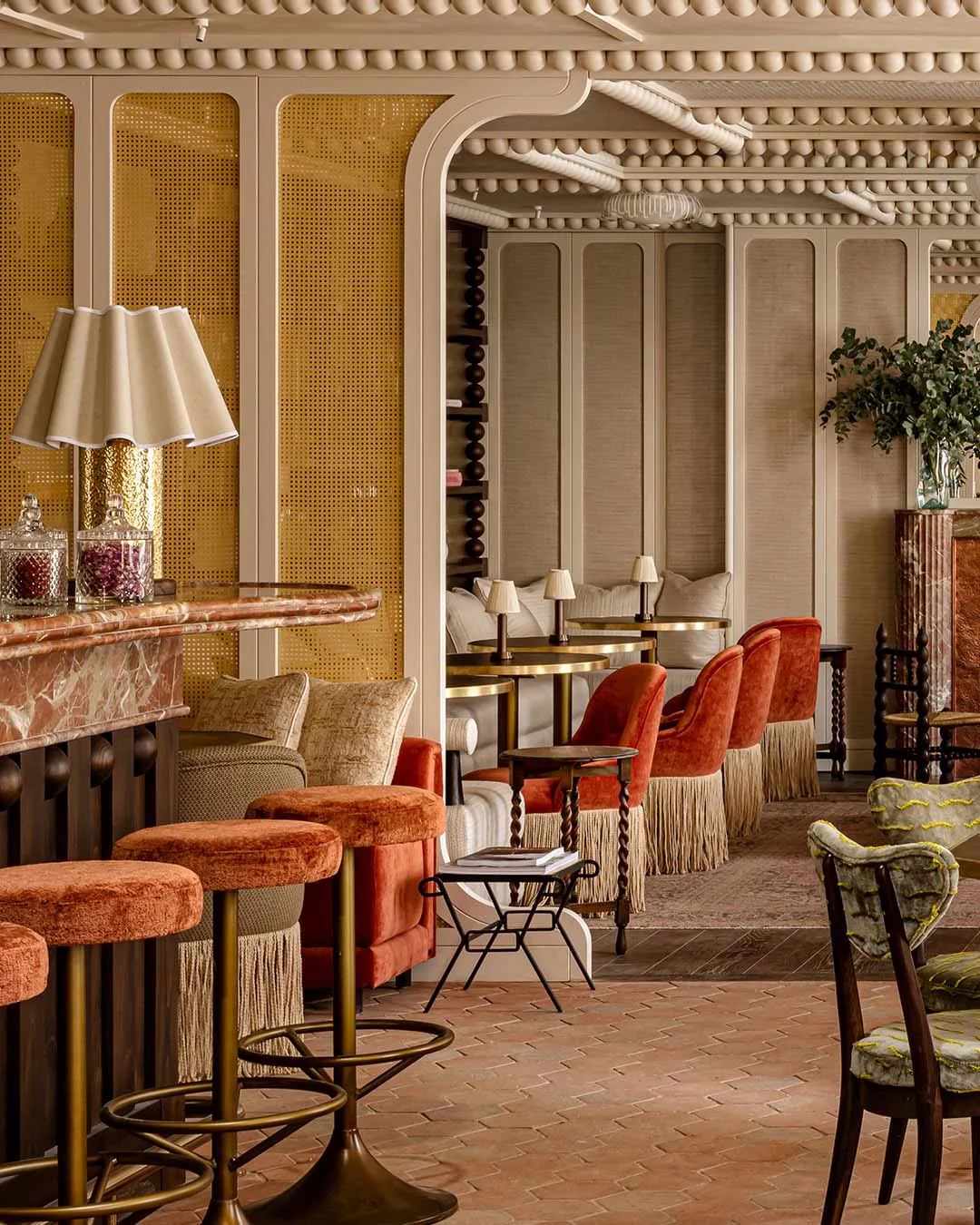
Hotel das Amoreiras sits on the leafy square from which this tranquil neighbourhood takes its name. Interiors are layered with warm Portuguese woods, hand-thrown ceramics and organic textiles in dusky greens and ochres. The courtyard is the hotel’s heart — a spot for unhurried breakfasts, aperitifs at golden hour or simply watching the day pass beneath the trees. From here, it’s a short walk to hidden corners like the Reservatório da Mãe d’Água, a vast stone cistern turned gallery and lookout point, or to the Fundação Arpád Szenes — Vieira da Silva, a light-filled museum housed within an old silk-making factory. Amongst the surrounding streets, small design ateliers and family-run cafés create a relaxed ambience that feels far from the crowds.
Hush-Hush Portugal
Together, these three destinations — Aljezur, Alentejo and Amoreiras — map a deeper, more hush-hush Portugal. One where wellness is as much about salt air and open spaces as it is about luxurious spa rituals.


MORE TOP PORTUGAL PICKS

Hotel Casa Palmela, Setúbal
Book now

Palácio do Governador, Lisbon
Book now

Pousada de Lisboa, Lisbon
Book now

The Lumiares Hotel & Spa, Lisbon
Book now

The Vintage Lisbon
Book now

Latest stories

One island, three ways: how to experience Crete according to your travel style
I packed Victoria Hislop’s The Island for a trip to Crete without giving it much thought. It wasn’t until my second morning at Phaea Blue, gazing across the bay, that I learned the novel had been inspired by Spinalonga, the tiny island sitting directly opposite the hotel. Later that afternoon,
Where to stay: our pick of new hotels that bring their destinations to life
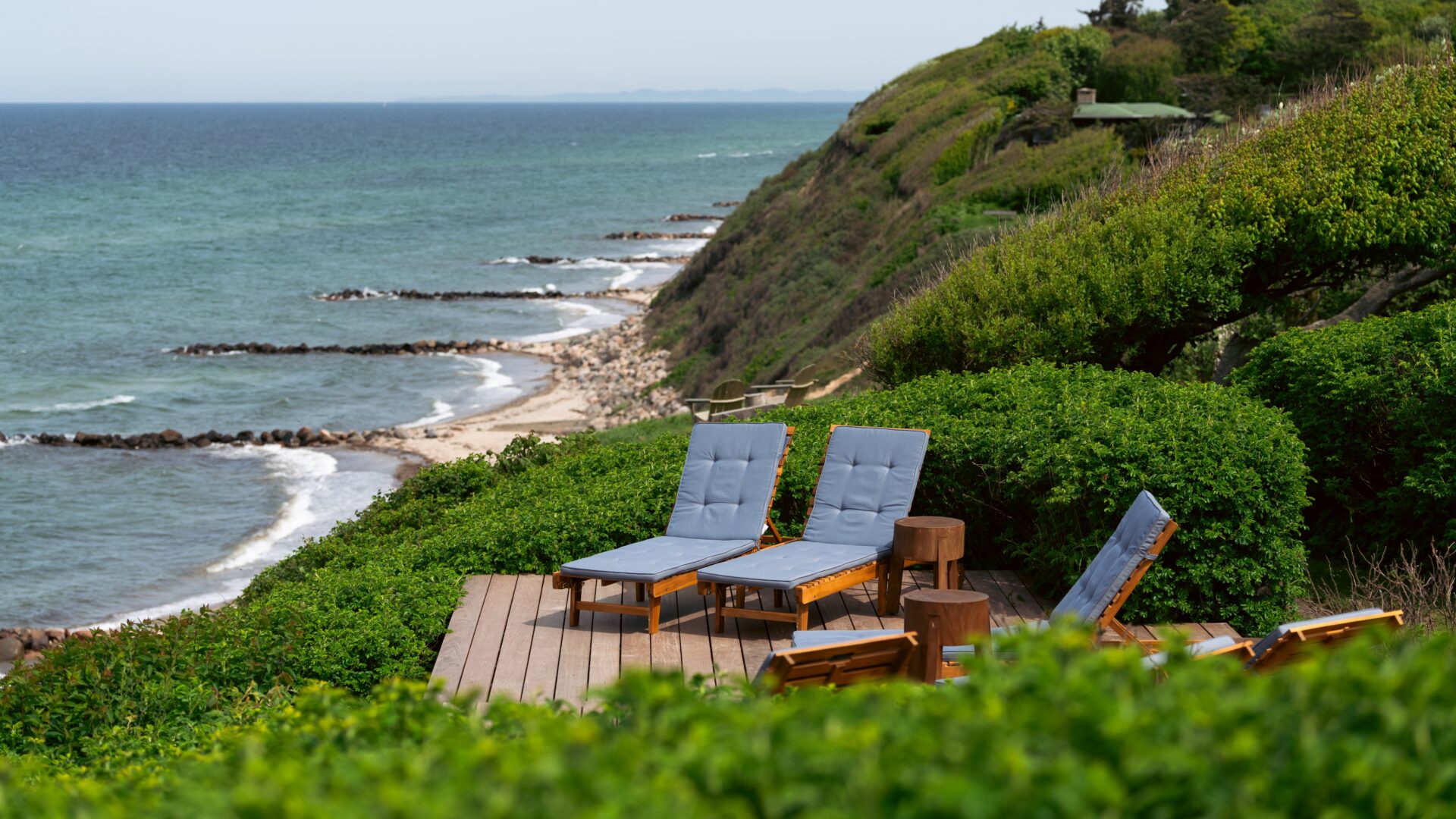
From a Japanese island retreat to a Danish coastal hideaway, we look at seven new member hotels that take their cues from the landscapes around them. Each brings its own perspective on design, wellbeing and a sense of place, whether deep in the mountains or by the Mediterranean. Helenekilde Badehotel,
Celebrating five years of the Considerate Collection
What does it mean to travel considerately? It might be a centuries-old farmhouse given a second lease of life in Transylvania; a Venetian landmark carefully restored with a heating and cooling system that uses lagoon water; or an island kitchen serving a plant-based feast made with seaweed gathered just offshore.

Making tracks: a train journey taking in six European cultural capitals
It’s official – inter-railing is back, as travellers increasingly swap flights for the speed and ease of Europe’s rail network. Think zippy connections, city-centre arrivals, and stress-free border crossings: train travel is one of the fastest and most convenient ways to explore the continent. Get ready for a whirlwind journey