
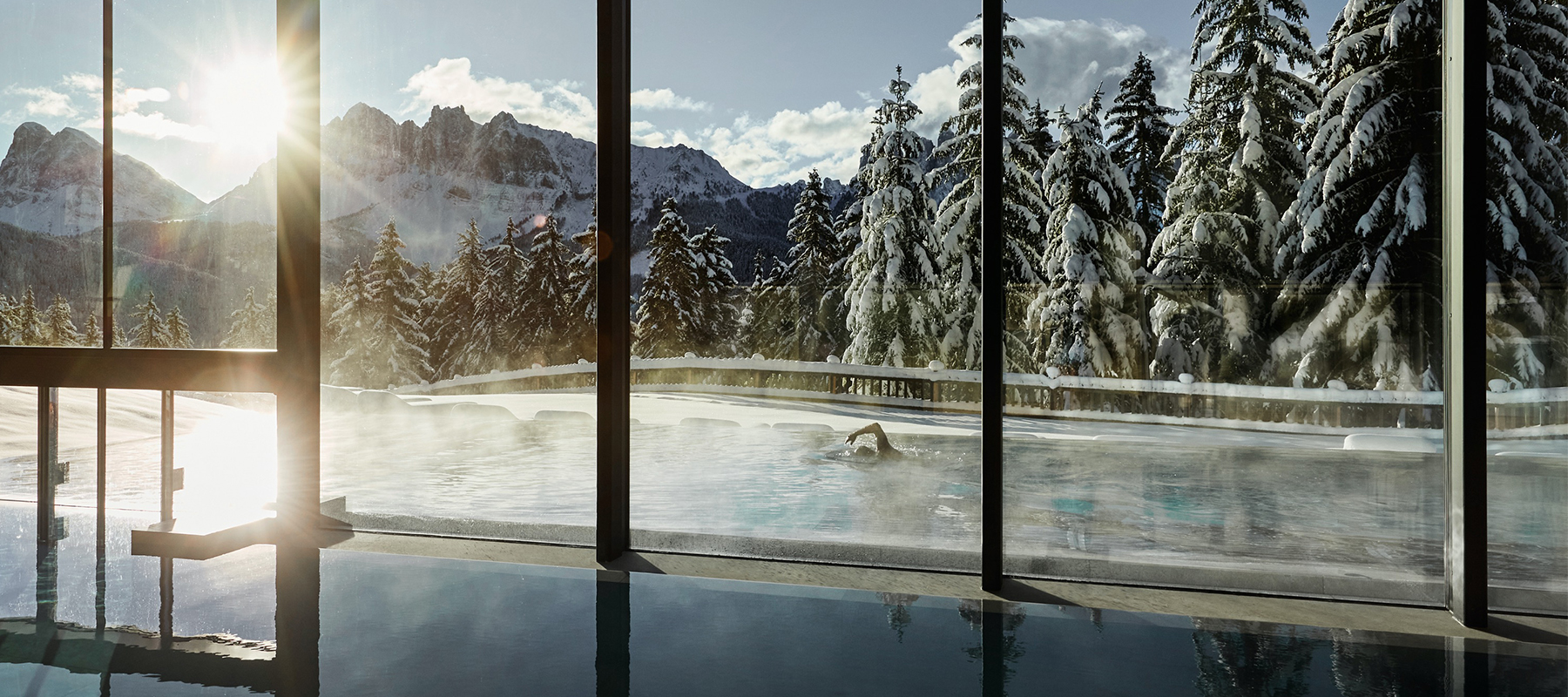

When the world feels too fast paced, the mountains offer the ultimate antidote. Whether blanketed in winter snow or wildflowers come spring, these high-altitude hideaways invite a deeper kind of rest — the kind found in silence, fresh air and unspoiled nature. Part of SLH’s Wellbeing Collection, each retreat goes beyond the spa to offer meaningful, year-round renewal: forest bathing ahead of facials, mindful hikes over treadmills, and nourishing cuisine rooted in the rhythms of the alpine landscape.
1. HUBERTUS Mountain Refugio Allgäu, Germany
A slow-food spa in Germany where the Alps meet Asia
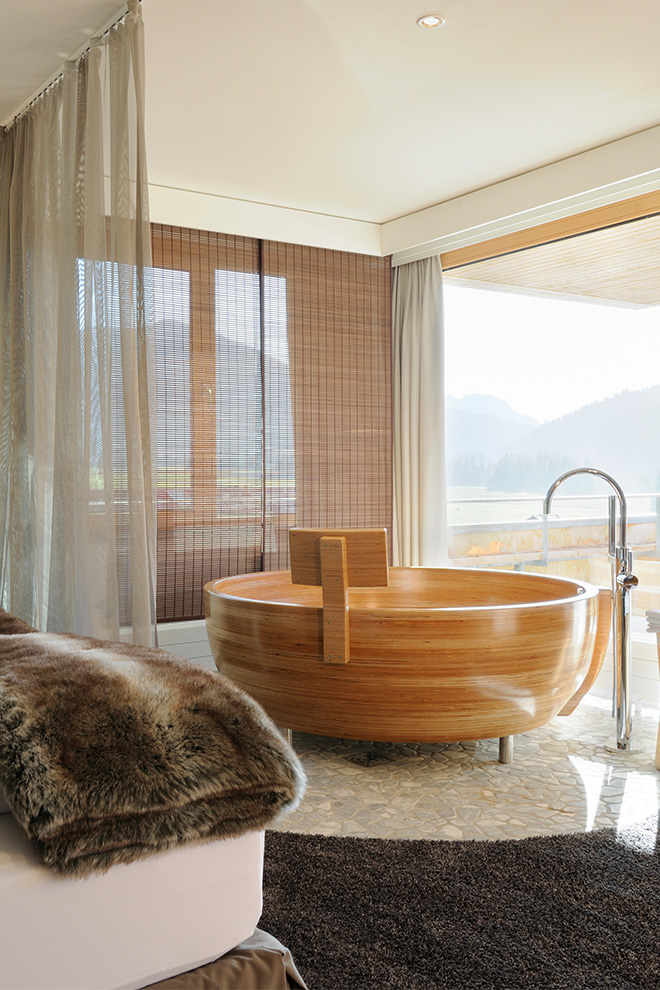
Cradled in the Bavarian mountains, this slow-food retreat doesn’t just nourish your body — it celebrates the art of mindful eating. HUBERTUS Mountain Refugio Allgäu has seven dining rooms, one for every day of the week, and the Traubel family, who own the hotel, personally know most of their suppliers and work closely with the kitchen to create healthy menus that include Ayurvedic and vegan dishes.
And then there’s the spa, with an eye-catching butterfly design that embraces the best of both Alpine and Asian traditions. Its Alpine Zen Garden merges seamlessly with a Japanese onsen pool, alongside an infinity pool overlooking mountain peaks that are unmistakably German. There are silent sunrise hikes and yoga classes, Sunday mass in the local church and singing bowl meditations, Ayurvedic treatments such as shirodhara, where warm oil is poured on the forehead to soothe a busy mind, and precision facials by a Swiss skincare range. And as a backdrop to everything, there is an endless supply of pure mountain air, stillness and silence to help you reboot for a better life.
2. FORESTIS, Italy
Reconnect with nature and ancient rituals at this Dolomites wellness retreat
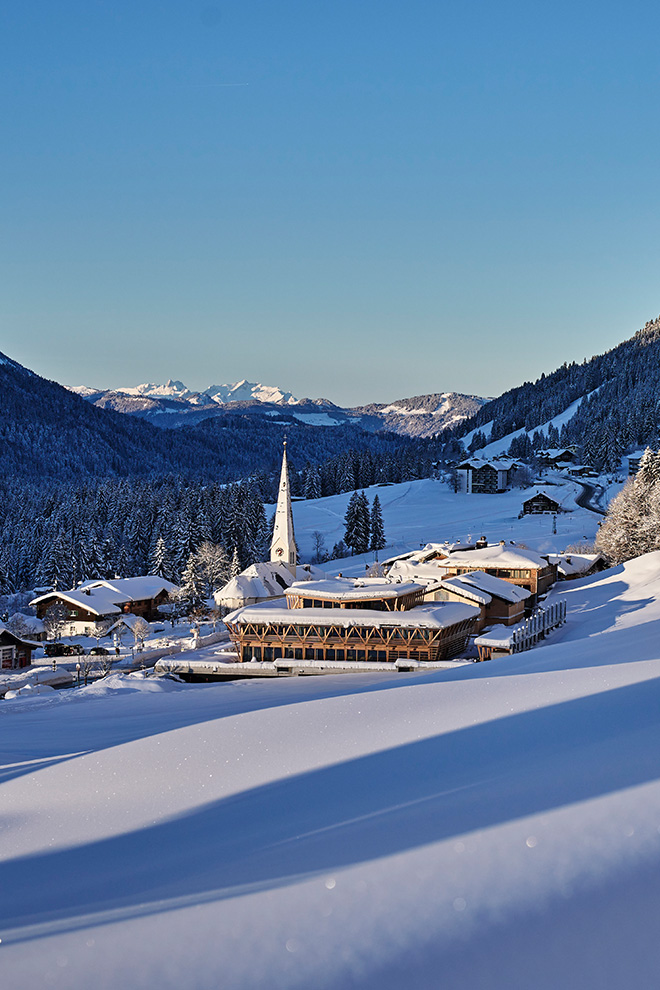
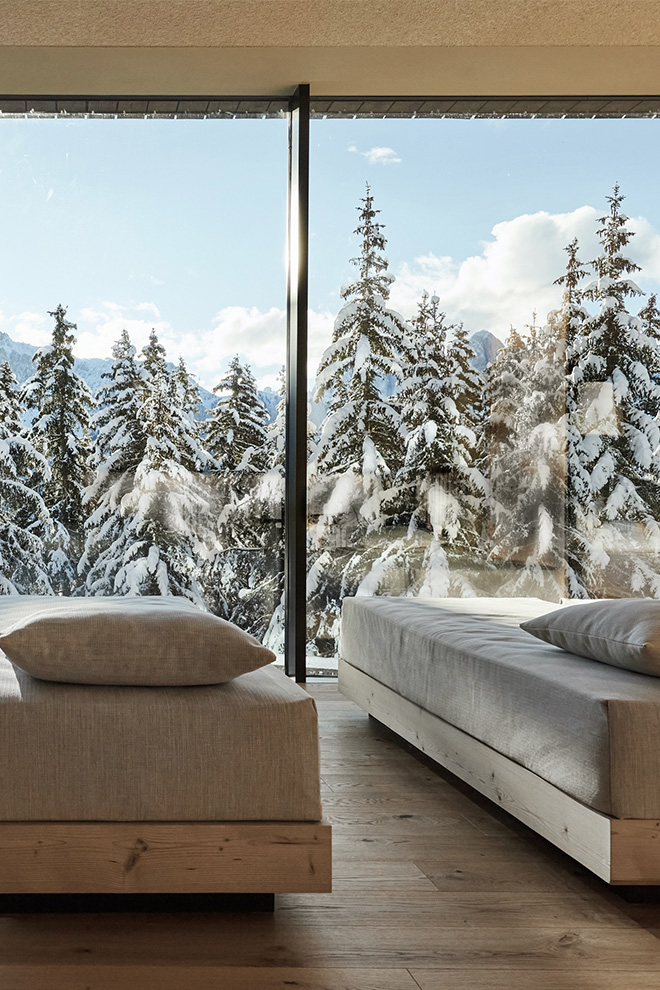
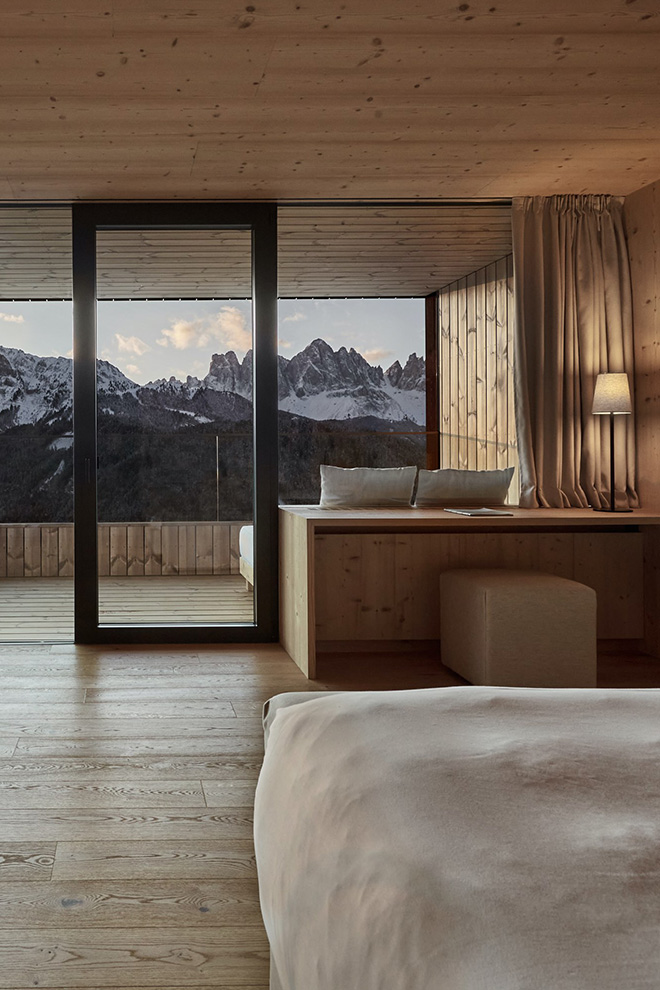
South Tyrol is Italy’s most enigmatic enclave, an intriguing fusion of Italian and German cultures wrapped up in emerald forests, icy-white mountains and the purest of pure air. FORESTIS is a contemporary eco-hideaway that fits in perfectly, refusing to conform to spa norms and instead embracing the region’s ancient Celtic Druid roots. You will find its Druid nature-based philosophy helps you slow down and fall into line with the natural rhythms of this landscape. There are no clocks in the resort, instead days are measured by the twice-daily drama of sunrise and sunset, when the sun washes the jagged peaks of the surrounding Dolomites in a rainbow of uplifting reds, from salmon pink to Persian rouge.
Soak up the forest’s innate spirituality while practising wyda, the Celts’ mindful version of yoga, barefoot in a moss-covered woodland clearing, or during sauna rituals where spring-water steam is laced with essential oils from local larch, spruce and pine trees to create an intoxicating scent. You are massaged with the forest’s therapeutic oils, you drink the mountain’s crystal-clear water and you dine on nutrient-dense organic food from local farms and delicacies foraged from the woods. It’s a gentle stroll back through the centuries to a time of uncomplicated peace, quiet and clarity.
3. Gangtey Lodge, Bhutan
A Himalayan hideaway where you can learn the art of meditation with monks
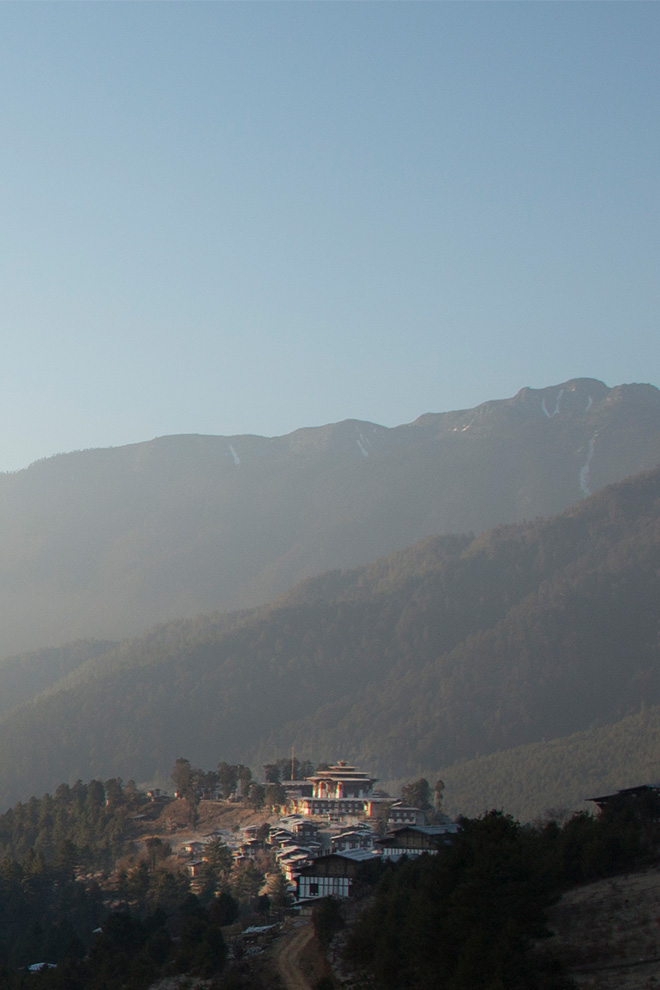
From the moment you set foot in this grand reinterpretation of a traditional farmhouse, you’ll feel as if you’ve been lifted to a higher plane. Not only is Gangtey Lodge perched above the remote and restful Phobjikha Valley, with scenic meadows grazed by yaks, but it is also imbued with an innate spirituality thanks to its ringside seat overlooking the 17th-century Gangtey Monastery, one of Bhutan’s most important places of worship. The retreat’s wellbeing philosophy makes the most of its window to nature and culture. You may hike ancient paths in the sacred valley or take your immersion to a more contemplative level by joining local monks for an early morning cleansing ritual and taking a meditation class with a tulku (the reincarnation of a deceased spiritual master).
There’s also the opportunity for more earth-rooted pastimes: visiting local farming families to help with daily tasks such as milking cows, making cheese, and tending crops. You can pamper yourself with indulgent massages utilising plant-based, therapeutic essential oils that soothe both your mind and your skin. Afterwards, soak in a traditional Bhutanese hot stone bath, where sizzling mineral-rich river rocks heat the water, and forest herbs infuse it with a multitude of medicinal benefits. A few days at this lodge offer a gentle invitation to slow your pace and open yourself to the quiet unfolding of inner peace.

4. Oasyhotel, Tuscany, Italy
Conservation retreat in Tuscany where wellbeing comes with a cultural twist
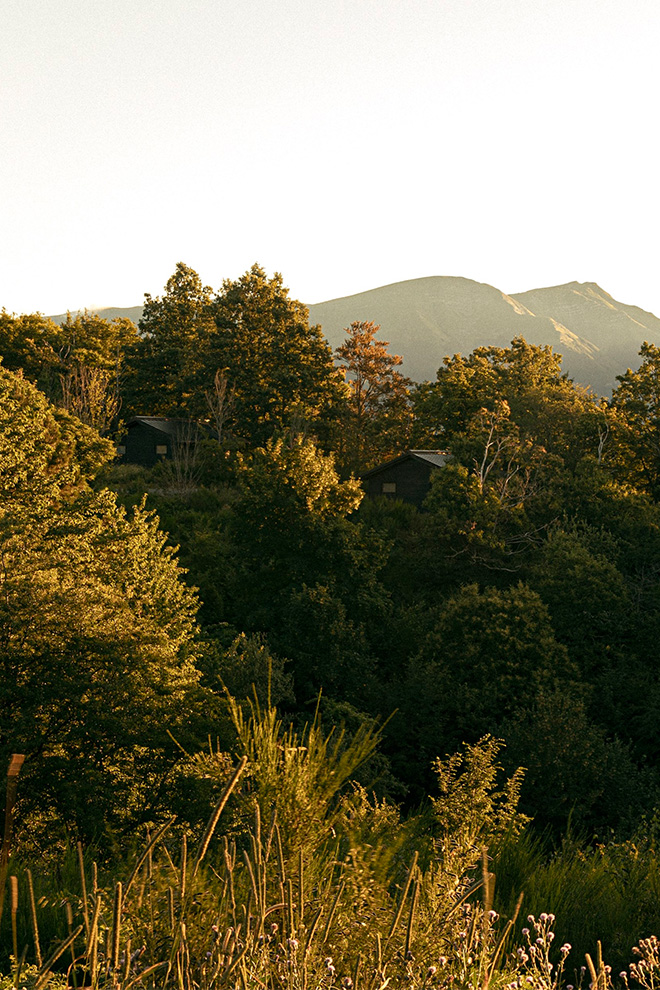
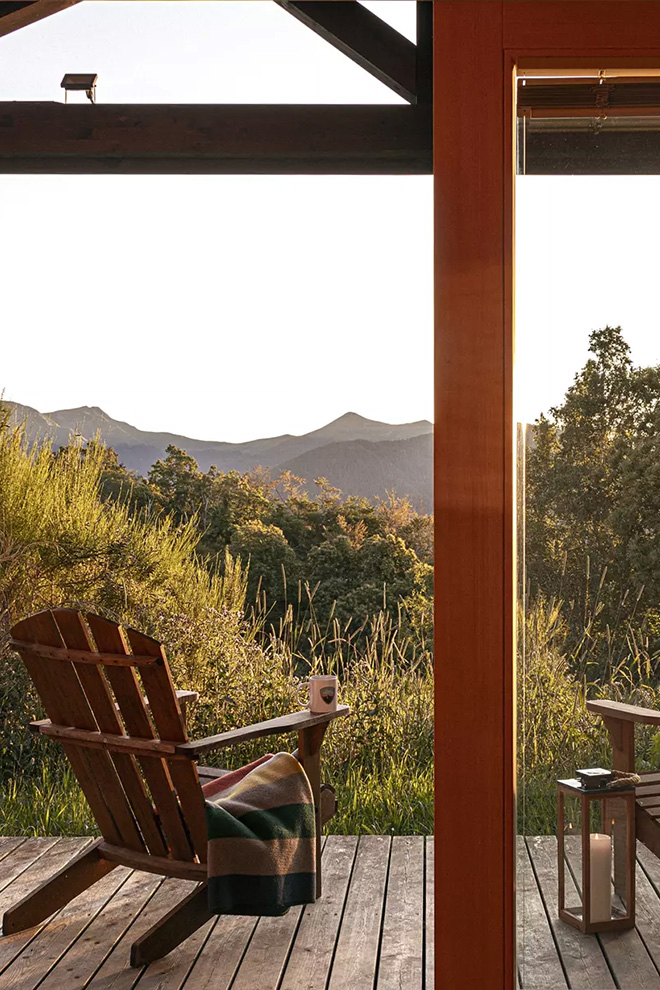
Pure silence reigns at this car-free 1,000-hectare wilderness reserve in the Apennine Mountains near Florence. Setting a seductively slow pace, Oasyhotel encourages a profound bond with nature, fostering the headspace and positivity that form the foundation for better health. Feel-good, nature-based wellbeing options await around every corner: trails of scented Douglas fir and white abbot woodlands are lined with site-specific sculptures and installations by internationally renowned artists and offer next-level forest bathing, while the estate’s crystal-clear, minty-green lake is the perfect setting for wild swimming.
Days might begin with a yoga class in a hilltop wildflower meadow and end with a meditative late-night forest walk, searching out stars and constellations in the uninterrupted skies above. Spa treatments are grounded in nature too, celebrating the earth, water, air, and sun. Using oils and creams that are local and 100% organic, these treatments, in the hands of the resort’s skilled therapists, act as a release valve for 21st-century stresses. For a total immersion, opt for a massage on the wooden platform tucked beneath the willow trees, with birdsong and the rustle of leaves serving as the ultimate relaxing soundtrack. Every aspect of wellbeing here is choreographed to heighten all five senses and gently usher the way to a complete reset.
5. Bhutan Spirit Sanctuary, Bhutan
Personalised wellness in a pine-studded valley near Paro
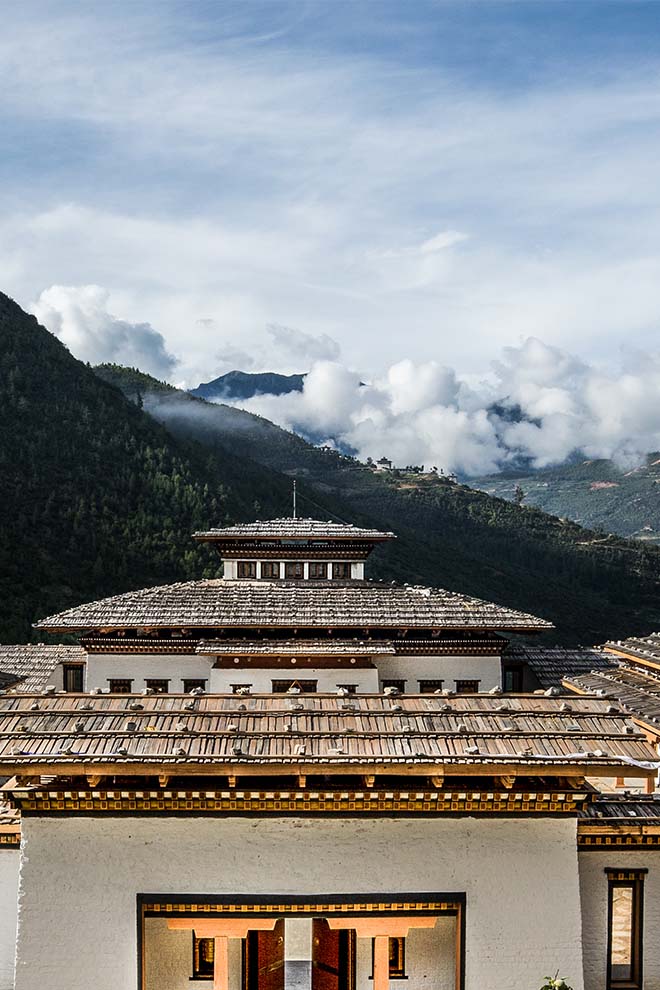
For wellness with a beguiling sense of stop-the-world-I-want-to-get-off magic, look no further than Bhutan Spirit Sanctuary, a Himalayan paradise hidden among the lush pine forests of the Neyphu Valley. Built to resemble the country’s towering fortress-like monasteries, as soon as you enter its central courtyard you feel a sense of calm descend. You will be ushered to a consultation with a Traditional Bhutanese Medicine doctor who will take your pulse, peer into your eyes and get you to stick your tongue out and somehow then deliver an uncannily accurate health diagnosis and set you on course to achieve better balance of mind, body and spirit.
This will include the use of at least some of the 60 healing plants from the spa garden for customised herbal compresses, hot stone baths and relaxing massage oils. It will also involve daily yoga and singing bowl sessions and you will probably want to add in dips in the heated indoor pool, stints in the sauna and steam rooms to counteract the aches from your heart-pumping mountain hikes. But Bhutan’s wellbeing toolbox embraces all aspects of the country’s culture, so the good doctor might also recommend a trip to a traditional fortune teller, a meditation session with monks at a local monastery, and possibly even a game of darts with local farmers.

Latest stories
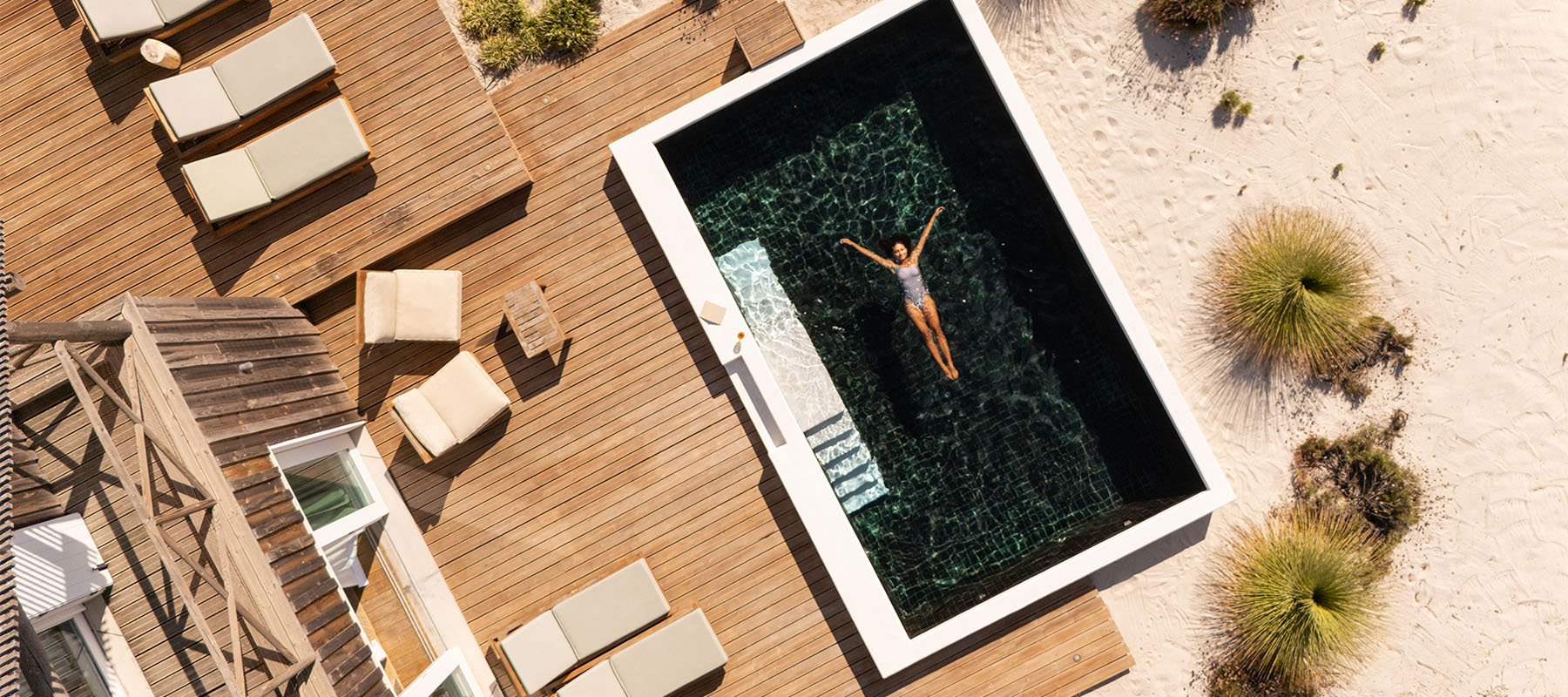
A wellness-boosting itinerary through Portugal: from the Algarve to Alentejo
Beyond the Algarve’s beach umbrellas and Lisbon’s tiled alleys lies a version of Portugal where nature leads and wellbeing follows. These wilder corners offer stillness, slowness and something that’s increasingly sought-after by today’s travellers — a deep and meaningful connection to nature.
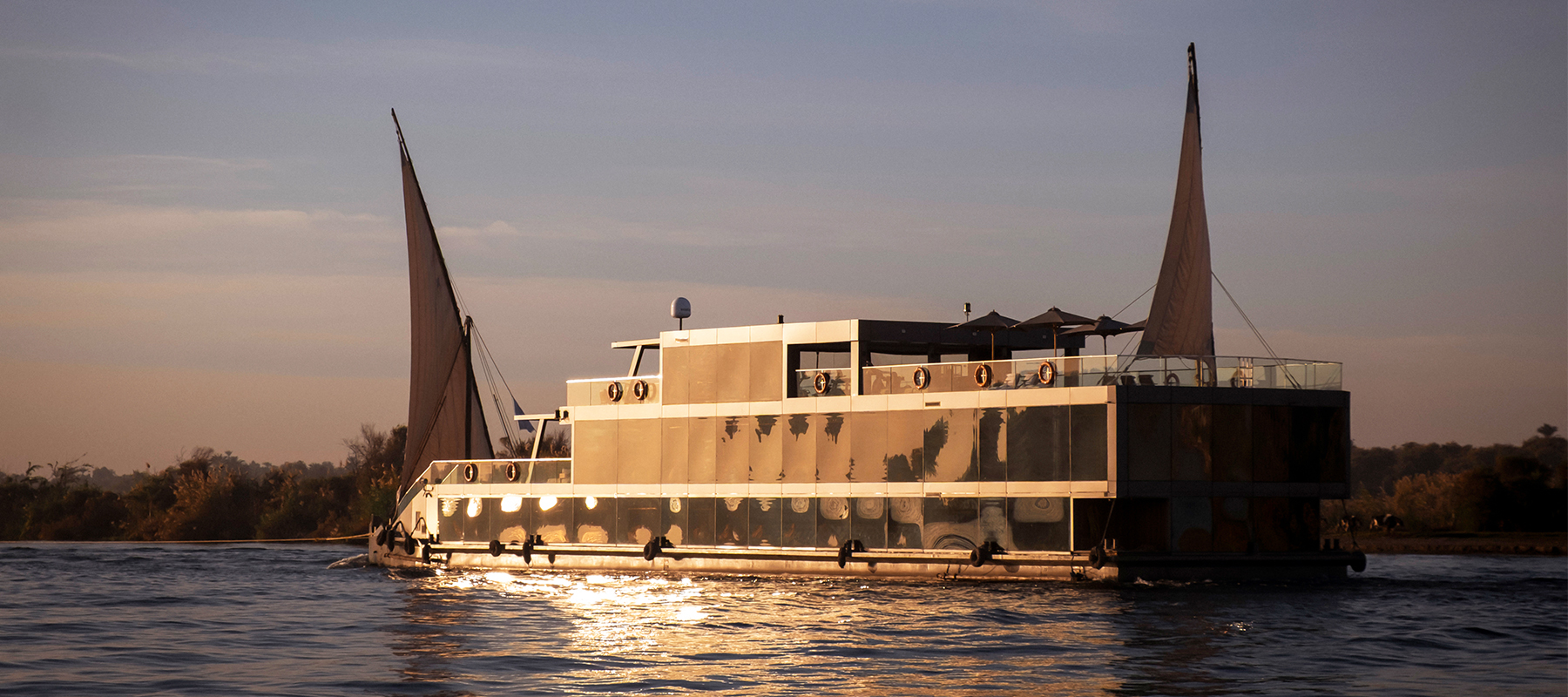
Why sailing the Nile by dahabeya is the most timeless way to experience Egypt
Aboard the beautiful Storia the Dahabeya, a four-day journey down the Nile comes to life with a thousand senses, from the snap of linen sails to the scent of sun-warmed papyrus drifting on the wind. We glide past palm-fringed banks and golden temples that continue to glow at dusk. Gentle
In with the new: from vineyard retreats to island hideaways these are the hotels on our radar in April
Spring brings a renewed sense of movement and with it, travel that feels both restorative and enriching. Some stays are steeped in nature, from Finland’s forested stillness to Corsica’s sunlit groves, while others unfold among the vineyards of California, Piedmont and beyond. Elsewhere, island rhythms take hold in Rhodes and
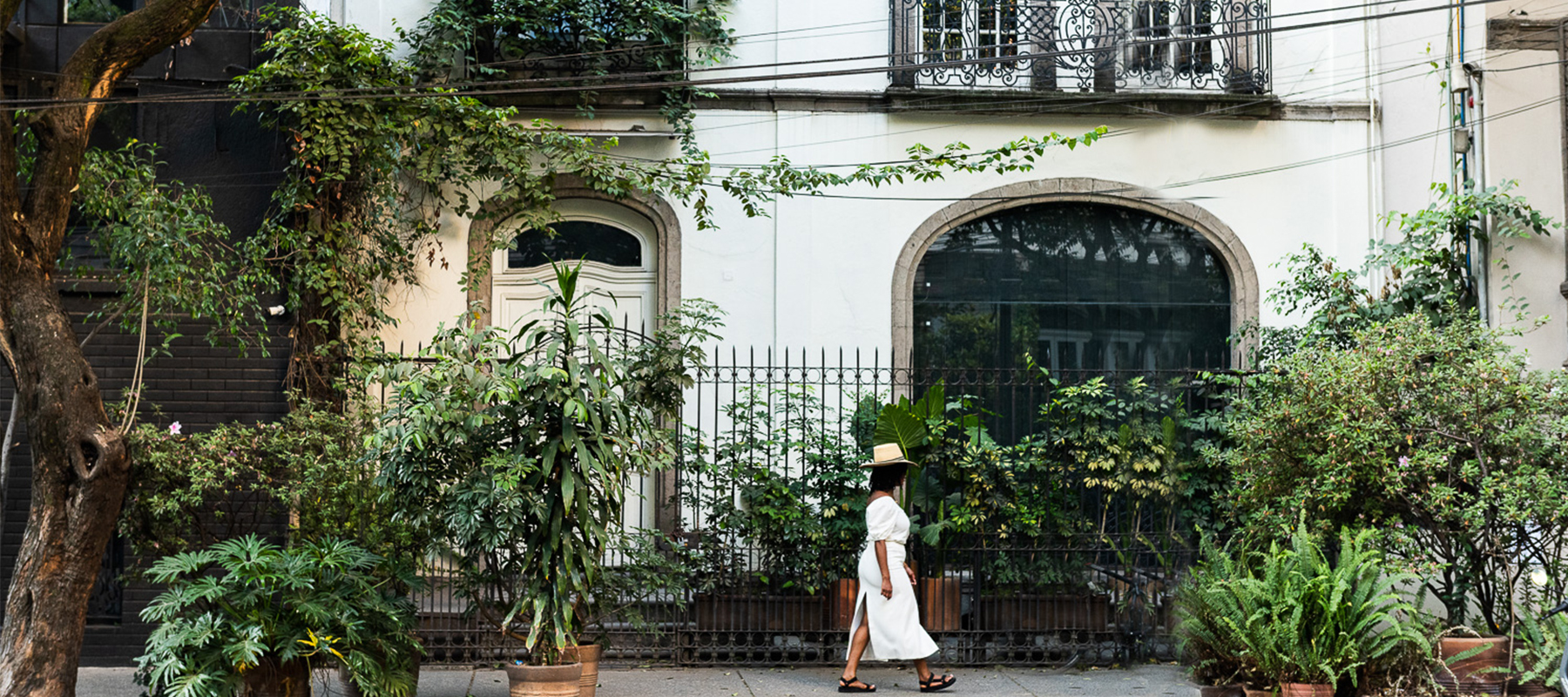
A pocket guide to Roma Norte: Mexico City’s most creative district
Full of characterful, colourful neighbourhoods where culture and cuisine thrive, Mexico City is a magnet for creatives to reside and visit. Condesa remains the go-to for Art Deco architecture and buzzy brunch spots. The bohemian enclave of Coyoacán has long been a refuge for artists. Burgeoning Juárez brings in a