

Wine, dine, and unwind at centuries-old Tuscan farm estate Villa Petriolo, where guests find joy in the simple life and sustainable pleasures that Italian agritourism has to offer.
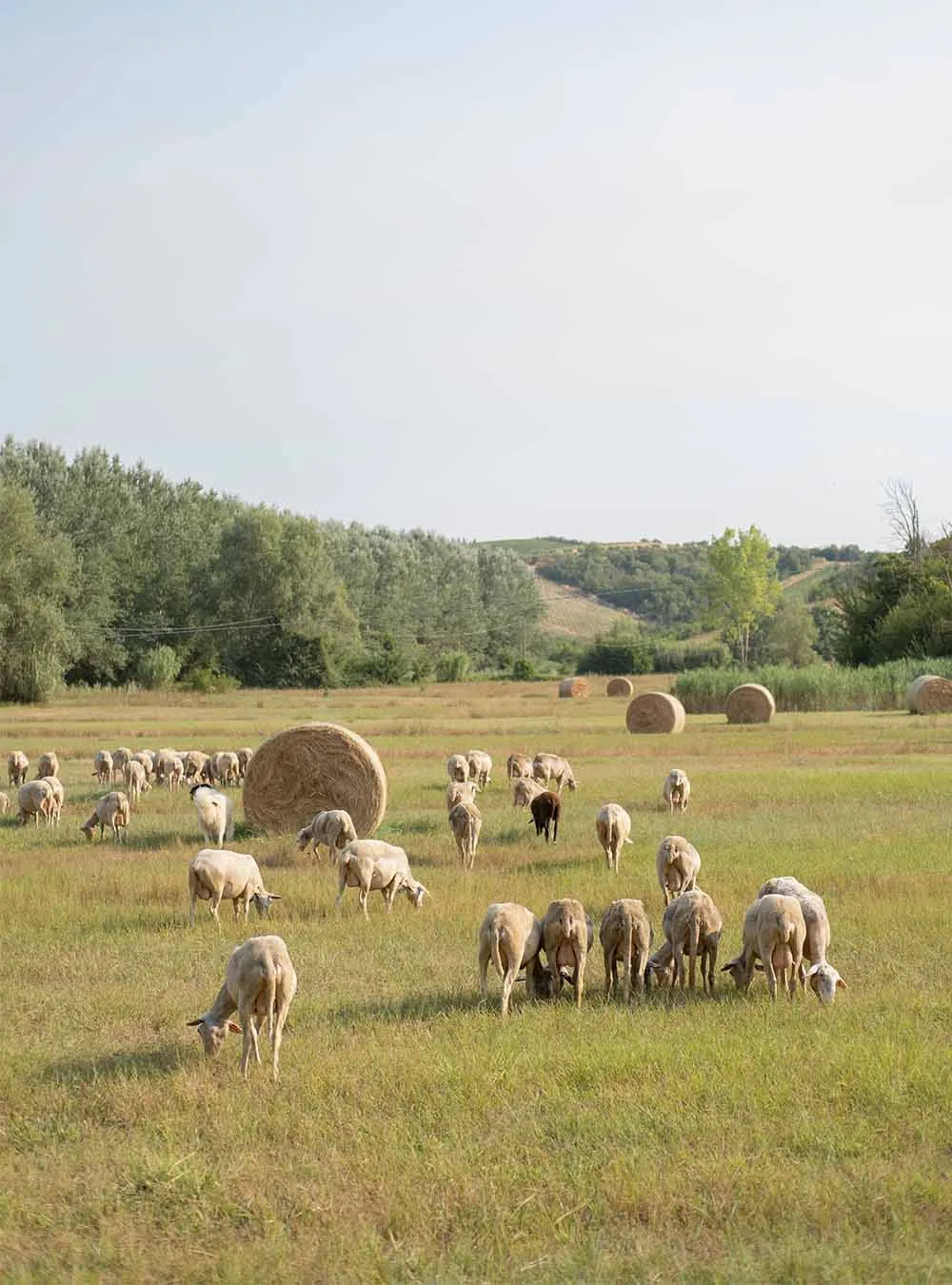
The rippling green hills of Tuscany have been etched into my wandering mind ever since my first visit as a child, and I have found many reasons to return to the region’s oil-painting scenery over the years. The latest draw is a honey-hued retreat and farming estate near the hillside village of Cerreto Guidi, a short drive from the birthplace of Leonardo da Vinci in Anchiano. Villa Petriolo’s agricultural roots run deep — all the way back to the 15th century, in fact — and much of its beauty lies in a landscape that has changed very little since da Vinci’s days. Livestock still dot the bucolic patchwork of olive groves, woodland, and vineyards, tended by the local shepherd (with help from resident sheepdogs Milano and Torino). Herds of wild boar and deer continue to snuffle in the undergrowth as you horse-ride through mist-cloaked forests, and the gentle hum of bees can still be heard around the fruit orchards and wildflower meadows.
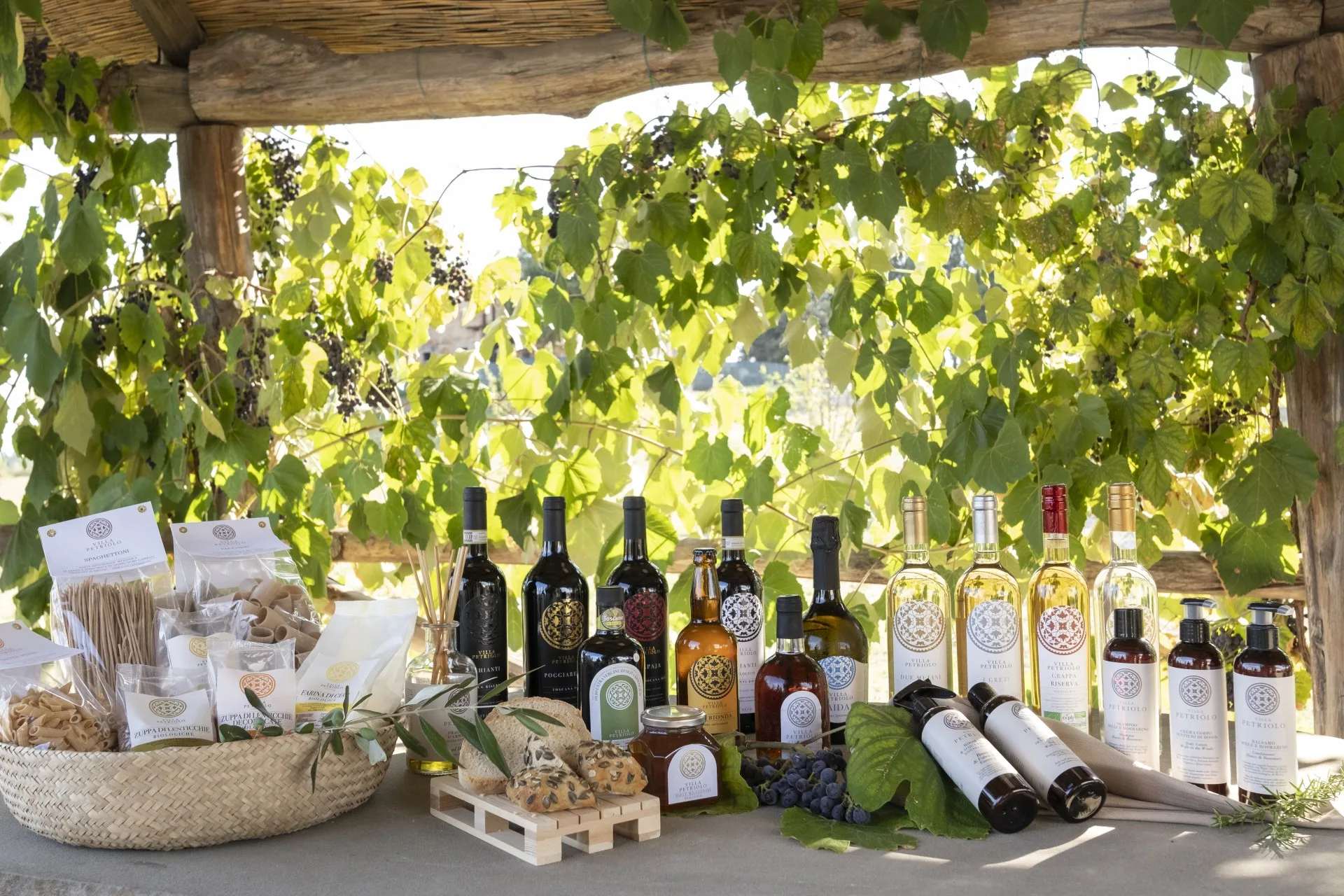
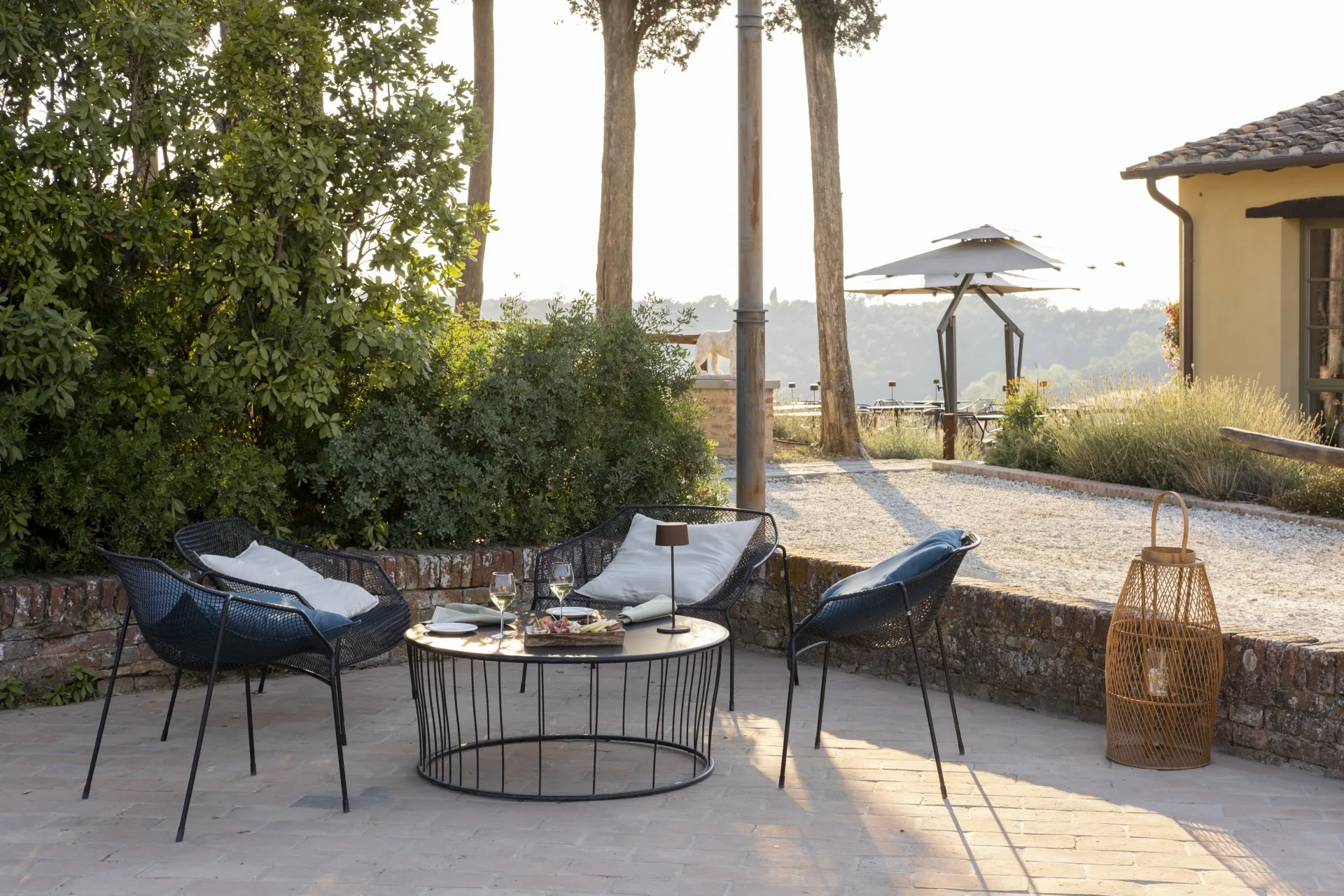
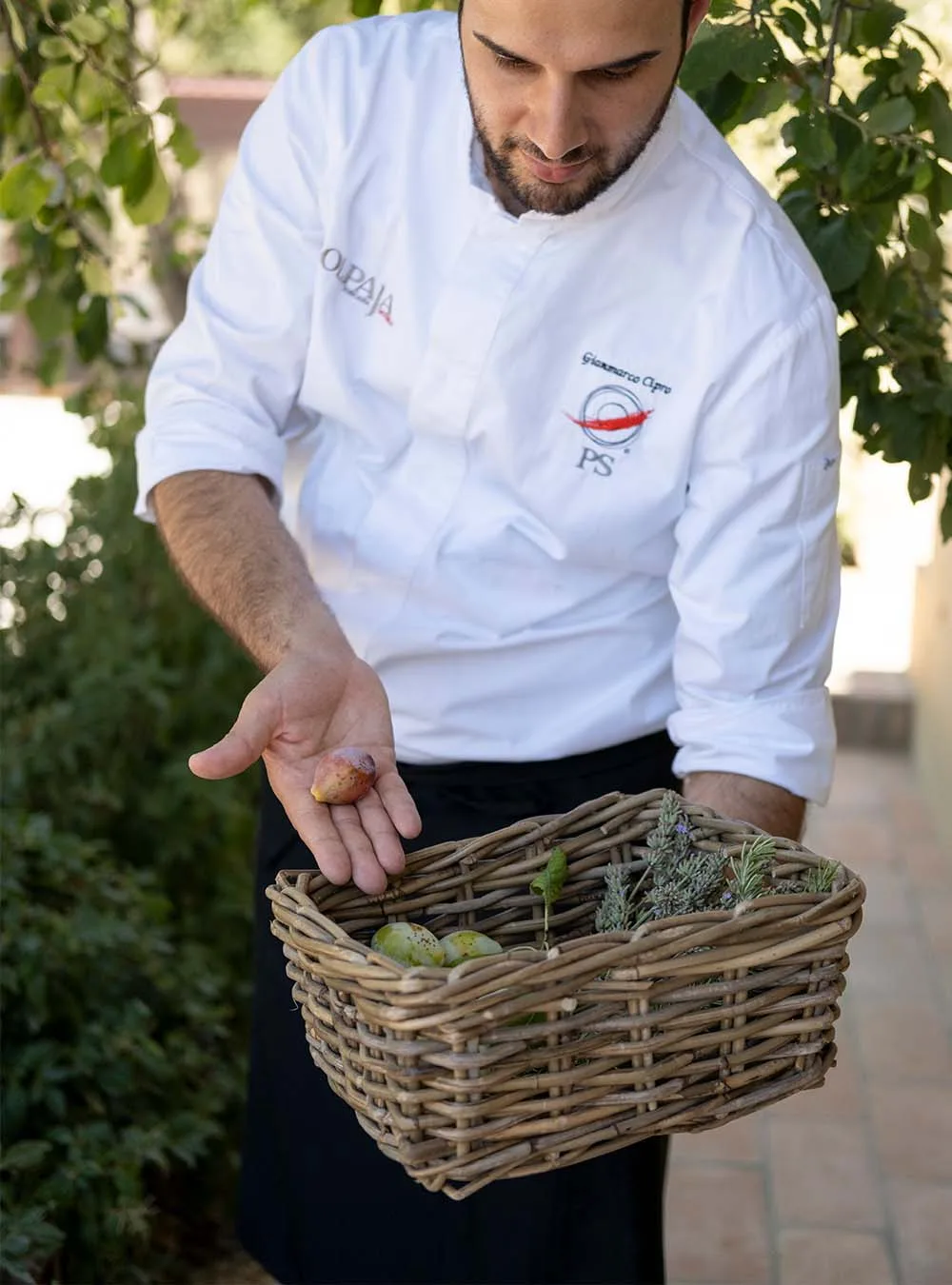
My visit to Villa Petriolo coincides with the soft glow of spring, perfectly timed to see fluffy lambs and donkey foals wobble their way through the pesticide-free pastures, and muddy piglets squeal in delight whenever their trough is filled. The farm’s original wagons and carts are scattered about the grounds, filled with fragrant Tuscan herbs like rosemary, thyme, and tarragon. These are mixed with the estate’s millefiori honey and olive oil to concoct organic, eco-conscious bath products (which worked immediate wonders on my hair and skin). Later, during aperitivo hour, herbs are also infused in cocktails served on the same central piazza where the estate’s farmers would gather to eat, drink, and dance after a long day in the fields.
Days are wonderfully slow paced here. I spend most of my time under the dappled shade of a citrus tree with a sun-stained copy of, rather fittingly, Helena Atlee’s The Land Where Lemons Grow, charting Italian cuisine, culture, and history via the story of the humble citrus fruit. Inevitably, the Medici are mentioned throughout (the Florentine family’s love of lemons is somewhat legendary, after their art obsession). I also learn that the bricks used to build Villa Petriolo and the Medici villa in nearby Cerreto Guidi were forged in the same clay furnace in one of Petriolo’s valleys. Furthermore, the Alessandri family (Villa Petriolo’s original owners, who retained the estate for over 500 years) used to trade with their renowned Renaissance neighbours.


Today, the noble family name lives on at Villa Petriolo.
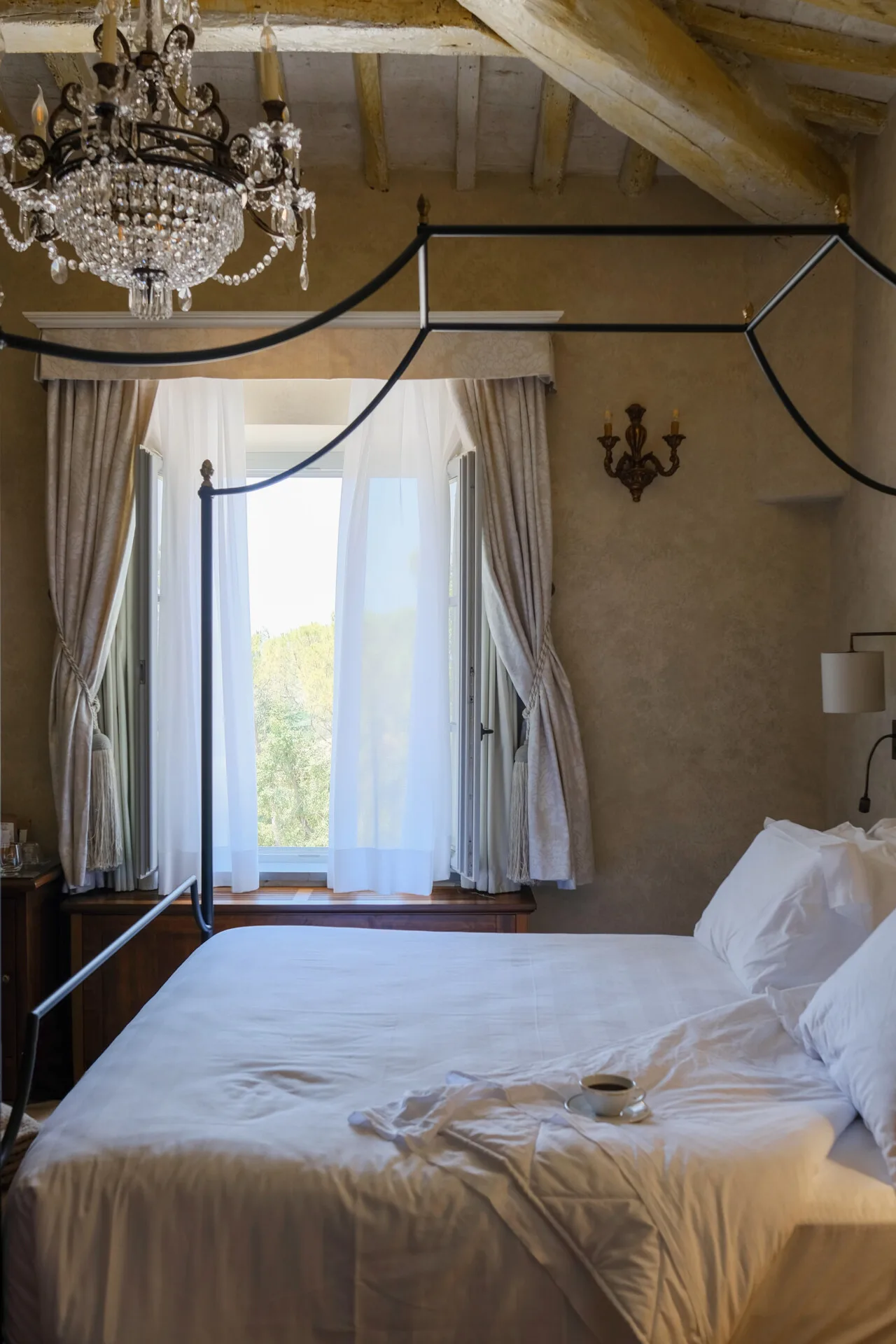
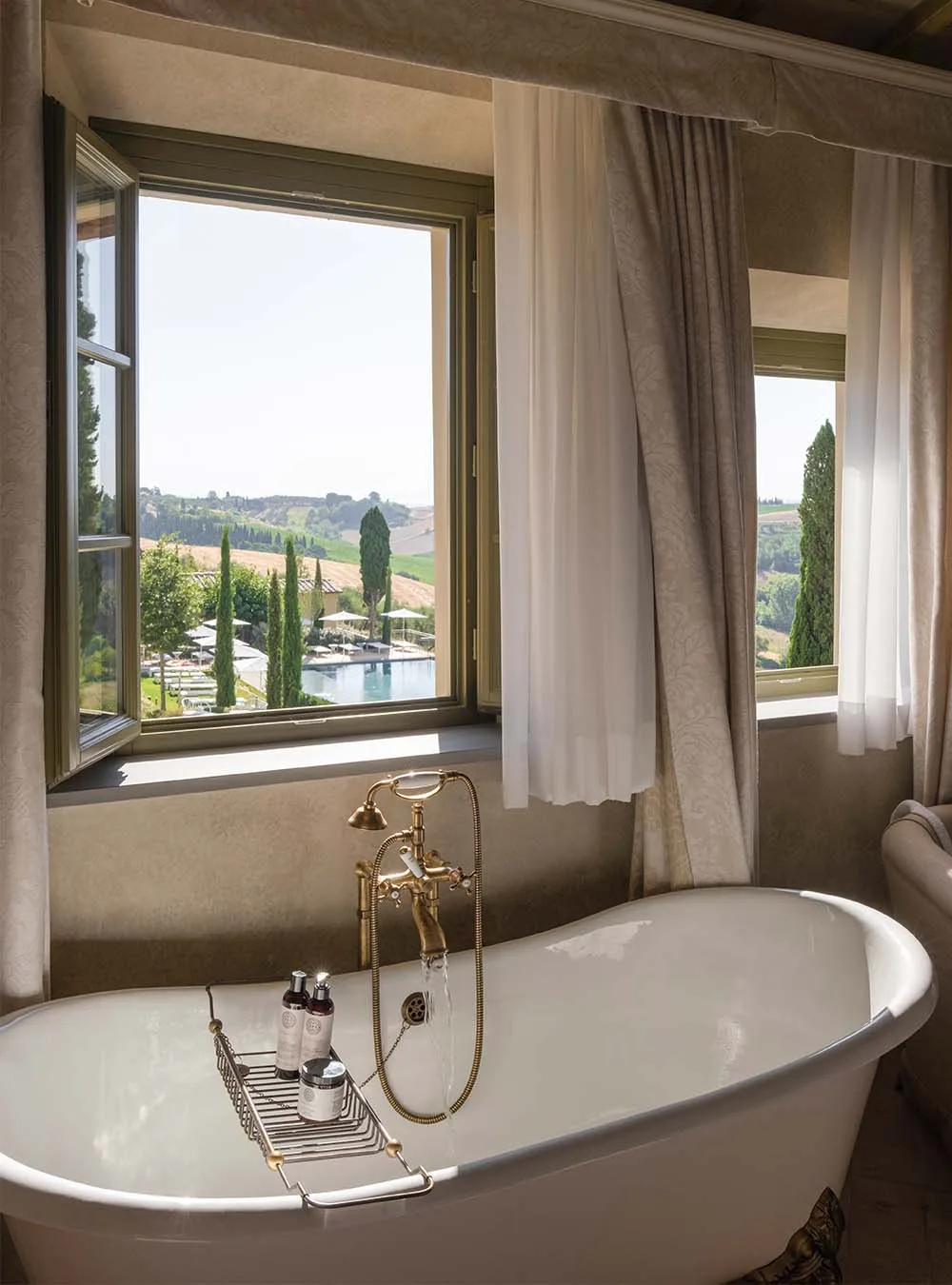
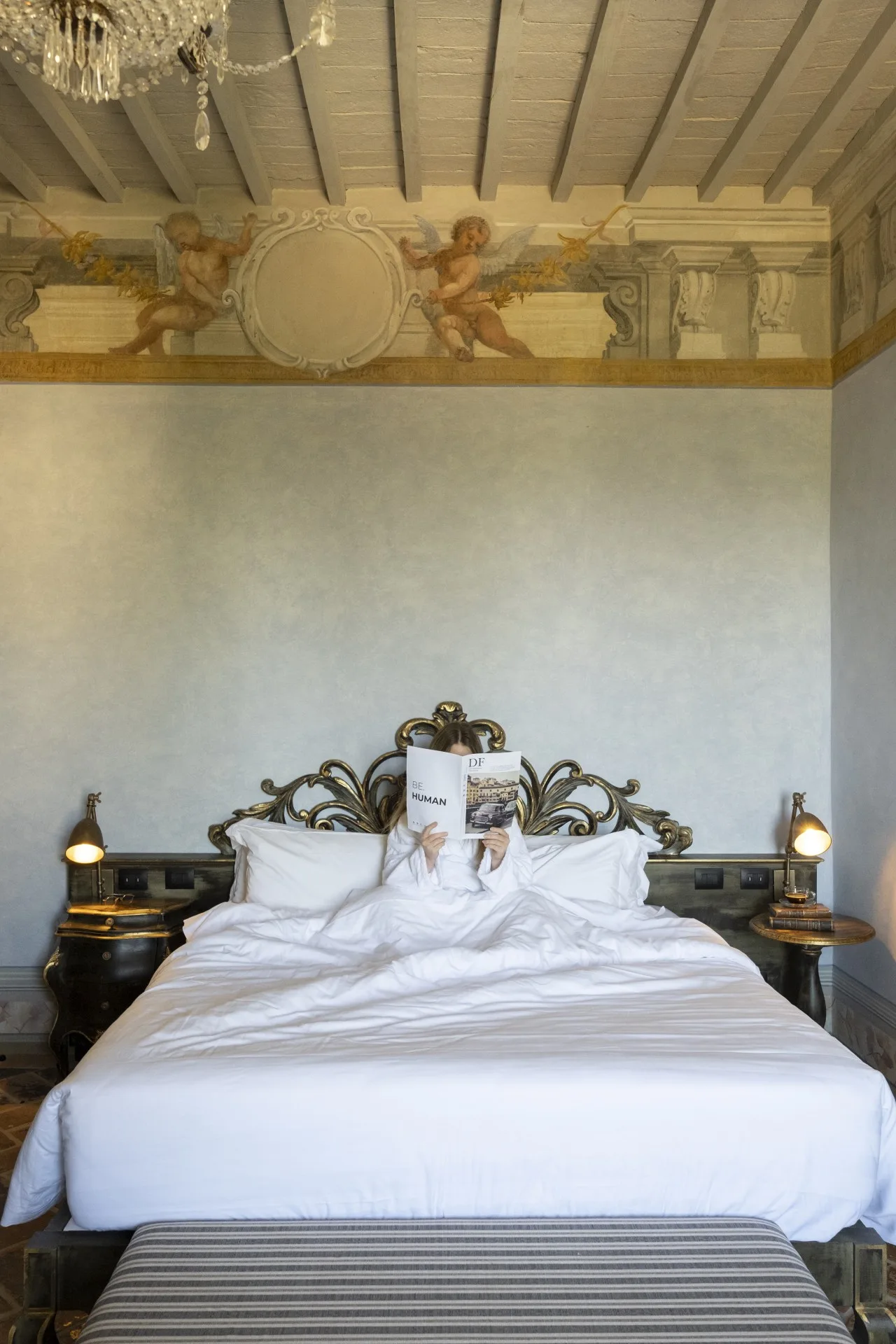
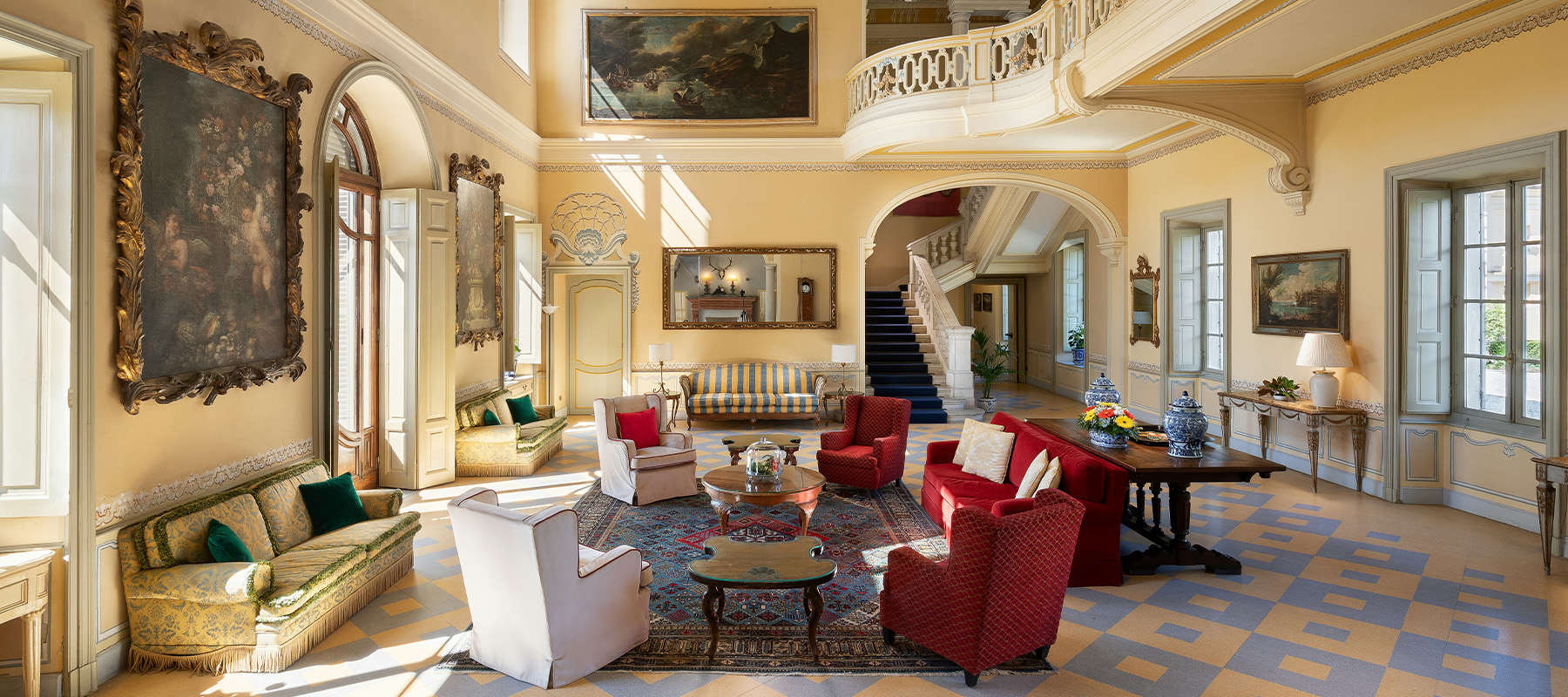
Tucked away just off a 17th-century chapel up a spiral staircase, the Alessandri Master Suite — arguably the most special suite in the hotel — is the only bedroom decorated with original frescoes. It features furniture meticulously crafted by local artisans, whilst in the adjoining marble bathroom, a clawfoot tub is thoughtfully positioned underneath a large window, ready for guests to soak up those undulating views outside.
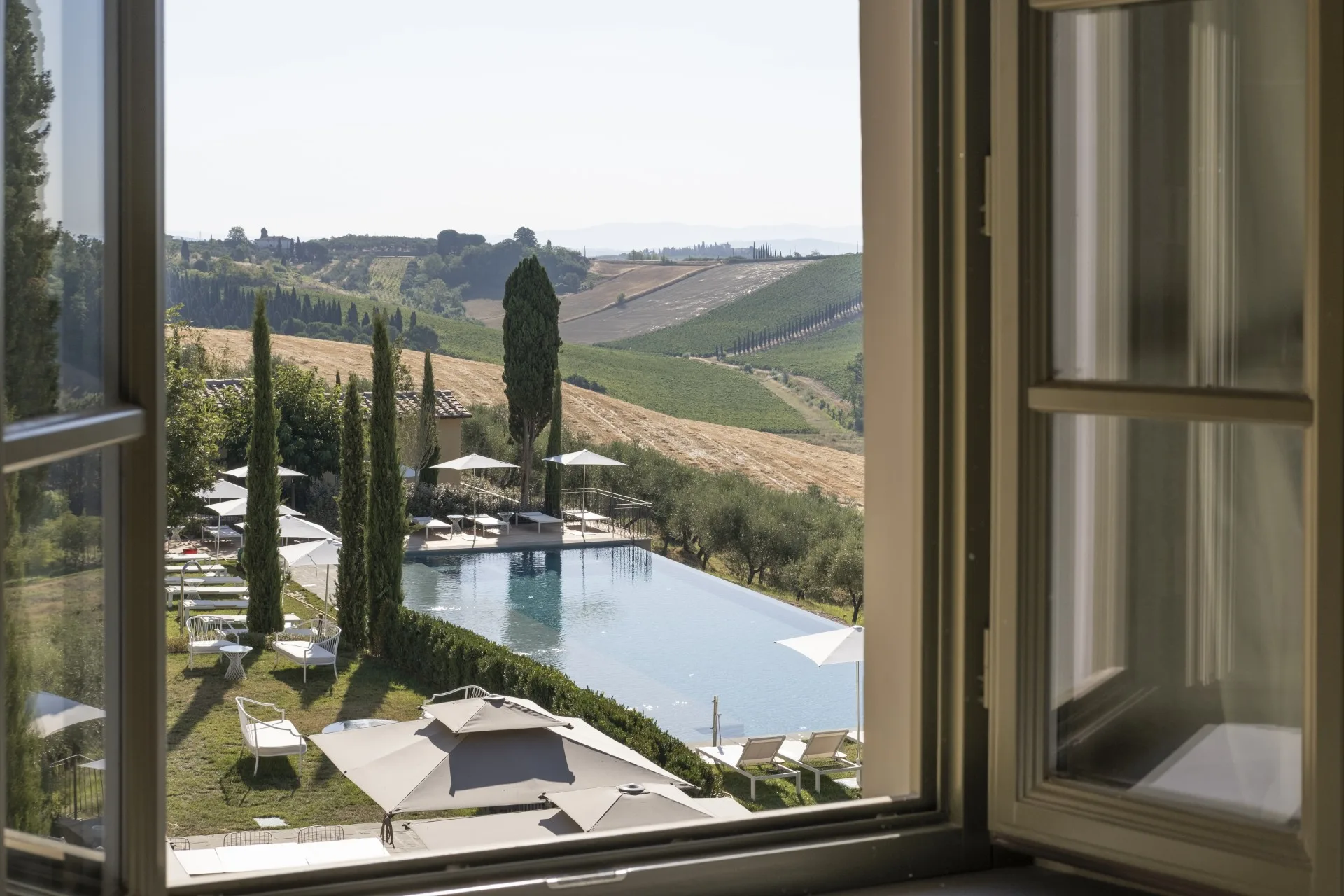
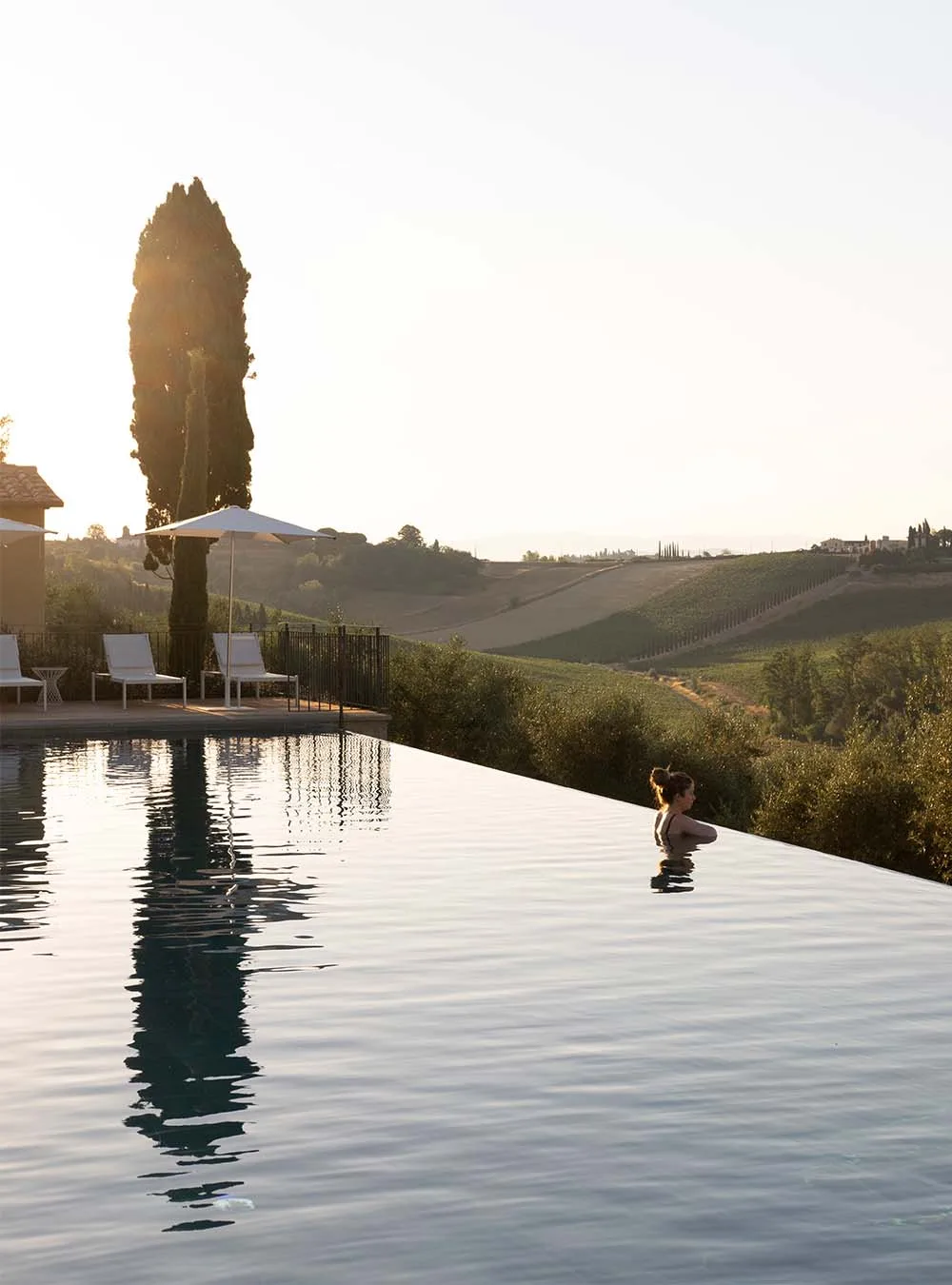
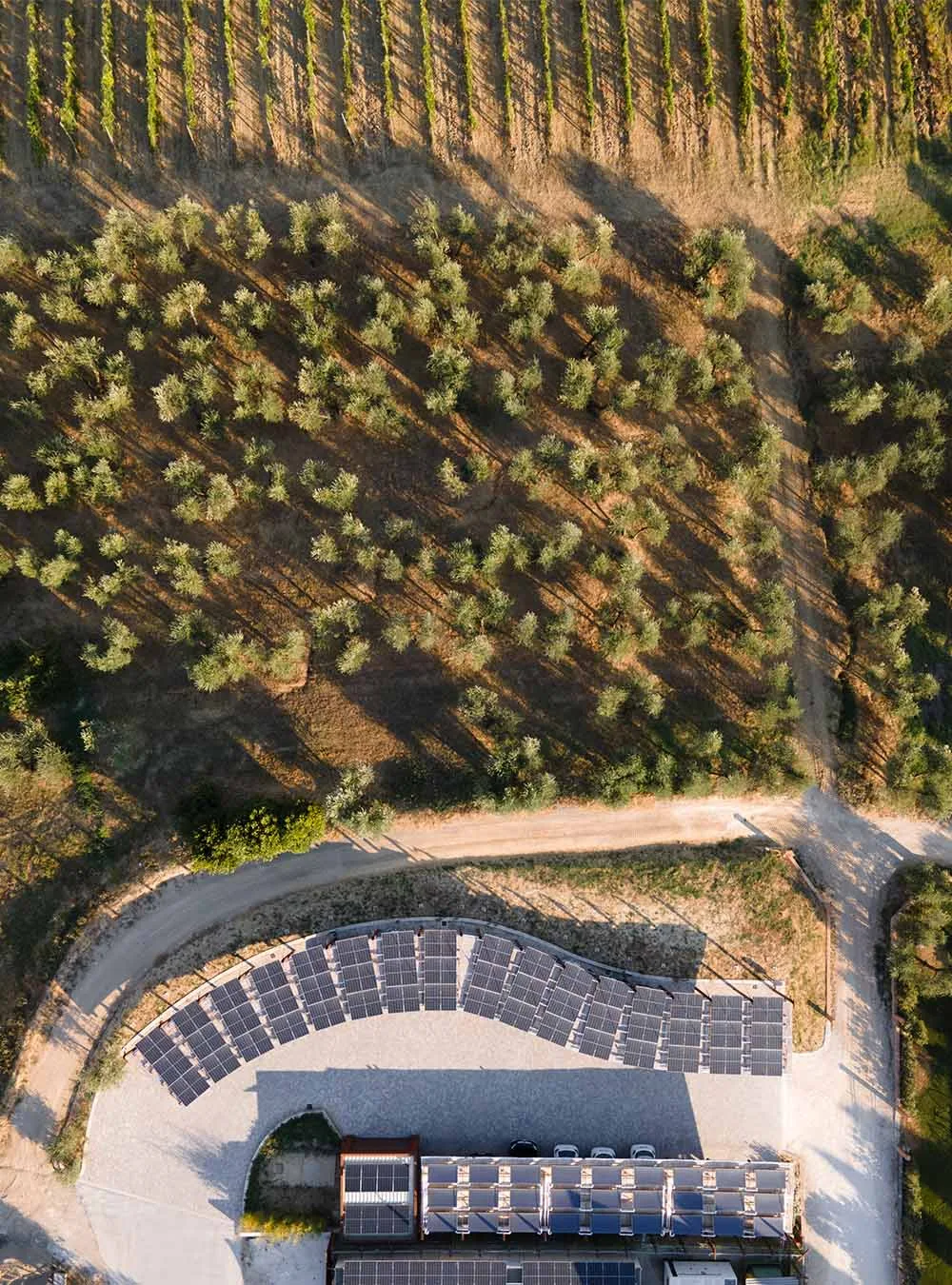
Of course, alongside all of the ancient traditions and techniques that have been so admirably preserved, modern enhancements have been made at the hotel — all with the good of the land in mind. Solar panels heat the property’s water and charge its fleet of electric vehicles and bicycles, whilst the infinity pool’s clever design minimises water usage. What’s more, the main restaurant, PS Ristorante, holds a Michelin Green Star thanks to its zero-waste, plastic-free kitchen.
Our affable host — and Villa Petriolo’s CEO — Daniele Nannetti, is a man with a vision, having played a key part in helping the hotel earn an impressive clutch of eco-credentials in recent years. Villa Petriolo is now a proudly GSTC (Global Sustainable Tourism Council) certified farming estate, a stalwart member of SLH’s Considerate Collection, and, in 2023, was named the first agriturismo in Europe to obtain the Iso Sustainable Tourism 21401 certification. When he’s not revising the hotel’s informative Green Book, or planning next season’s harvest, Nannetti can be found giving the resident boar Elena a good belly rub (the pair have been firm friends since Nannetti bottle-fed her as a piglet).
For additional temptation into the Tuscan countryside…
Villa Petriolo recently launched its own Holistic Wellness Centre, complete with a menu of all-natural treatments that draw upon the estate’s bountiful produce. Nature-inspired rituals include donkey milk and wildflower honey facials, acacia blossom scrubs, olive oil and cypress aromatherapy, rosemary, sage and lavender masks, and citrus massages. The newly-built spa stands in a quiet corner of the estate, fitted out with an indoor hydrotherapy pool, salt room, steam bath, a cryotherapy suite (featuring an ice waterfall), and a Finnish sauna overlooking — you guessed it — more Tuscan hills, not to mention plenty of indoor-outdoor relaxation rooms to lounge in between treatments. Weekly yoga classes are held in the aromatic herb gardens, and relaxation devotees can now sleep as close to the spa as possible in the just-added Wellness Suites upstairs.
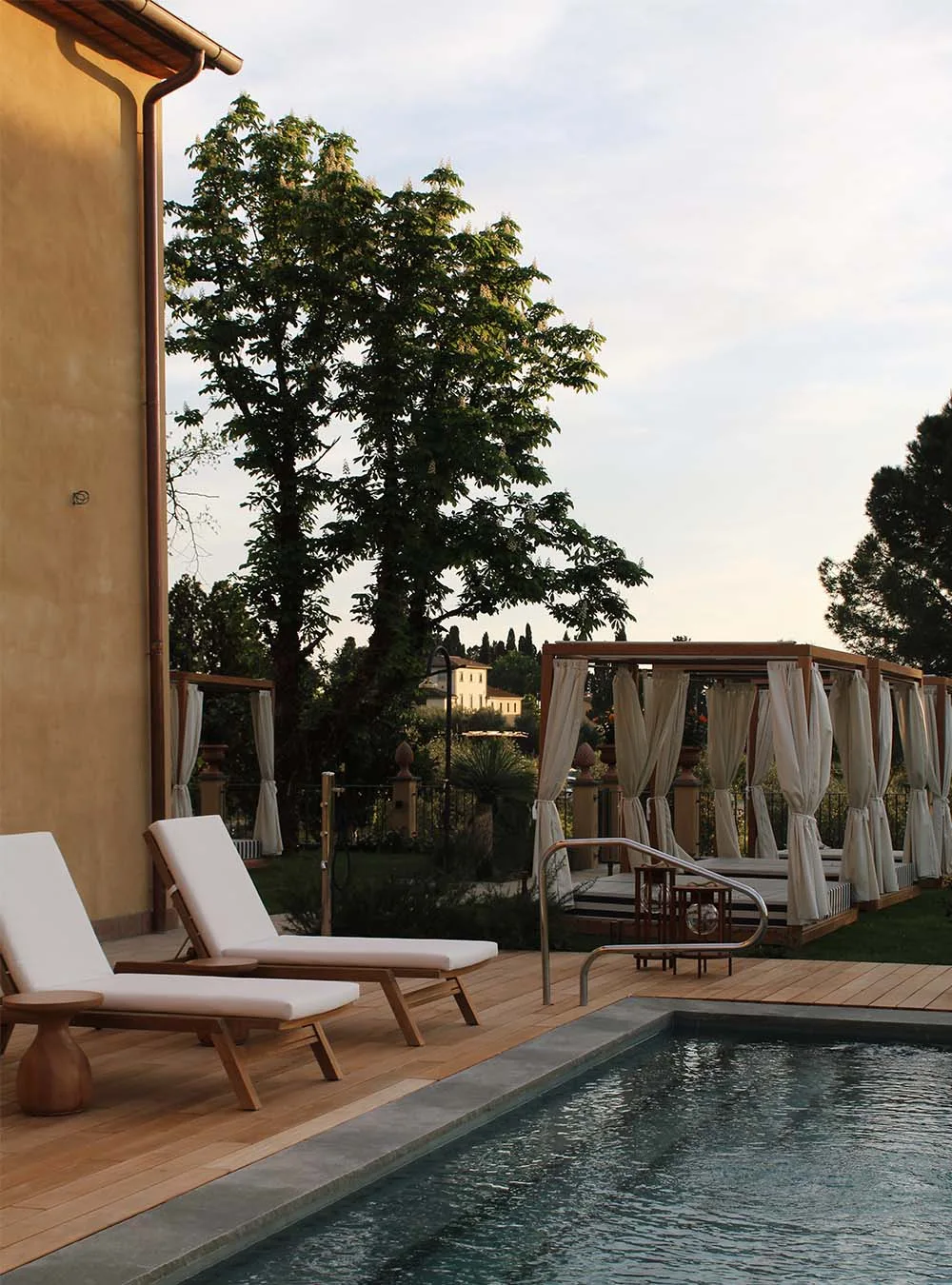
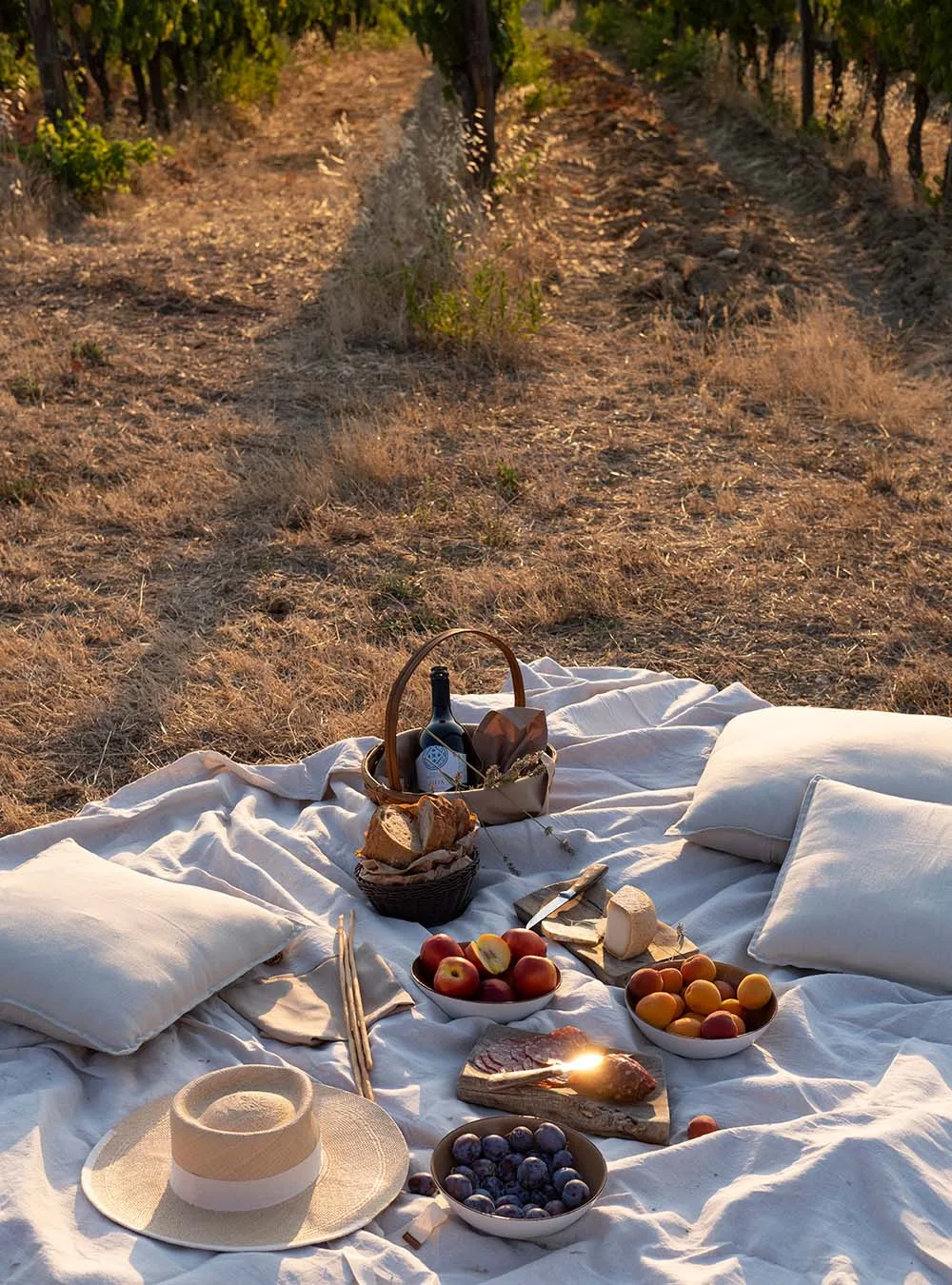
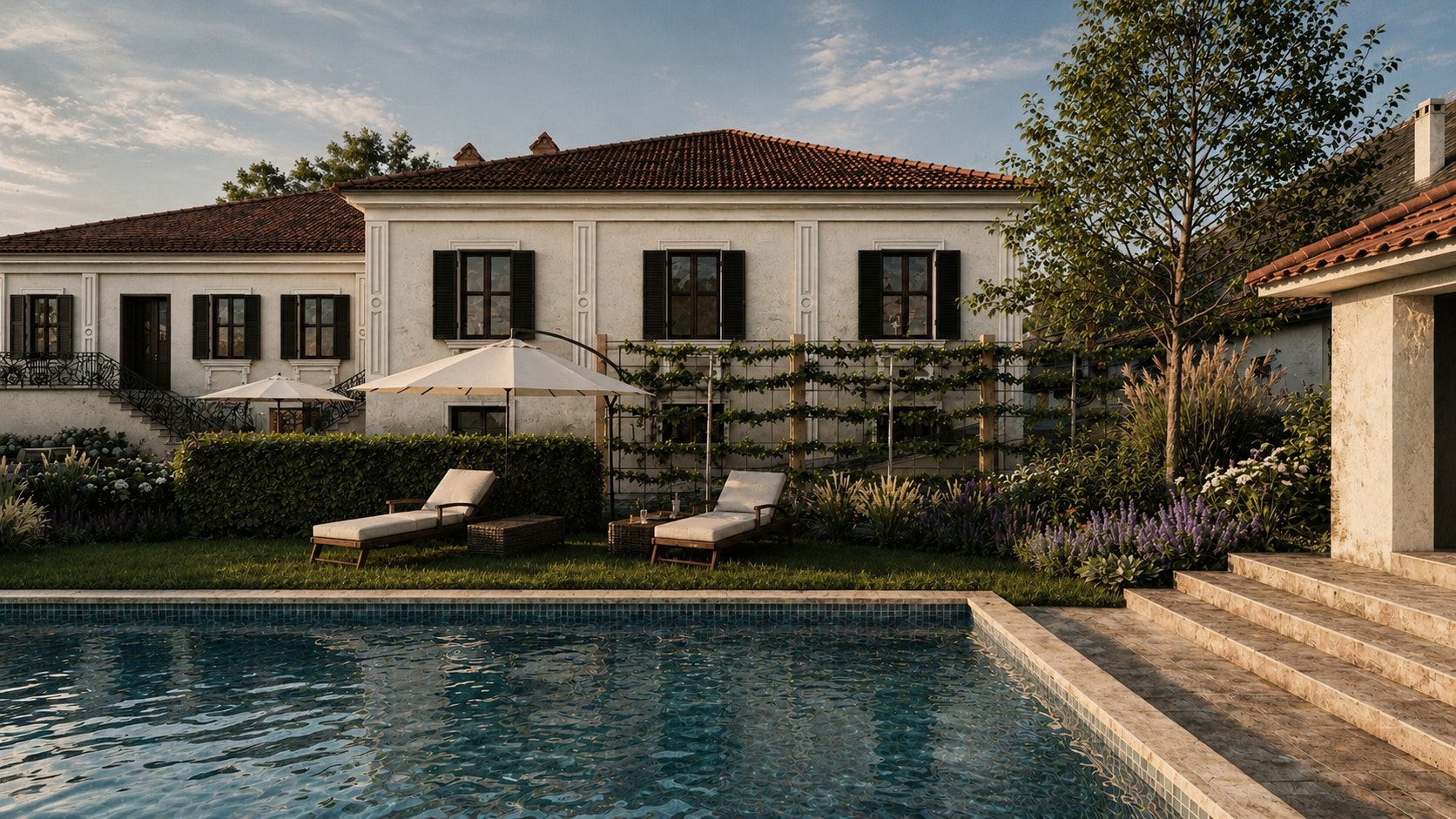
You can wine-taste, picnic, truffle-hunt, hike, bike, and horse-ride your way around all 17 acres, or simply loll by the orange tree-lined pool as geckos scuttle beneath the loungers, and the occasional white bunny-tail flashes into a hedge.
Alternatively, you’ll soon be able to rent a private nine-bedroom villa and set of luxury apartments which are currently under renovation, perched atop two of the estate’s prettiest hills; secluded enough for groups to experience that ‘get away from it all’ feeling, but with Villa Petriolo’s luxurious facilities just a short amble away.
You can wine-taste, picnic, truffle-hunt, hike, bike, and horse-ride your way around all 170 acres, or simply loll by the orange tree-lined pool as geckos scuttle beneath the loungers, and the occasional white bunny-tail flashes into a hedge. The poolside bar has mastered the art of apericena — which loosely translates as ‘drinks and nibbles that turn into dinner’ — luring robe-clad guests onto the alfresco terrace of Osteria di Golpaja, to feast on homemade pasta and estate-grown wine as the cicadas start to chirrup.
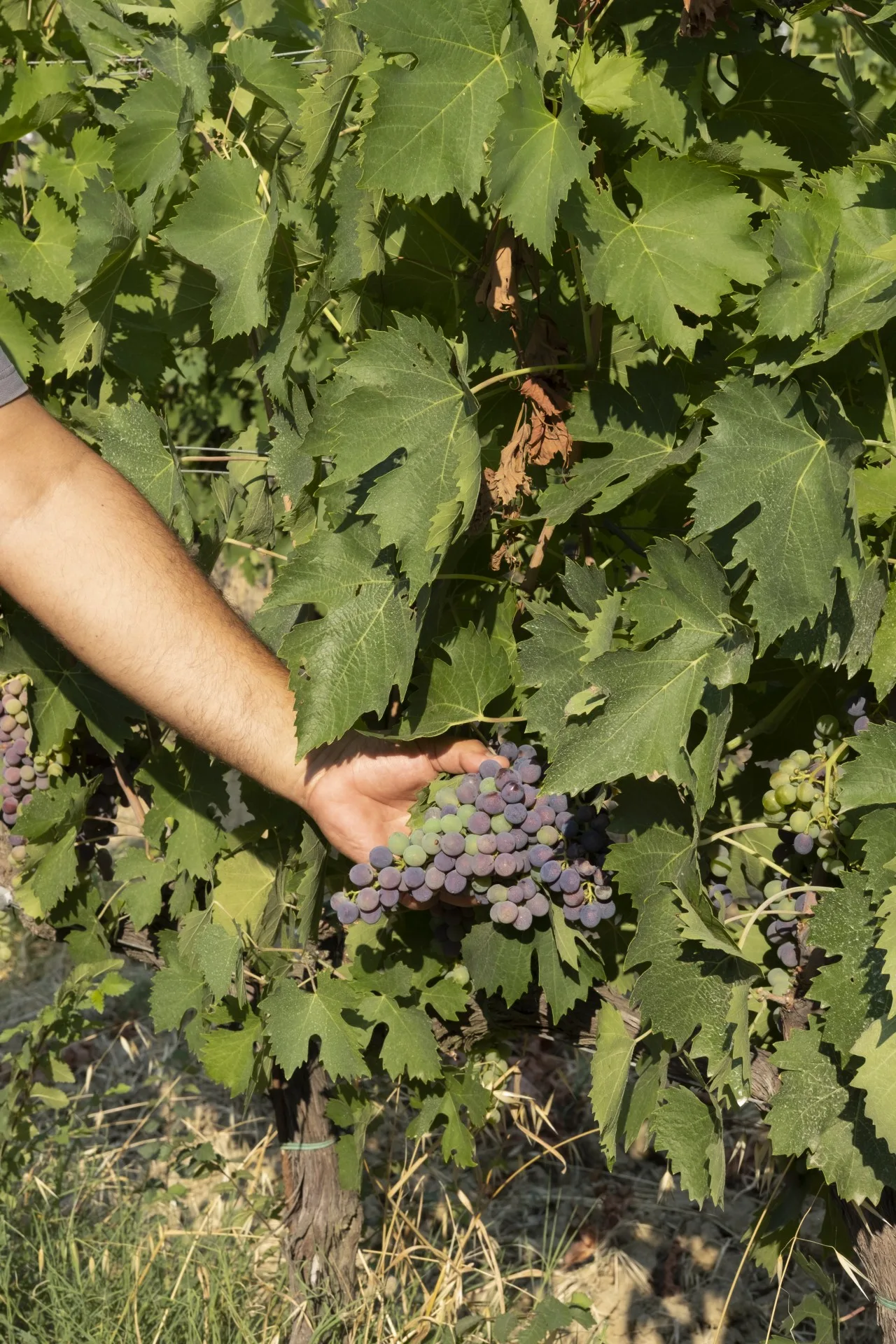

As idyllic as Villa Petriolo is, the rural peace and quiet might be appreciated even more after spending a few nights in Florence beforehand. Within the space of a single afternoon, you could stroll along the city’s Ponte Vecchio admiring the glitzy jewellery displays as creamy gelato melts down your hand, before seeking shade in the Lemon House of Boboli Gardens, until you’re ready to whizz on a 35-minute train ride to the teeny-tiny station of San Miniato-Fucecchio (just a 10-minute drive from Villa Petriolo). Whatever you do, time under the Tuscan sun is well spent here, having indulged in the sweetness of doing something good — a sustainably-driven stay — and absolutely nothing (la dolce far niente), all at once.


Latest stories
Celebrating five years of the Considerate Collection
What does it mean to travel considerately? It might be a centuries-old farmhouse given a second lease of life in Transylvania; a Venetian landmark carefully restored with a heating and cooling system that uses lagoon water; or an island kitchen serving a plant-based feast made with seaweed gathered just offshore.

Making tracks: a train journey taking in six European cultural capitals
It’s official – inter-railing is back, as travellers increasingly swap flights for the speed and ease of Europe’s rail network. Think zippy connections, city-centre arrivals, and stress-free border crossings: train travel is one of the fastest, most convenient, and still sustainable ways to explore the continent. Get ready for a

Independent Minds: Sheila Kyarisiima, The Pinnacle Kigali
High above Kigali on Rebero Hill, The Pinnacle offers sweeping views across the city, bringing contemporary luxury together with a strong sense of place. What began as a private family retreat has evolved into a destination that celebrates Rwanda’s culture, creativity and community. Here its founder, Sheila Kyarisiima, shares the
A postcard from: Piedmont with Sina Villa Matilde
Piedmont may be one of Italy’s less-travelled regions, and that is precisely part of its appeal. Sitting at the foot of the Alps, the landscape is a mix of rolling hills, family-run wineries and elegant country estates, with excellent food and wine at its heart – some might even say