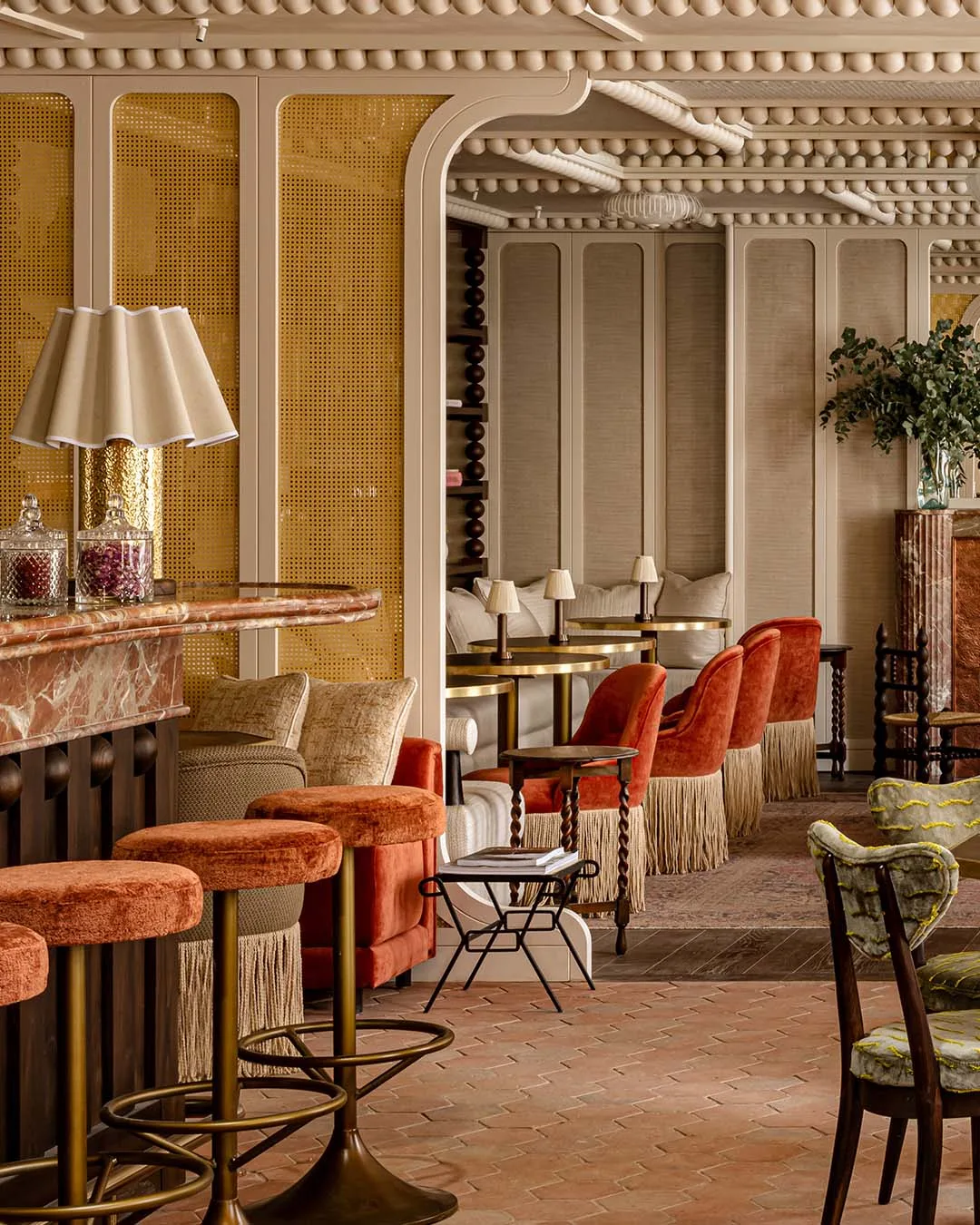

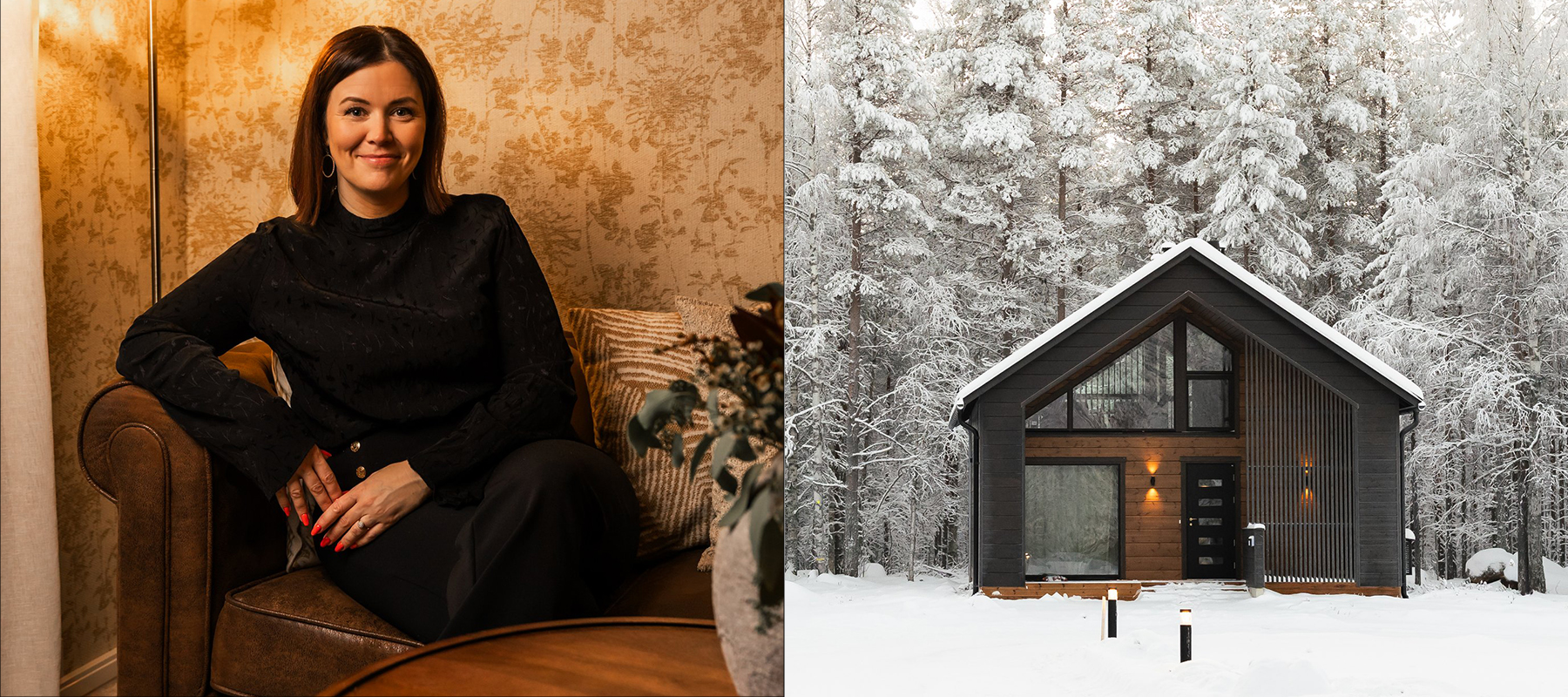
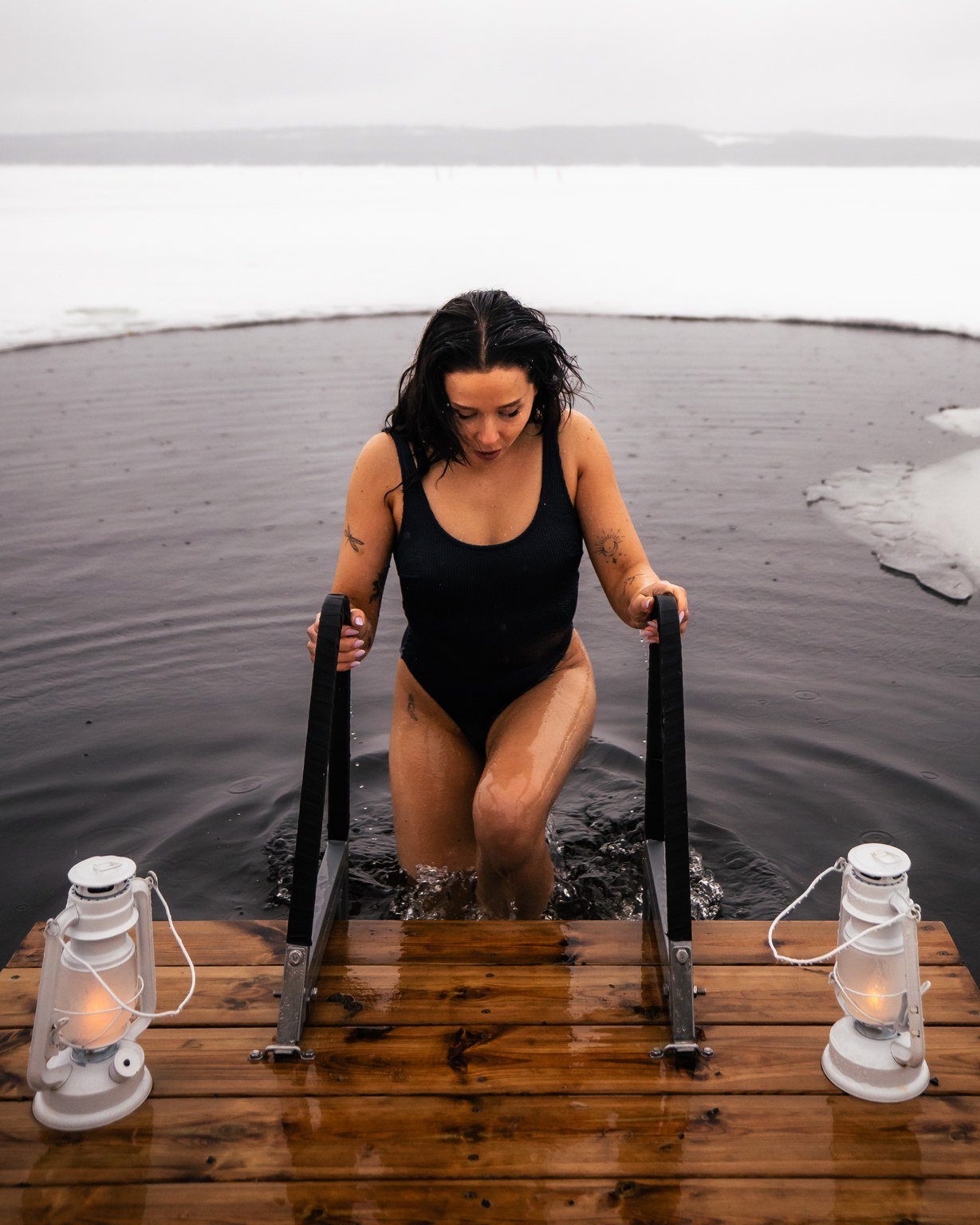
In the stillness of Finnish Lapland, beside the waters of Lake Norvajärvi, Susanne Hulbekkmo has created a restorative retreat centred on the constantly changing light and temperament of the landscape that surrounds it. Housed in a painstakingly restored Fifties village school, Skýra Retreat – part of the Wellbeing Collection – brings together Nordic design, ancient sauna rituals and the quiet of the forest to offer a different kind of escape: a place to feel cared for and find your way back to the present.
Take us through the beginnings of Skýra Retreat.
Our CEO, Mika Pitkämäki, already had a holiday home on the neighbouring plot. When the former village school came up for sale, he initially bought it to protect the character of the area. He felt that such a remarkable location should be protected from overdevelopment with something smaller and more considered.
We were already business partners in other ventures, but the concept developed slowly. We were balancing other work, and then the pandemic changed both the timeline and the world around us. By the time we returned to the project properly, people’s needs had shifted. Travellers were looking for privacy, space, nature and experiences that felt restorative rather than performative. Tourism in Rovaniemi had also grown enormously, and we felt there was a genuine need for a more intimate and holistic place.
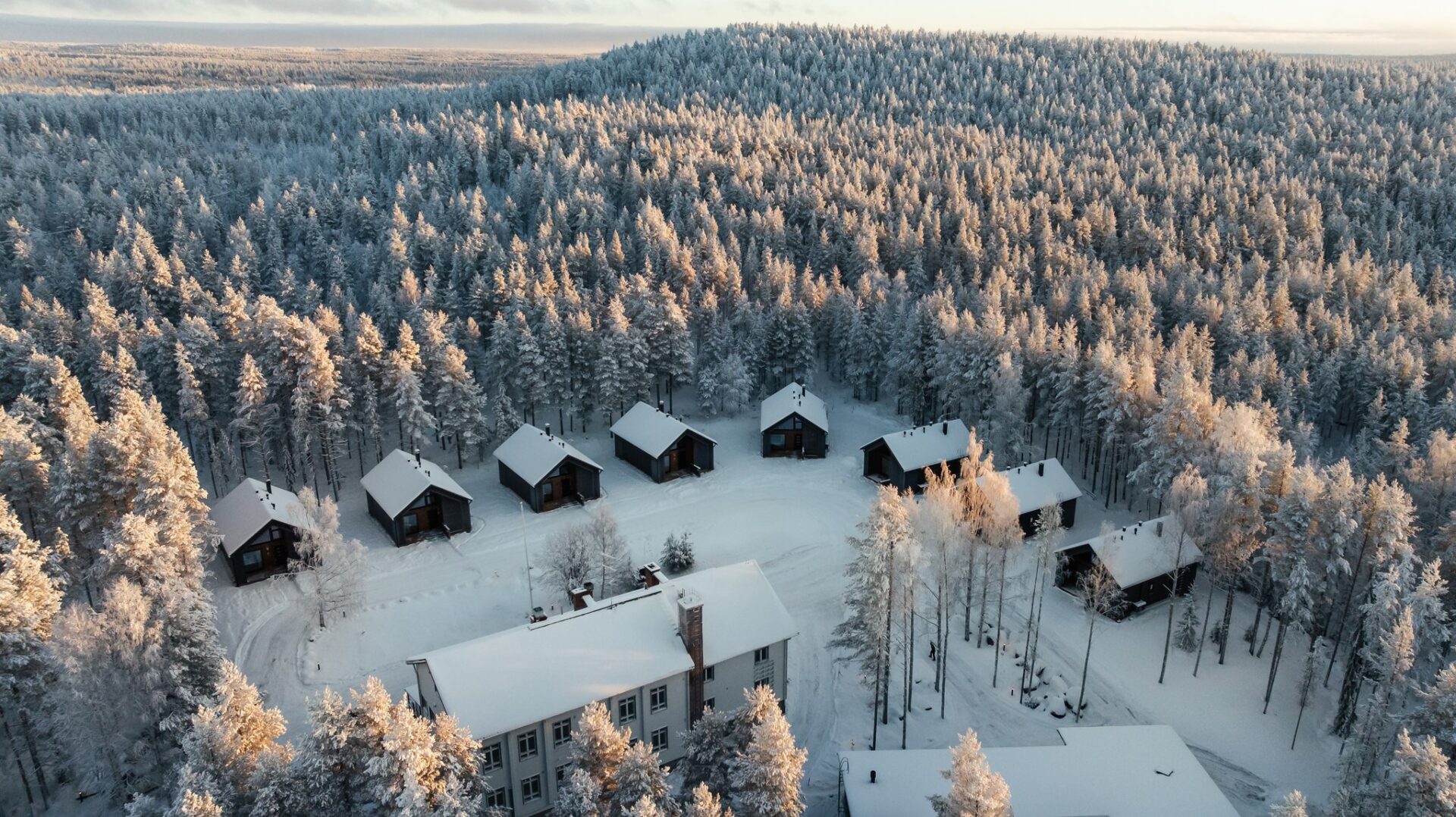
When we began planning in detail, I spent hours sitting in different parts of the grounds — lying in the snow where each cabin would stand — to understand the feeling of every location. The former school yard and sports field allowed us to position the accommodation without clearing the forest, and Norvajärvi had a magical quality of light and peace I wanted others to experience.
Describe where we are – the landscape and culture specific to the area.
To understand where we are, it helps to understand that “Lapland” means several different things at once. It is an administrative region of Finland, but also a globally recognised destination associated with snow, wilderness, Christmas and the Northern Lights. Within it are older cultural landscapes such as Peräpohjola, where we are, and the wider Northern region overlaps with Sápmi, the homeland of the indigenous Sámi people, which extends across several national borders.
Skýra is on the northern shore of Lake Norvajärvi, approximately 17 kilometres northwest of Rovaniemi. Rovaniemi is often presented internationally as a remote Arctic destination, but for those of us who live here, it is also an ordinary and active regional capital. It has welcomed travellers for generations, and hospitality is deeply embedded in the region.
Norvajärvi expresses another side of local life. It is one of the larger lakes in the Rovaniemi area, covering approximately 1,180 hectares, and many local families have cottages along its shores. Retreating to a simple lakeside cabin is a very Finnish tradition. Due to the volume of holiday homes we sometimes jokingly call it “the Hamptons of Rovaniemi”, although the glamour here is more likely to involve woollen socks and sauna.
The old village school makes that continuity particularly visible. Built from local logs in 1952, it educated generations of children and served as a meeting place for the entire village. It belongs to the history of post-war Lapland, when Rovaniemi and its surrounding communities were rebuilding after the destruction of the Lapland War.
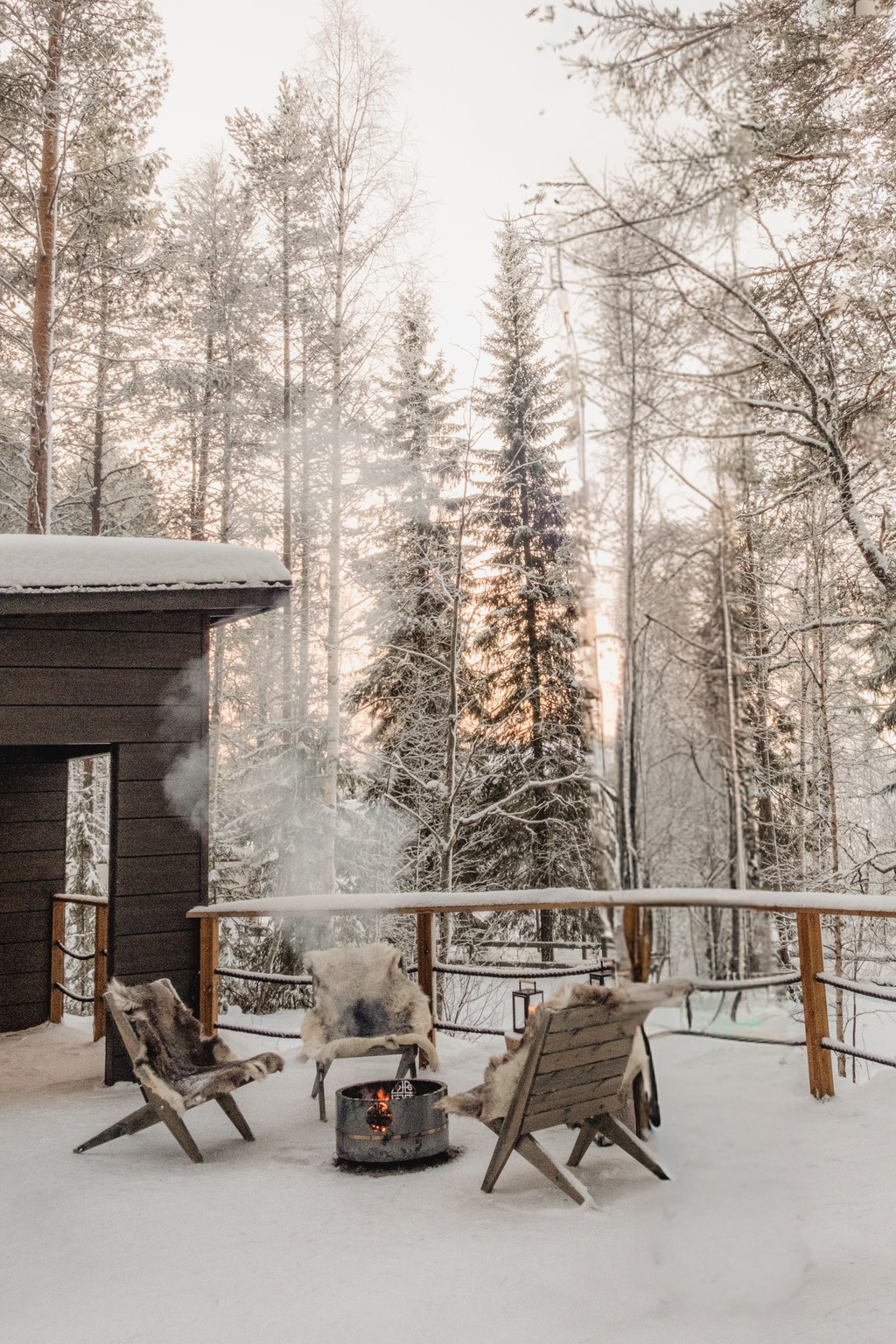
Nature here is defined by constant change. Winter begins with the Polar Night, freezing water and the first snow, before deepening into blue light, heavy snow and a frozen lake where guests can walk, ski and fish beneath the open sky. From autumn through spring, the Northern Lights are often visible directly above the retreat, with the open lake providing an exceptionally clear view. Spring brings dazzling light and longer days; summer, the Midnight Sun and light-filled nights; and autumn, ruska, when the forest turns red, ochre and gold. In Lapland, the changes in light are as significant as those in temperature, shaping how people live, move and understand time.
There is a powerful sense of continuity here: generations have lived beside this lake, children once walked to school here, and villagers gathered in what is now our restaurant.
What makes a good hotel to you?
To me, a good hotel is one in which everything the guest encounters makes sense. The flow of the spaces feels intuitive – from where you place your bag on arrival to how you check in, where water is available and how the lighting changes throughout the day. These details may seem small, but together they determine whether a guest can truly relax.
Above all, a good hotel is designed for sleep. People come to hotels to rest, and an exceptional bed, proper pillows and duvets, thoughtful lighting, quiet and an understanding of sleep health should be fundamental – especially in a wellness hotel like ours. Sleep, in all its simplicity, is one of the most powerful recovery tools available to the human body.
Luxury cannot be created simply by manufacturing beautiful surroundings and calling them luxurious. Nor is great service only about technical precision or formality. It is about deep empathy, expressed at every level: in the design, the service, the language and the way a team anticipates what a guest might need. The spaces and service must be designed around that empathy from the beginning.
What feeling did you want to create for guests?
What speaks to people first is whether a space makes them feel that they belong. I cannot stand environments that make people feel foolish or excluded—as though they are overdressed, underdressed, the wrong size, too tired or somehow not sophisticated enough to be there.
At Skýra, I wanted that feeling to be one of being genuinely looked after: somebody has thought about you, considered your preferences and needs, and prepared for your arrival accordingly. Everything comes back to care.
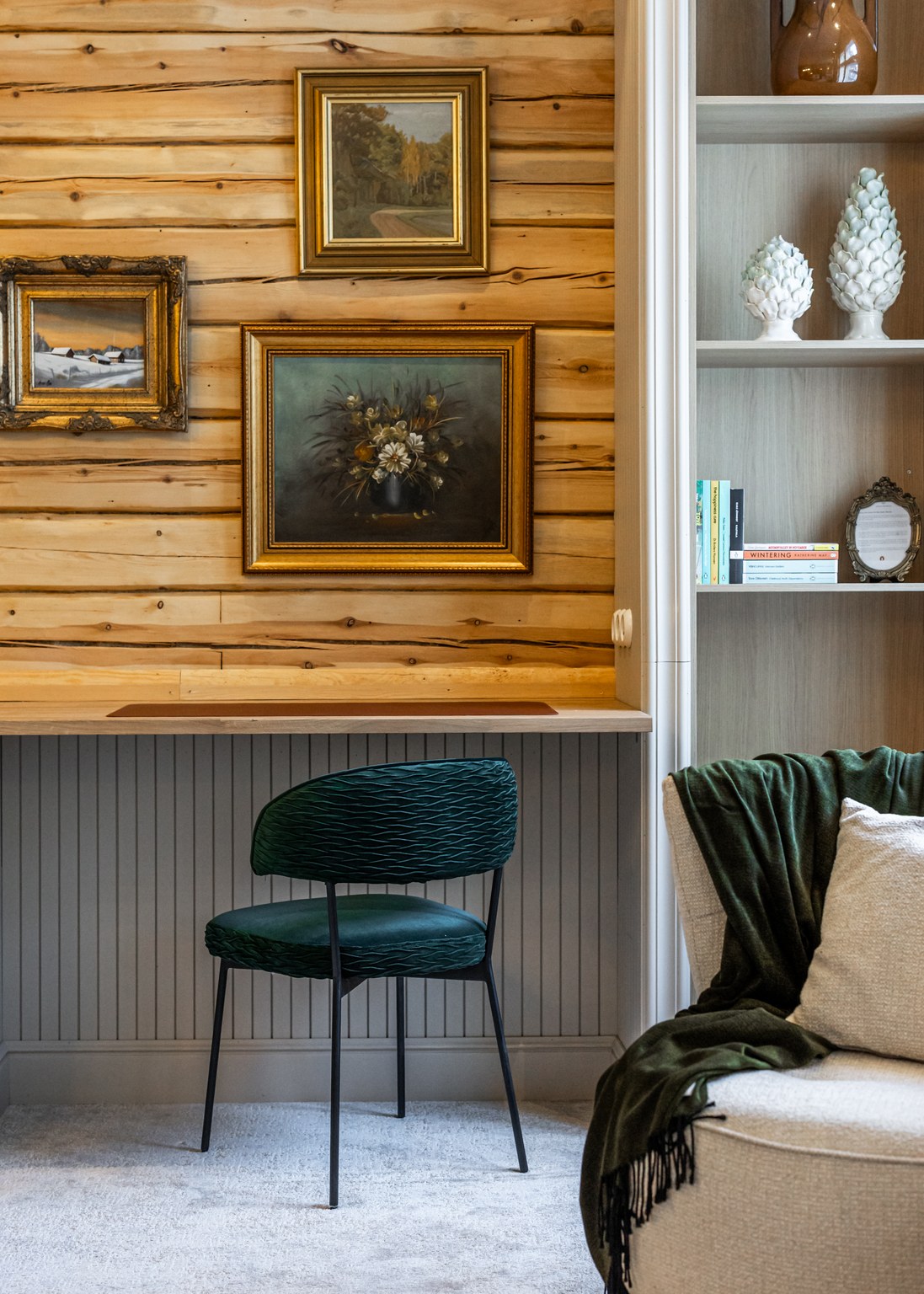
The spaces are beautiful – I am an aesthetic person, and I believe beauty gives the eye somewhere to rest – but the beauty here is rustic and slightly bohemian, shaped by the old building and the rawness of the surrounding Lappish landscape. You should feel equally at home in padded winter trousers or a cocktail dress. There is no posing at Skýra.
What do you think sustainability looks like today?
Sustainability has become a very broad word. It can easily be reduced to a collection of visible gestures: a sign about towels or the removal of a few plastic items. Those choices are important and matter, but sustainability must ultimately shape how decisions are made throughout the hotel.
Hotels are places of consumption. We heat buildings, use water and electricity, wash linen, prepare food, purchase amenities, move people and goods, and generate waste. The first responsibility is therefore to examine those systems honestly.
At Skýra, our most significant decision was to work with what already existed. Rather than demolishing the former village school, its original log structure was uncovered by hand over three years, preserved and adapted for contemporary comfort and energy efficiency. The new log buildings were designed for longevity and for the realities of an Arctic climate, with modern insulation, energy-efficient systems and durable materials chosen to age well rather than require constant replacement. They were positioned on the former school playing field, allowing us to develop the accommodation without clearing the established forest in front of them.
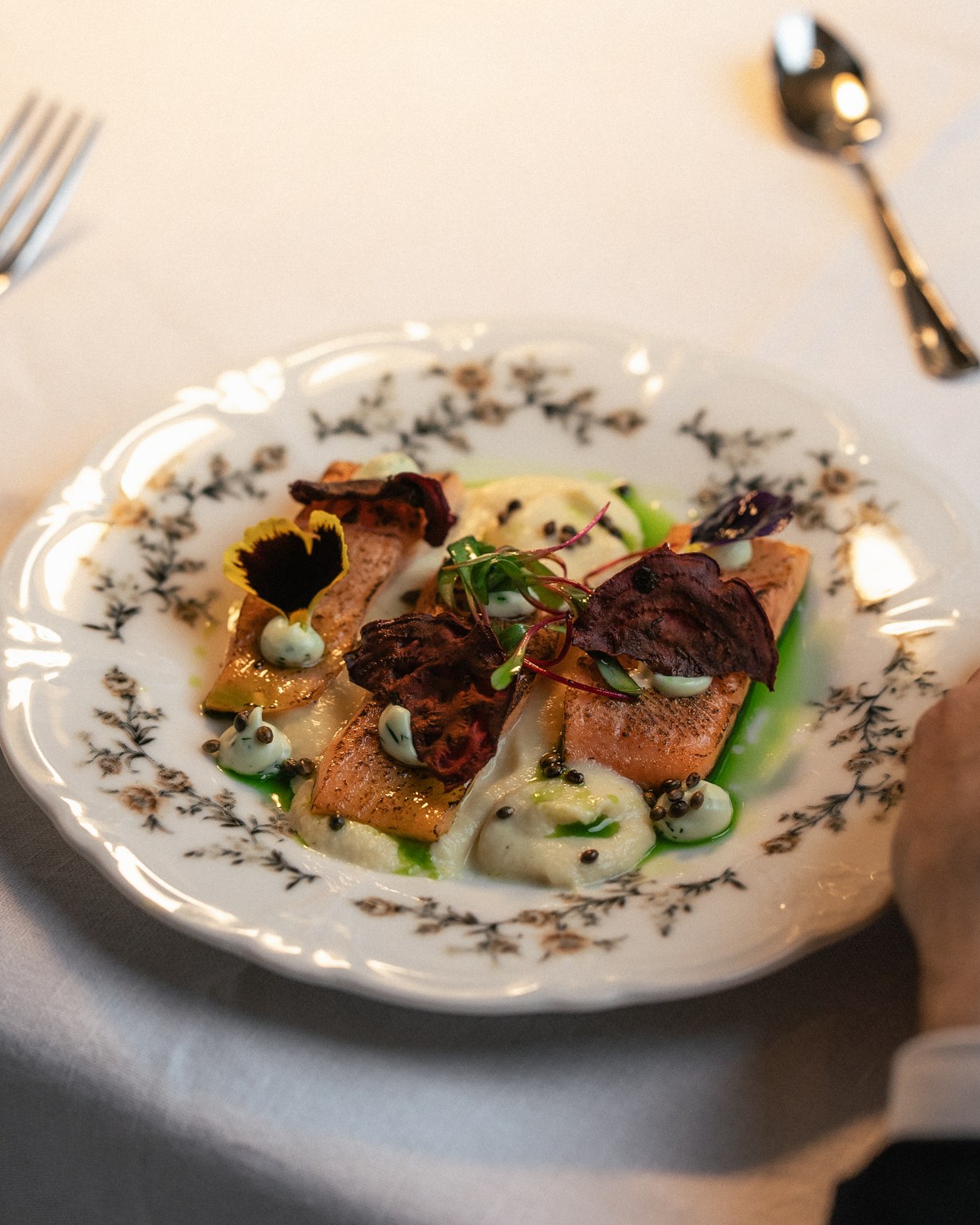
Food is another area where hotels can make an immediate difference. Our menus are seasonal and grounded in Nordic ingredients with near-zero waste. Working with Finnish producers, local guides and specialist practitioners keeps knowledge and economic value within the area. It creates experiences rooted in the place so that guests can truly understand where they are.
But I believe the next stage of the sustainability conversation must be social and human. A hotel cannot call itself sustainable solely because its buildings are energy-efficient. Sustainability concerns how people are employed and supported, how partnerships are formed, who benefits economically and whether the surrounding community still feels that the destination belongs to them.
Ultimately, sustainability means extending hospitality beyond the paying guest. It is care for the people doing the work, for the community living alongside us, for the building and history entrusted to us, and for the nature and landscape that will remain after we are gone.
Share this article
Latest stories
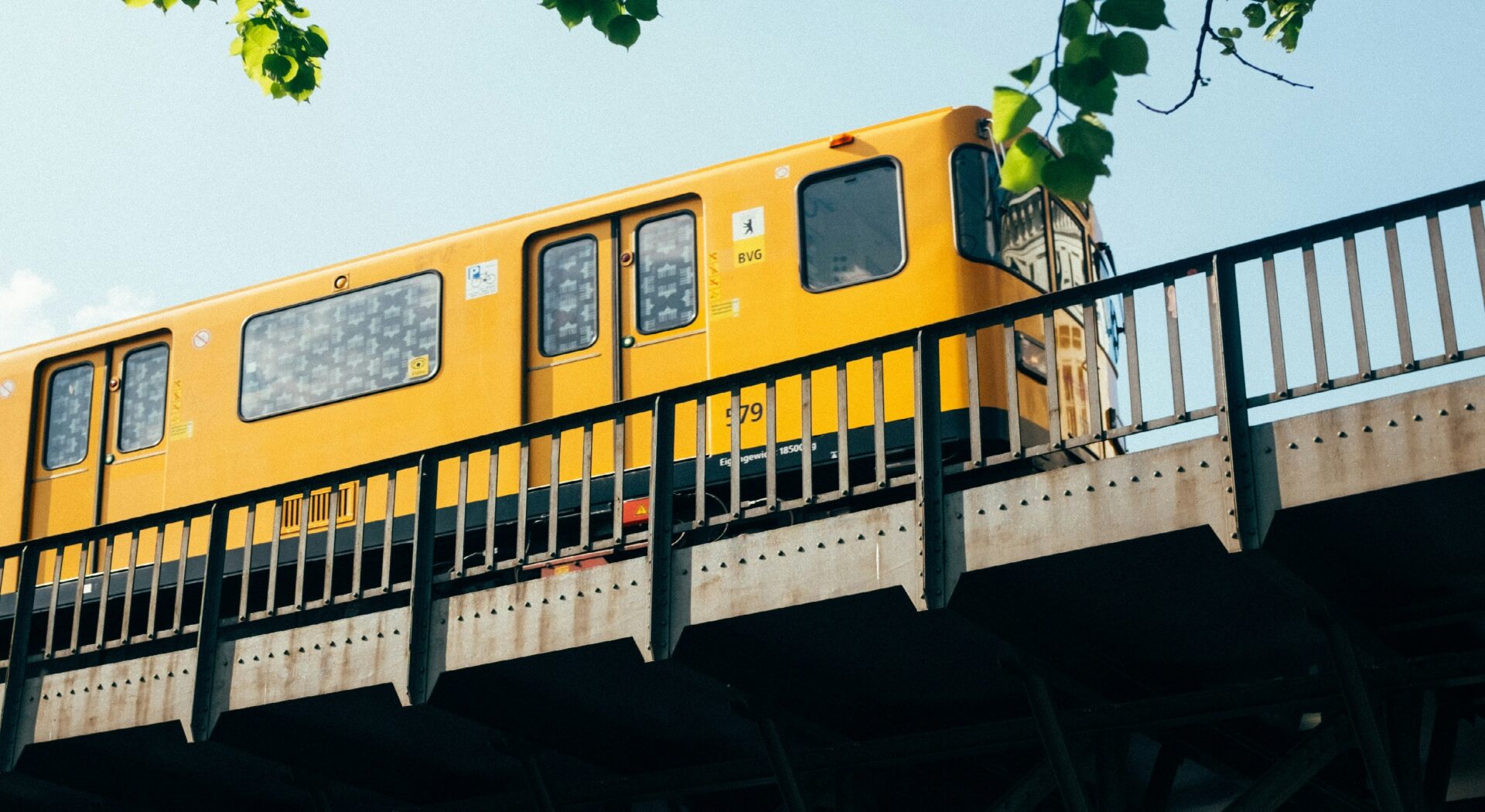
Making tracks: a train journey taking in six European cultural capitals
It’s official – inter-railing is back, as travellers increasingly swap flights for the speed and ease of Europe’s rail network. Think zippy connections, city-centre arrivals, and stress-free border crossings: train travel is one of the fastest, most convenient, and still sustainable ways to explore the continent. Get ready for a
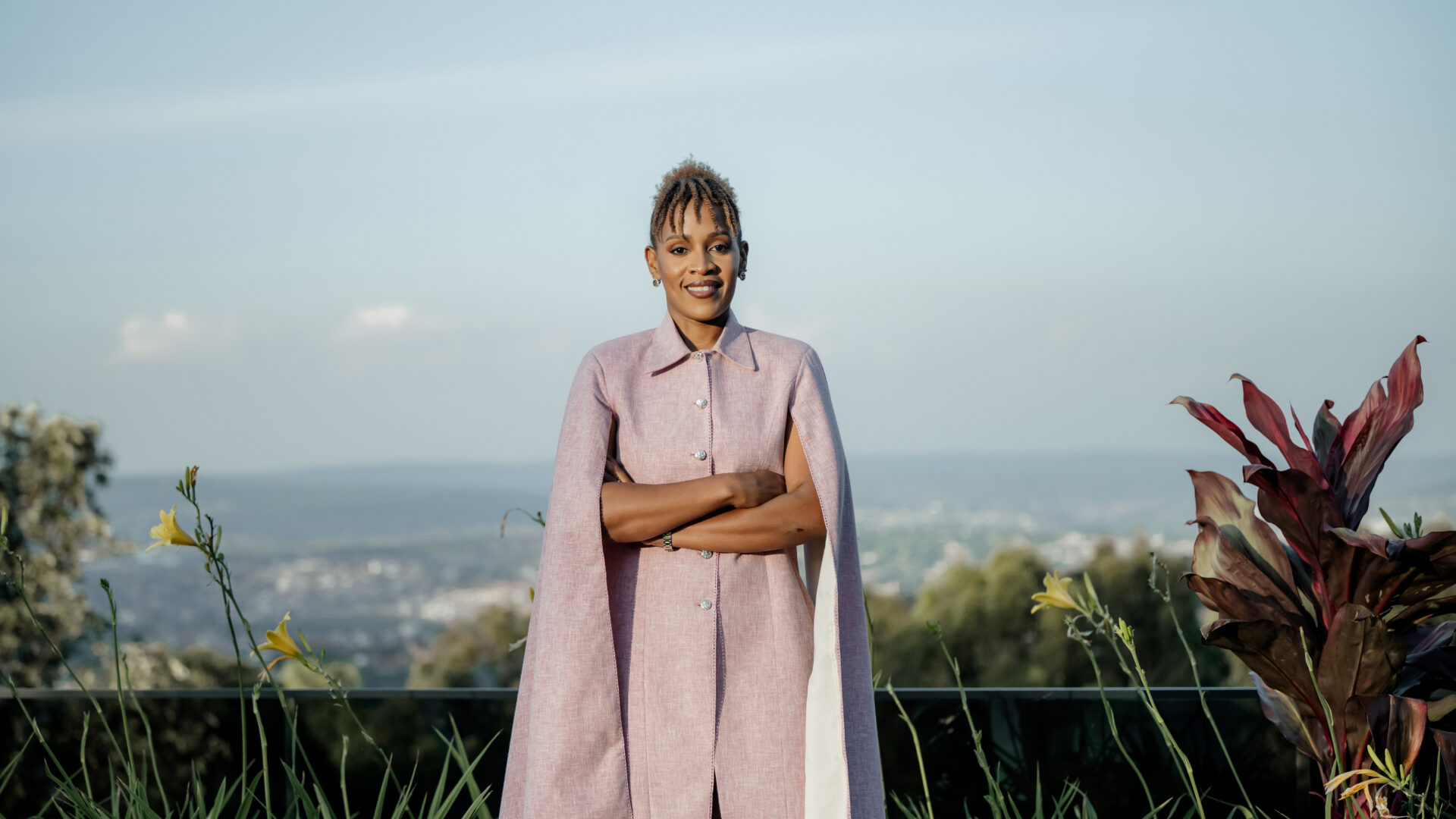
Independent Minds: Sheila Kyarisiima, The Pinnacle Kigali
High above Kigali on Rebero Hill, The Pinnacle offers sweeping views across the city, bringing contemporary luxury together with a strong sense of place. What began as a private family retreat has evolved into a destination that celebrates Rwanda’s culture, creativity and community. Here its founder, Sheila Kyarisiima, shares the
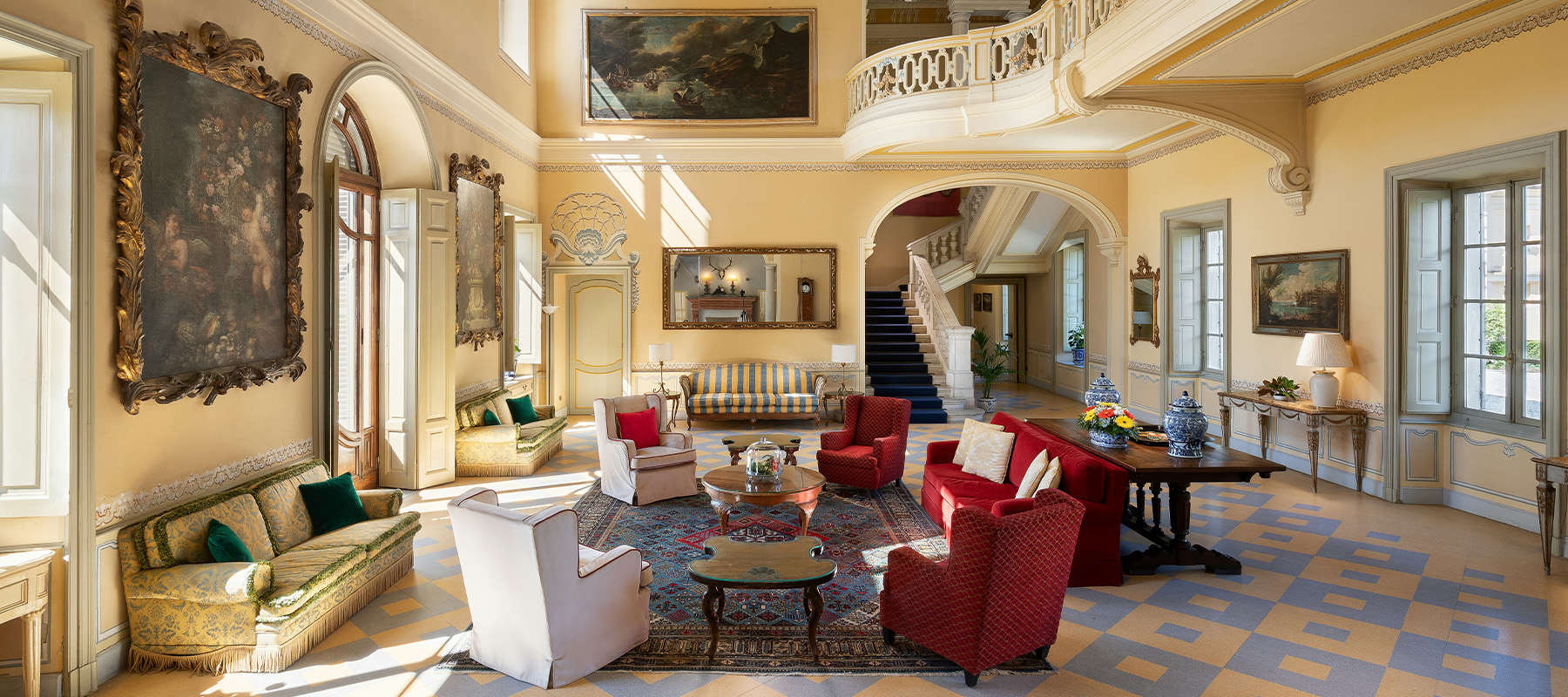
A postcard from: Piedmont with Sina Villa Matilde
Piedmont may be one of Italy’s less-travelled regions, and that is precisely part of its appeal. Sitting at the foot of the Alps, the landscape is a mix of rolling hills, family-run wineries and elegant country estates, with excellent food and wine at its heart – some might even say
Our edit of hotels to book in October
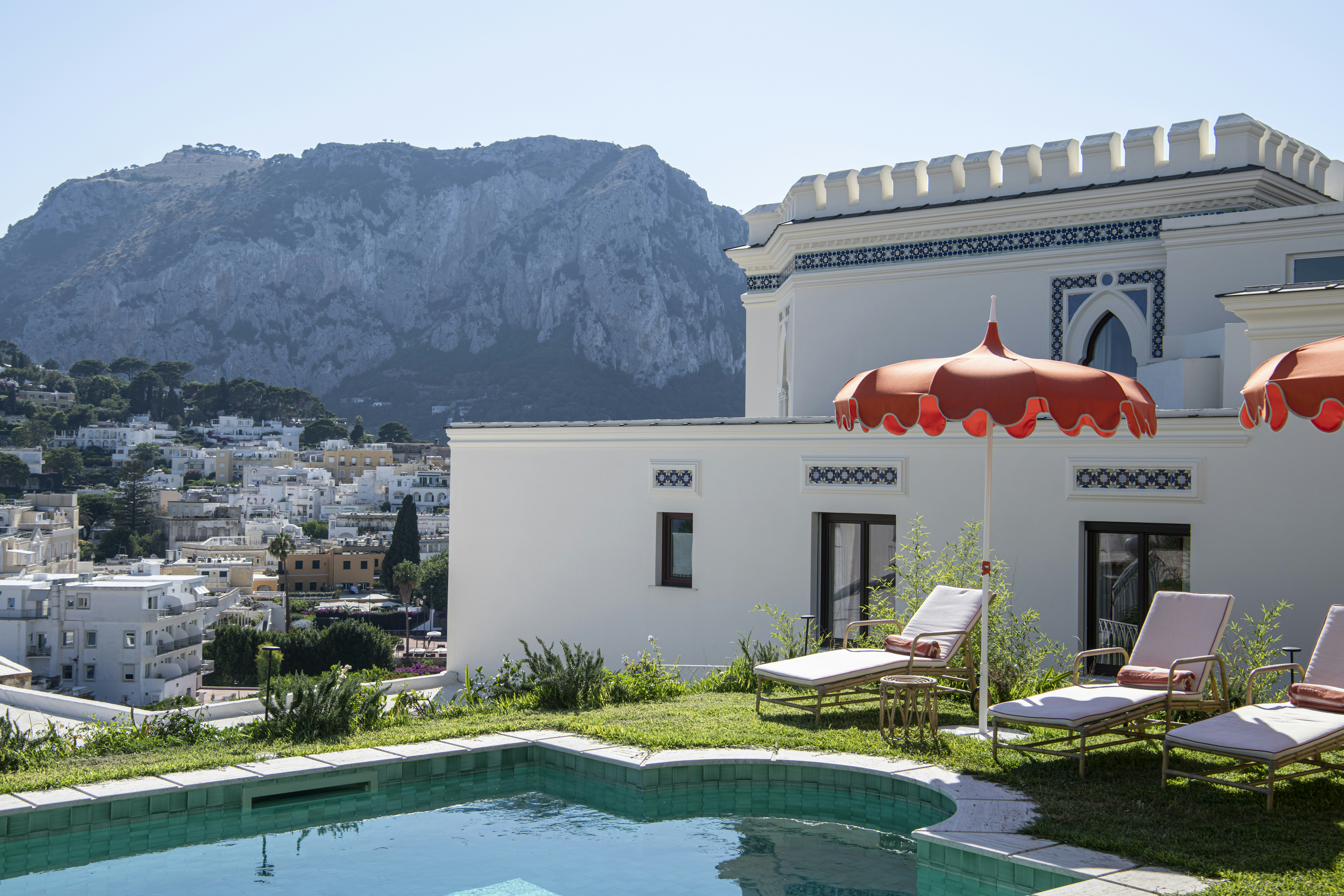
From a colourful restored villa in glamorous Capri to a private island with overwater villas in Indonesia, October brings a new crop of hotels worth knowing about. These are the openings catching our eye this month – some are historic properties given a new chapter, while others bring contemporary flair