
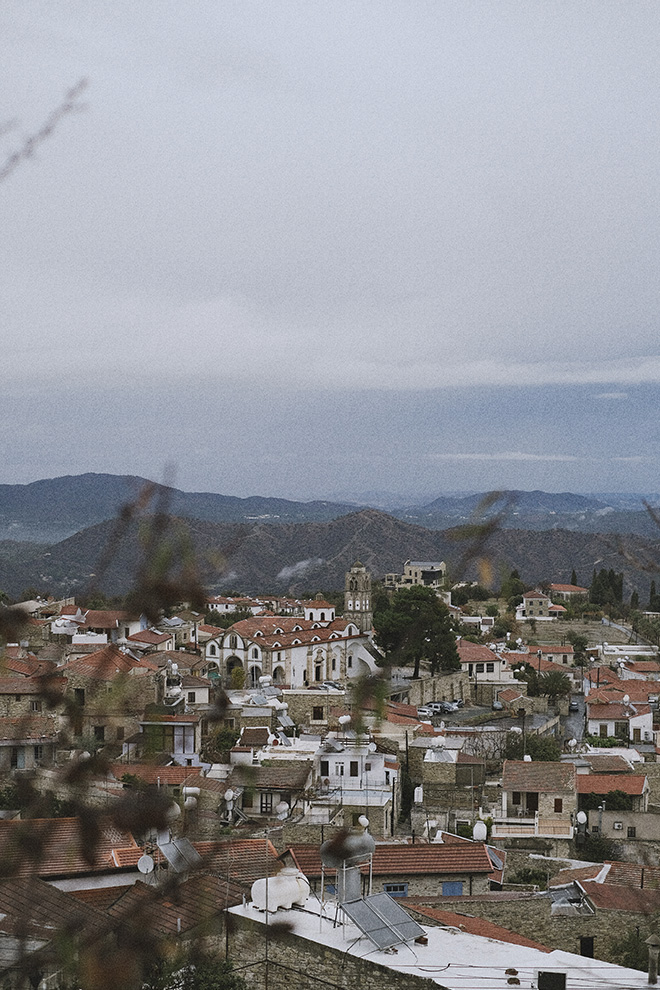
Out of season in Cyprus, Lefkara doesn’t ask for your attention; it earns it by refusing to compete. The streets are narrower than you expect, the stone cooler under your palm than it looks, the air so clean it feels almost deliberate. You hear at your own pace: the sound of a door closing two alleys away, or the small, exact music of a place that is not trying to be elsewhere. In villages like this, time is not a line. It’s a surface. It lies across the day like light across plaster: moving slowly, pausing where it wants.
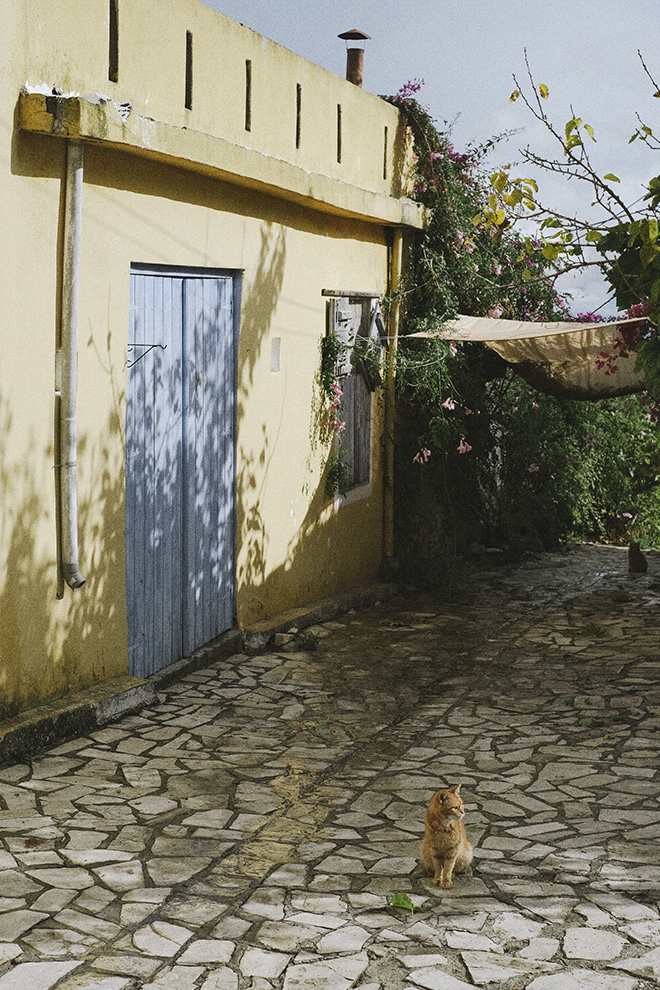
I walk without an aim and keep meeting scenes that feel like they had been left there for me, not staged but simply true: two chairs angled toward each other as if the conversation had only stepped inside for a moment; a blue door set into sun-warmed stone; branches throwing a pattern across a wall so delicate it looks drawn by hand.
The Agora Hotel
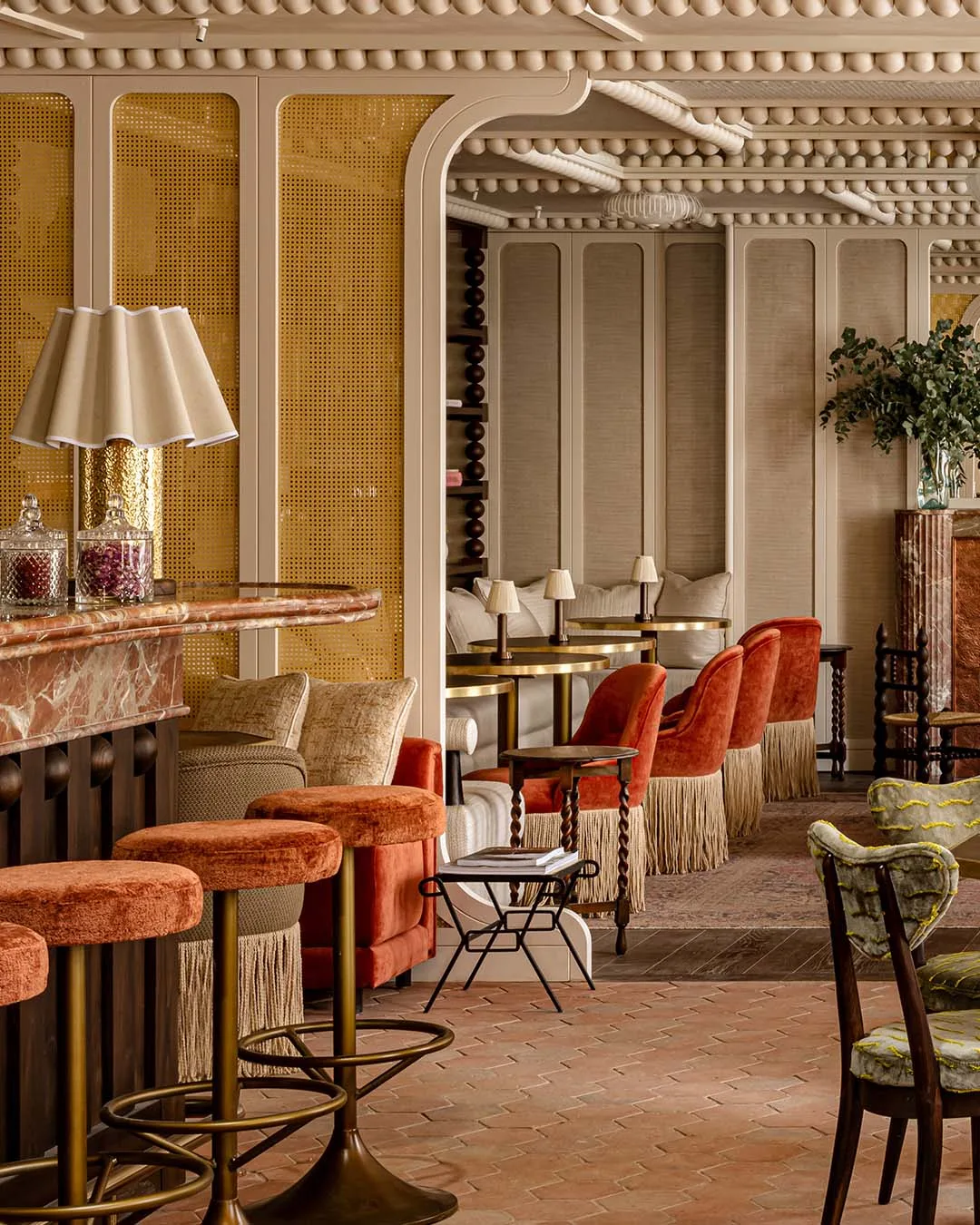
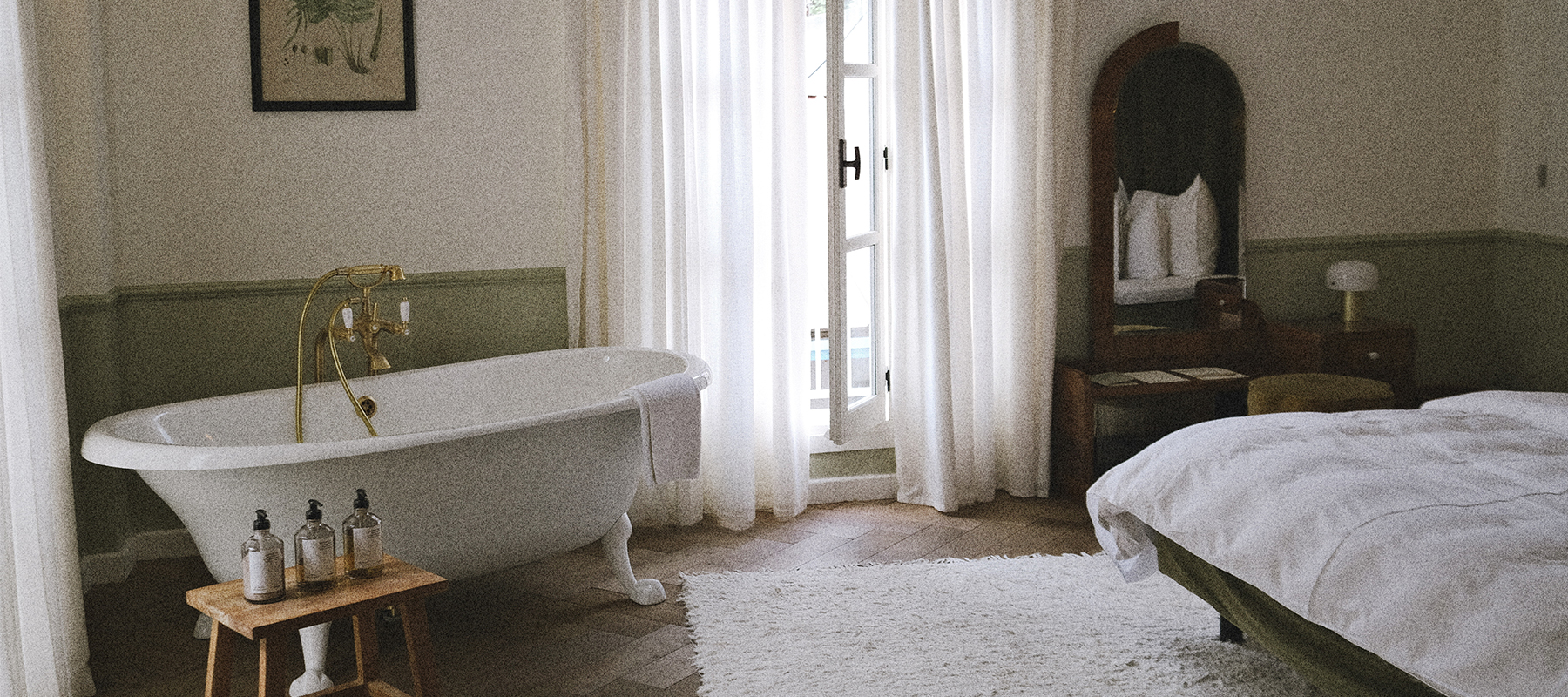
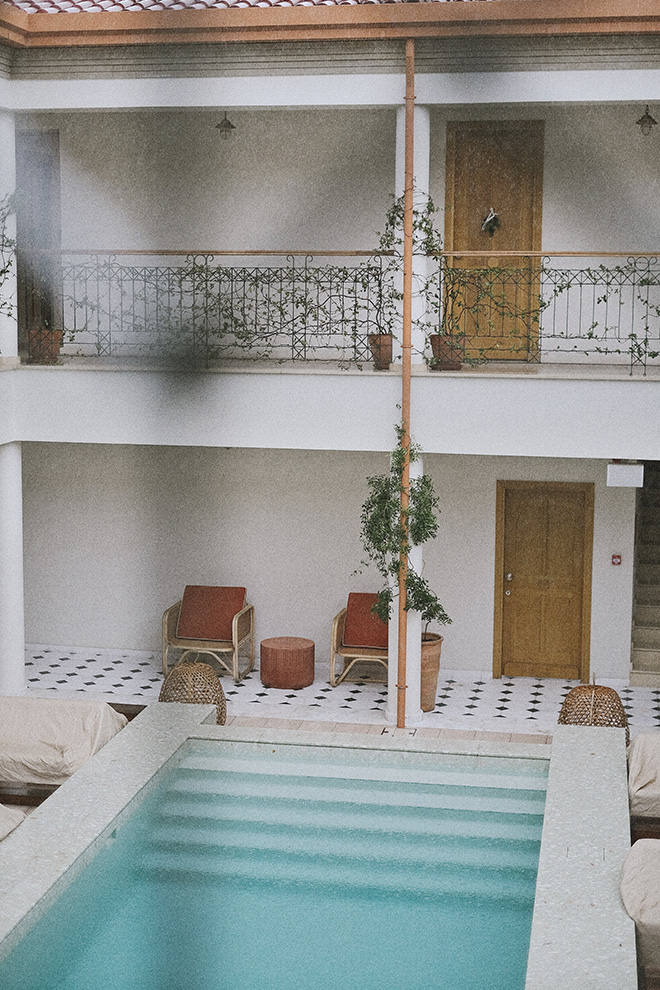
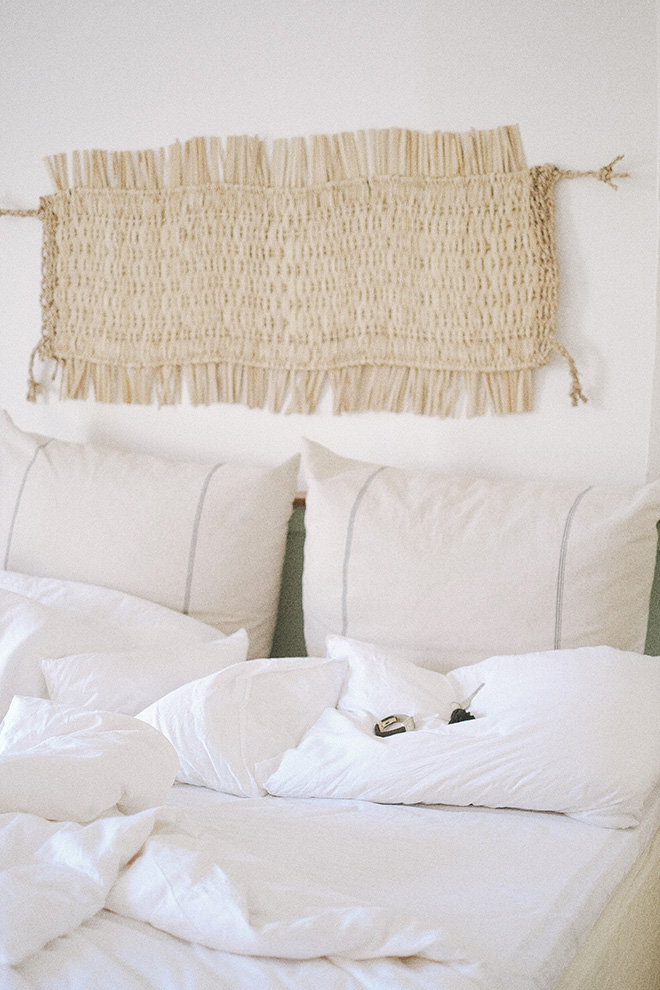
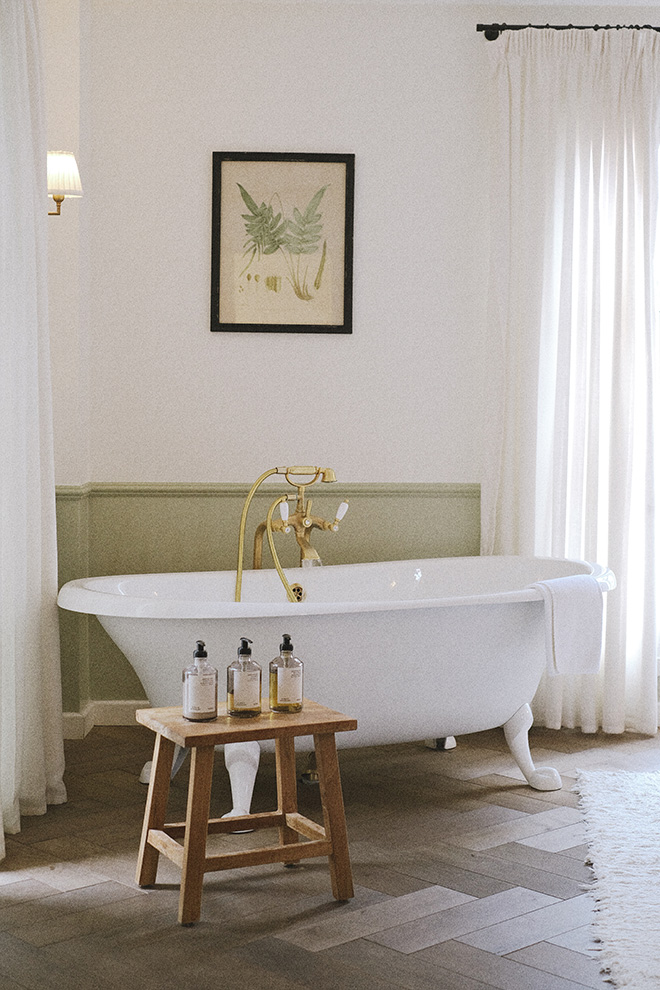
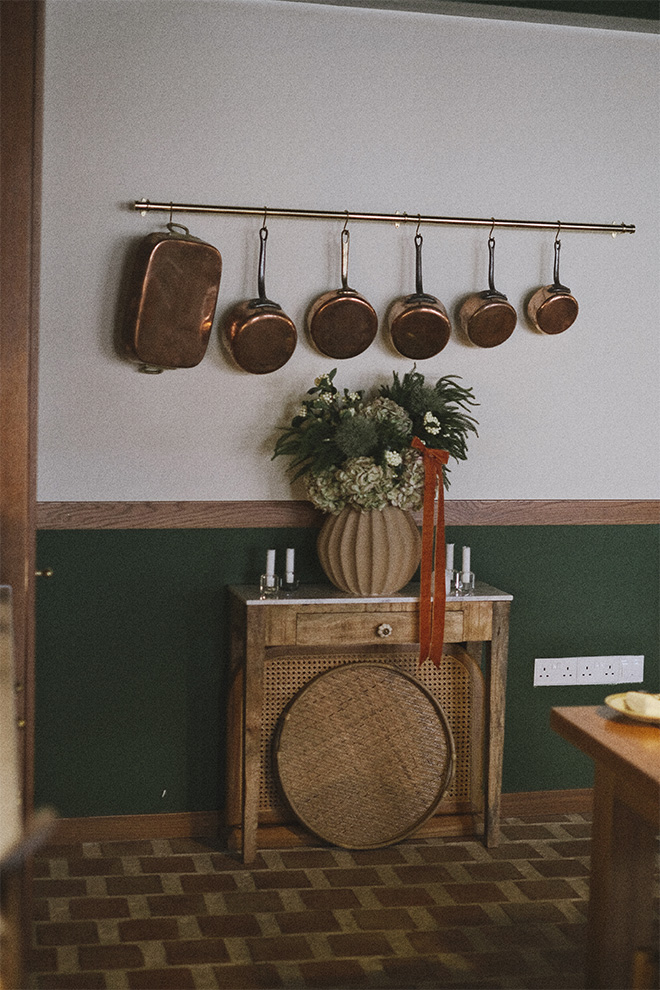
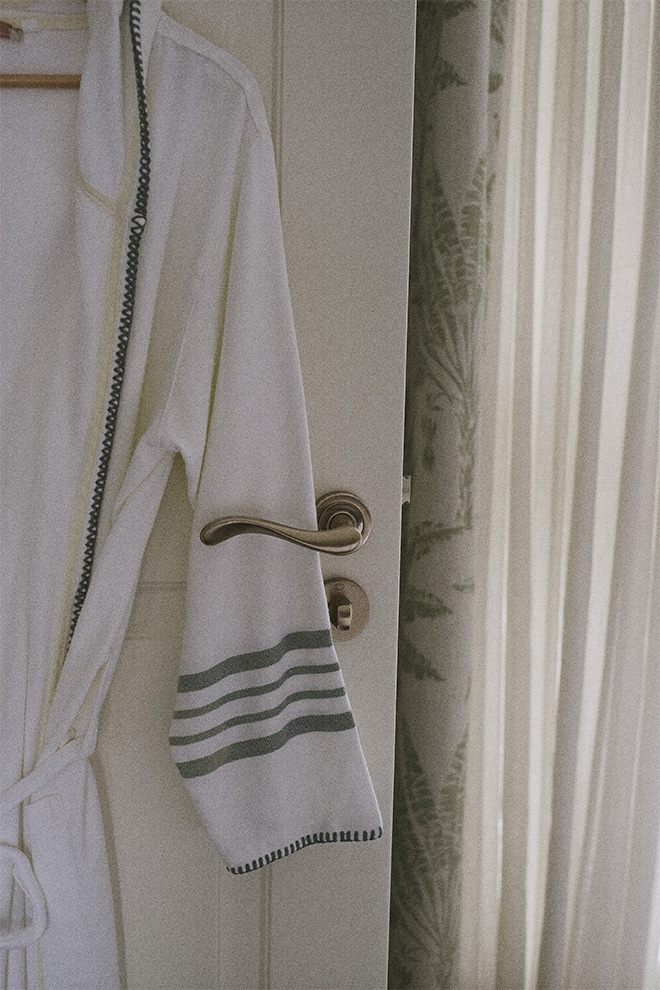
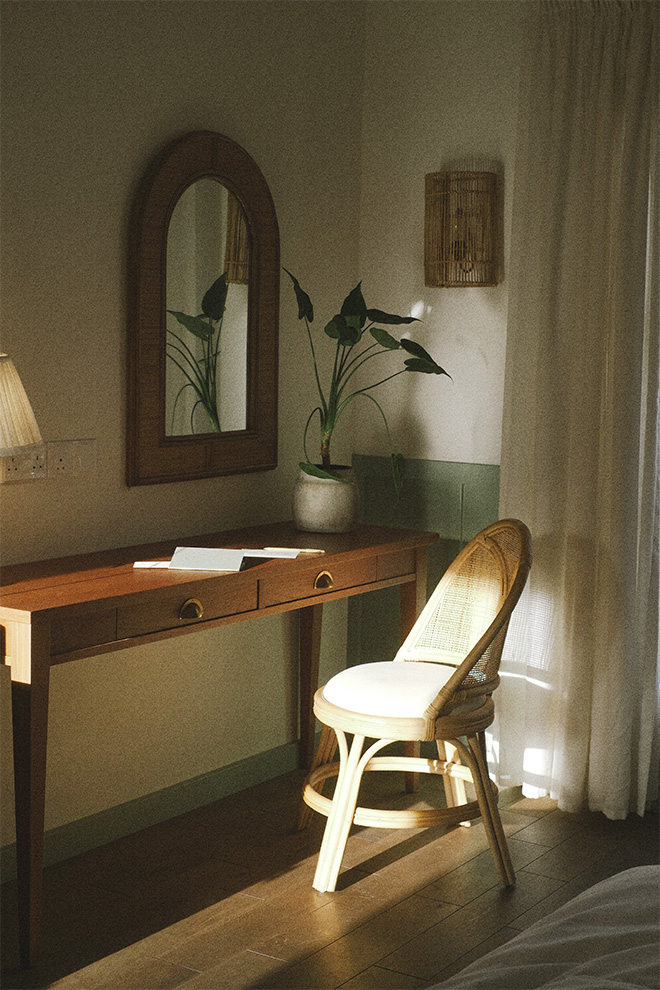
The Agora Hotel sits in the middle of this rhythm like a sentence you don’t want to end. The hush inside is not the quietude of a museum (careful, restrictive) but the sense of calm belonging to a private house late in the afternoon, when someone has just opened the windows and then left you alone.
Even my footsteps soften. I begin to notice the smallest things, which is always the first sign that you’re returning to yourself. The way fabric sounds when you move more slowly. The quiet click of the latch. The difference between silence and stillness.
At night, the village outside dims into a soft darkness, but inside the hotel the light never feels harsh; it is lowered and intimate, like someone has placed it there to protect the evening from the world.
And because my pace has changed, Lefkara changes too. I stop seeing the village as architecture and begin to feel it as a craft. That’s when the villlage’s longstanding lace tradition (known as lefkaritika, a tradition recognised by UNESCO as Intangible Cultural Heritage), stops being a fact and became a sensation. Lace is patience made visible; it is emptiness placed on purpose; it is repetition turned into meaning.
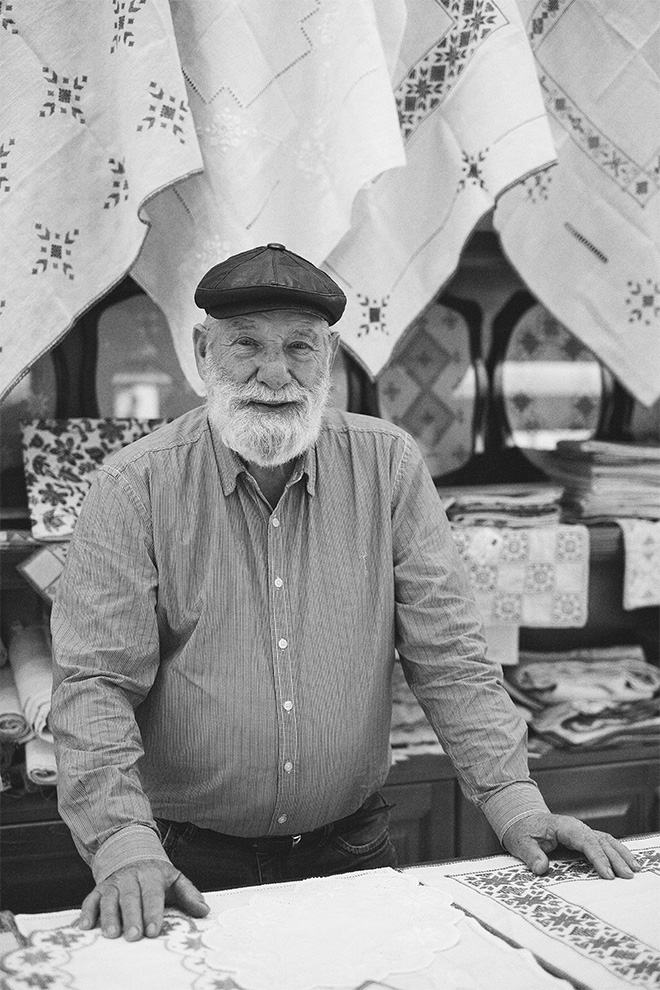
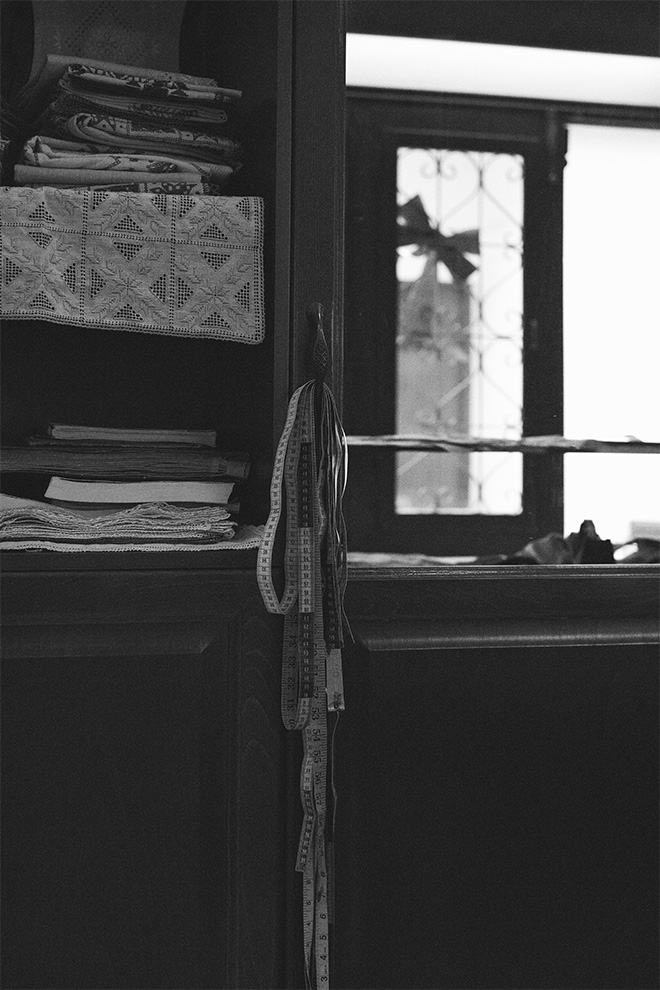
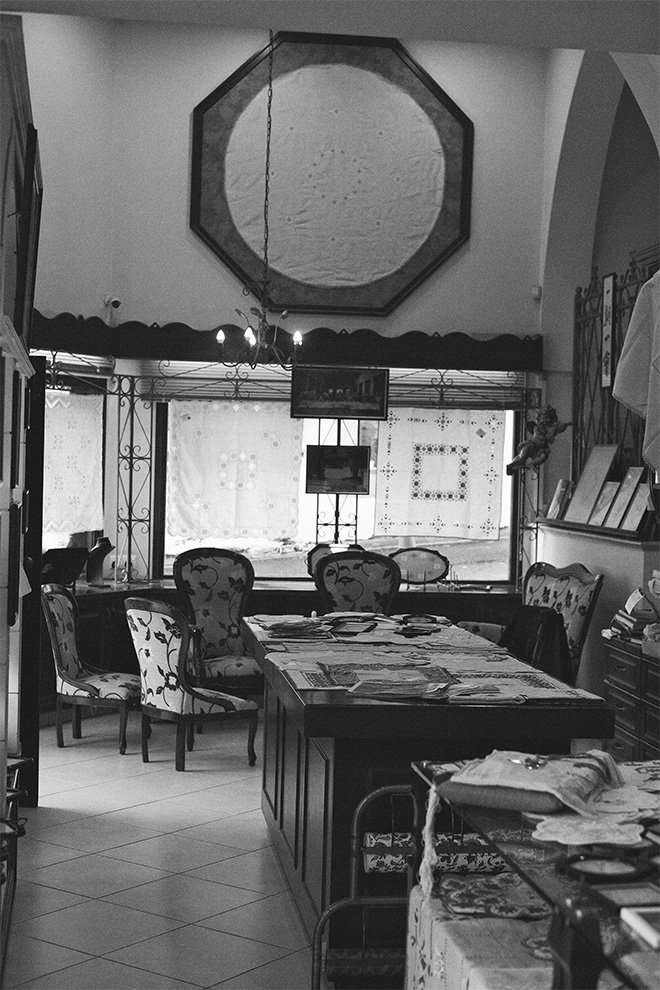
I visit the Rouvis family and feel, immediately, the difference between a tradition that is displayed and a tradition that is lived. It isn’t a showroom. It is a working room. Tools are present without being exhibited. Cloth lies where cloth is laid when it is part of everyday life. Time is not celebrated; it is spent: quietly, faithfully. Michael Rouvis holds his attention the way a candle holds flame in a draft: calmly, carefully, without drama. Watching him work the lace, I realise something that made me unexpectedly emotional: the world doesn’t usually end traditions by attacking them. It ends them by rushing past them. The fragility I feel here isn’t sentimental. It is the simple possibility that a millennial gesture can disappear not because it lacks value, but because it requires what we increasingly don’t give: time.
After this, the village looks like lace to me. Shadows stitched across plaster. Vines tracing careful lines up railings. Rooftops repeating a motif against the sky. Even the way the alleys loop back into each other is reminiscent of pattern-work; an intelligence built slowly, over generations, without haste. I keep thinking: this is what I needed. Not an escape: a correction.
That is the thread that ties Lefkara and The Agora together: not my images, not even my itinerary, but a shared belief in care. In Lefkara, care is ancestral: passed hand to hand, point by point. In The Agora, care is contemporary: built into quiet, into light, into spaces that don’t demand anything from you. They are two versions of the same kindness: the kind that doesn’t entertain you, but returns you.
When I leave, I don’t feel ‘refreshed’ in the simple, glossy way travel sometimes promises. I feel reassembled. I carry home a different tempo (subtle, almost invisible) like a fine thread caught on a sleeve. And in the days after, I find myself searching for that tempo again: in the way light moves across a room, in the sound of a door closing gently, in the choice to do one thing at a time.
Share this article
Latest stories
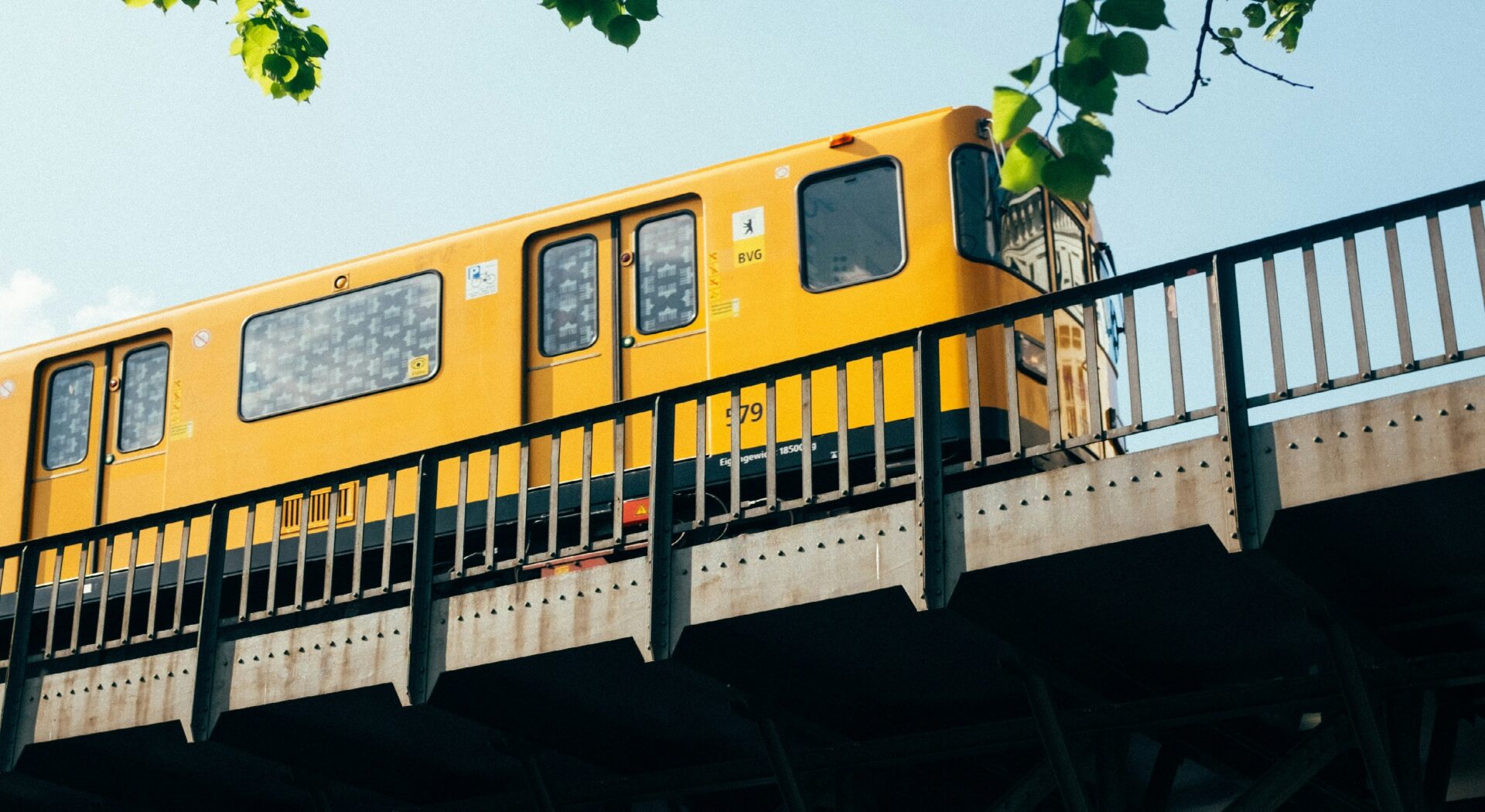
Making tracks: a train journey taking in six European cultural capitals
It’s official – inter-railing is back, as travellers increasingly swap flights for the speed and ease of Europe’s rail network. Think zippy connections, city-centre arrivals, and stress-free border crossings: train travel is one of the fastest, most convenient, and still sustainable ways to explore the continent. Get ready for a
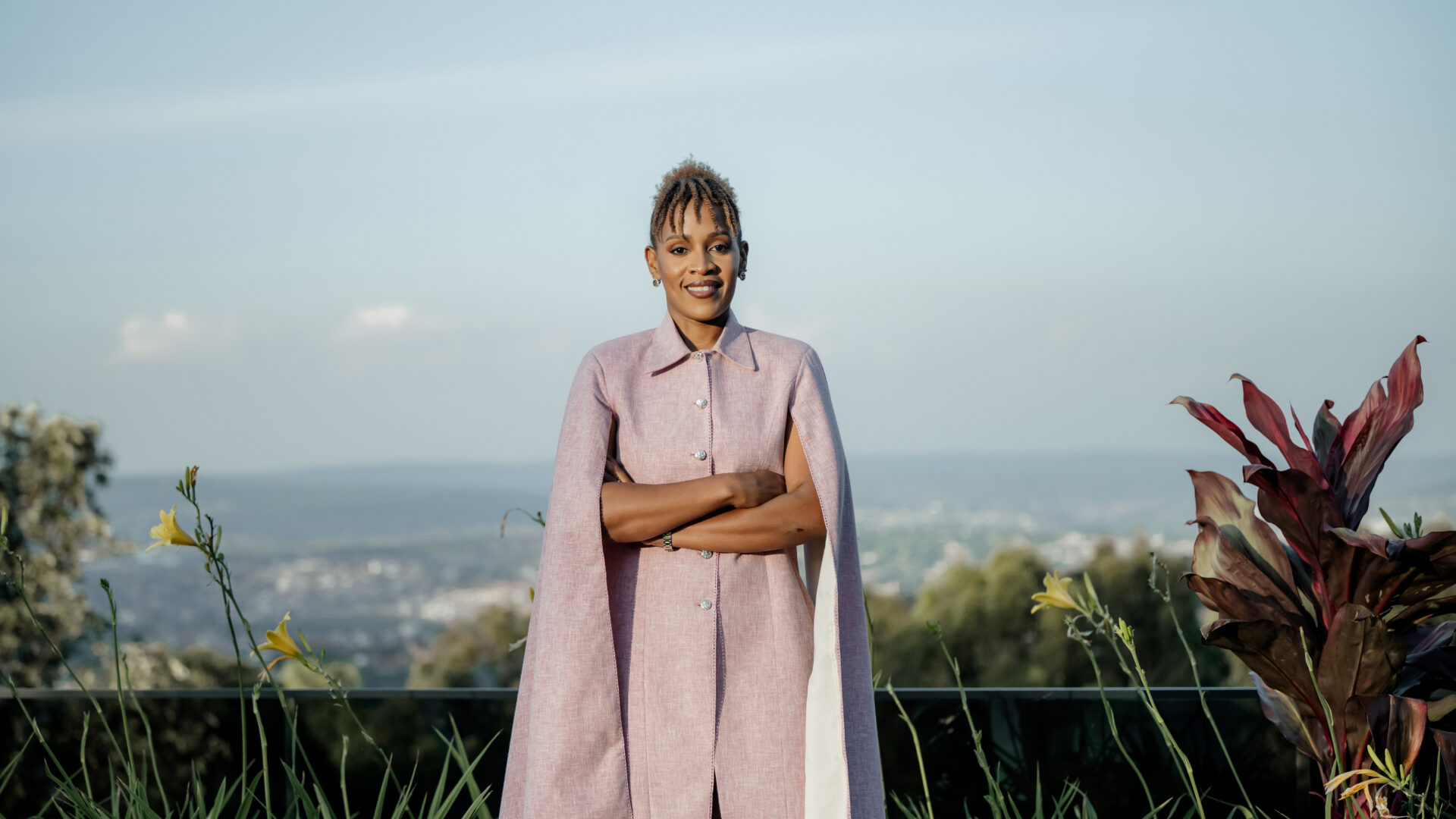
Independent Minds: Sheila Kyarisiima, The Pinnacle Kigali
High above Kigali on Rebero Hill, The Pinnacle offers sweeping views across the city, bringing contemporary luxury together with a strong sense of place. What began as a private family retreat has evolved into a destination that celebrates Rwanda’s culture, creativity and community. Here its founder, Sheila Kyarisiima, shares the
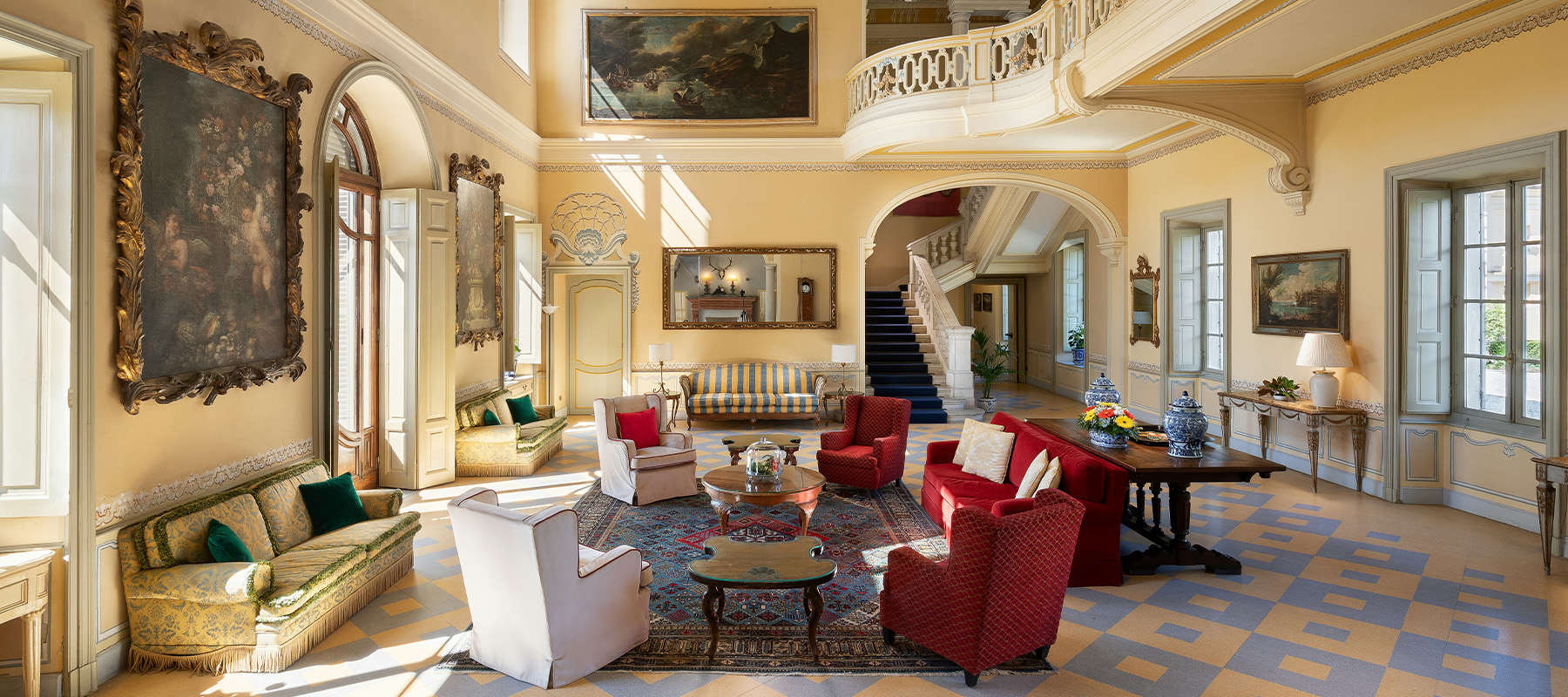
A postcard from: Piedmont with Sina Villa Matilde
Piedmont may be one of Italy’s less-travelled regions, and that is precisely part of its appeal. Sitting at the foot of the Alps, the landscape is a mix of rolling hills, family-run wineries and elegant country estates, with excellent food and wine at its heart – some might even say
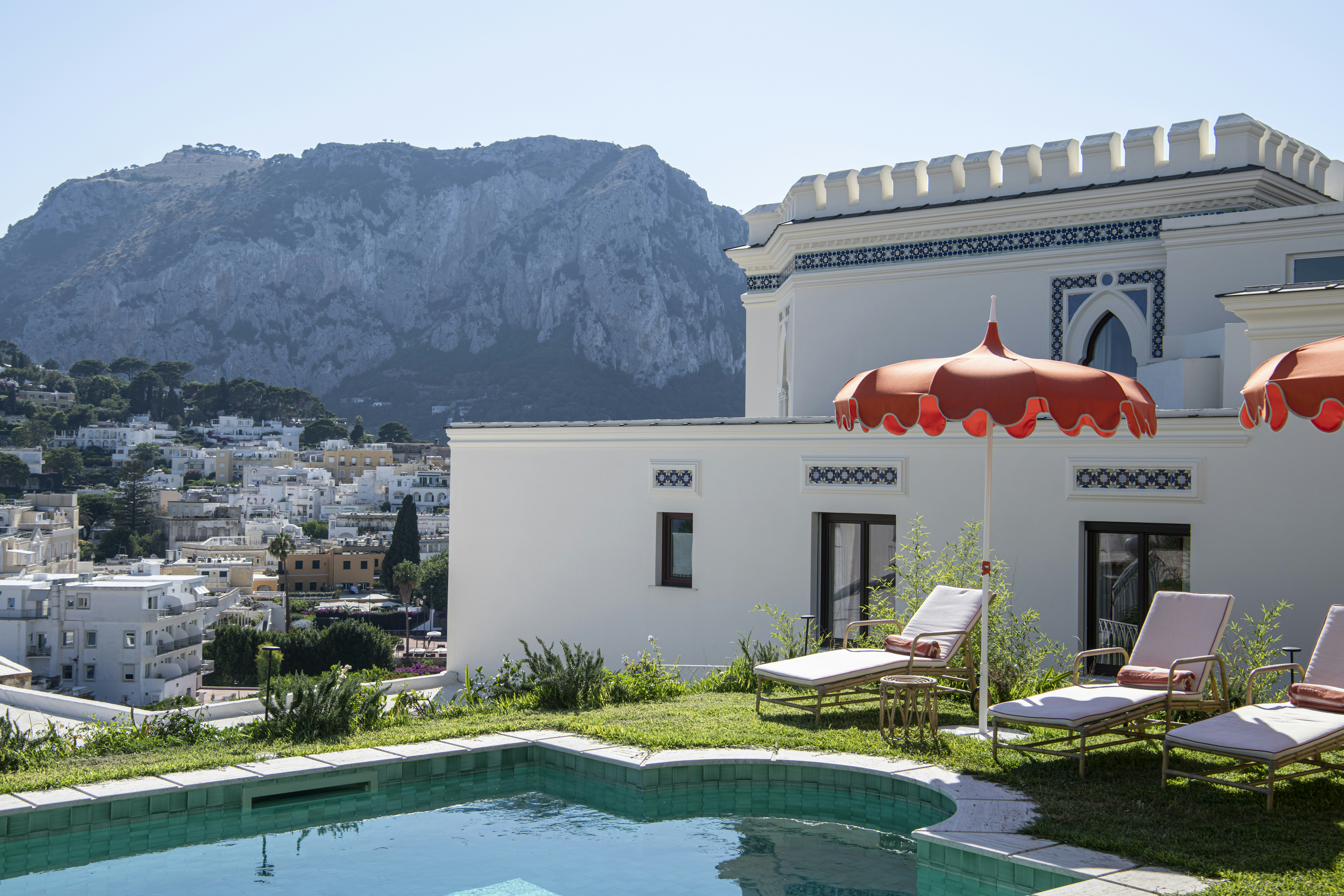
Our edit of hotels to book in October
From a colourful restored villa in glamorous Capri to a private island with overwater villas in Indonesia, October brings a new crop of hotels worth knowing about. These are the openings catching our eye this month – some are historic properties given a new chapter, while others bring contemporary flair