

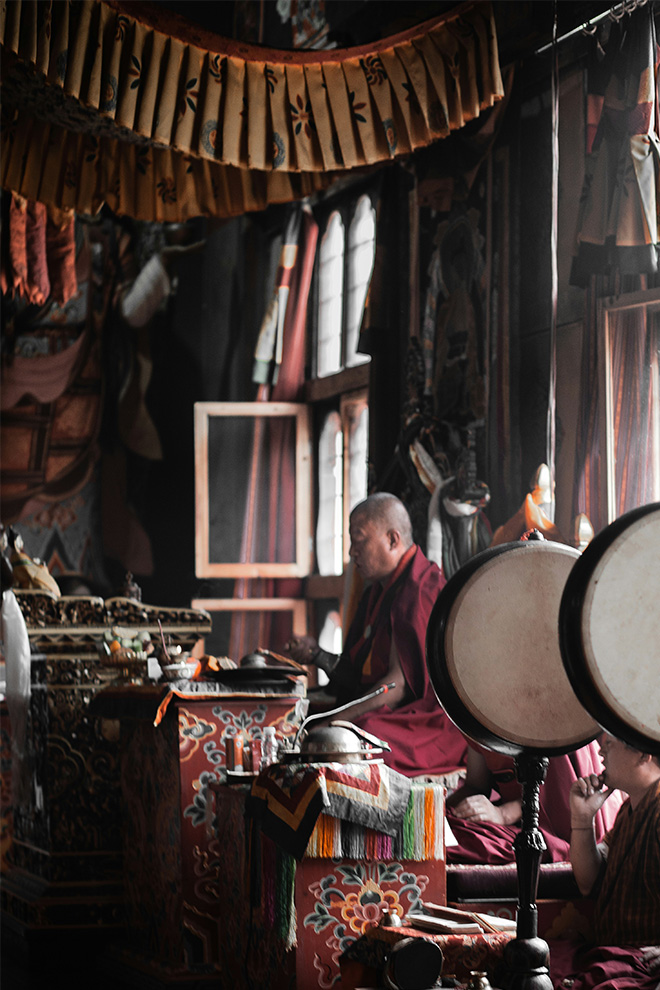
Several goblet-like lamps flicker within the colourful, ornate prayer hall at Gangtey Gonpa, a 17th century monastery on a mist-shrouded ridge overlooking Bhutan’s Phobjikha Valley. Filled with clarified yak butter, the lamps symbolise wisdom dispelling the darkness of ignorance (believed to be the root cause of human suffering in Tibetan Buddhism) and illuminating a path toward enlightenment. As a practicing Jain, an ancient Indian religion that espouses non-violence and asceticism among its major tenets, the metaphor of light banishing darkness is not foreign to me.
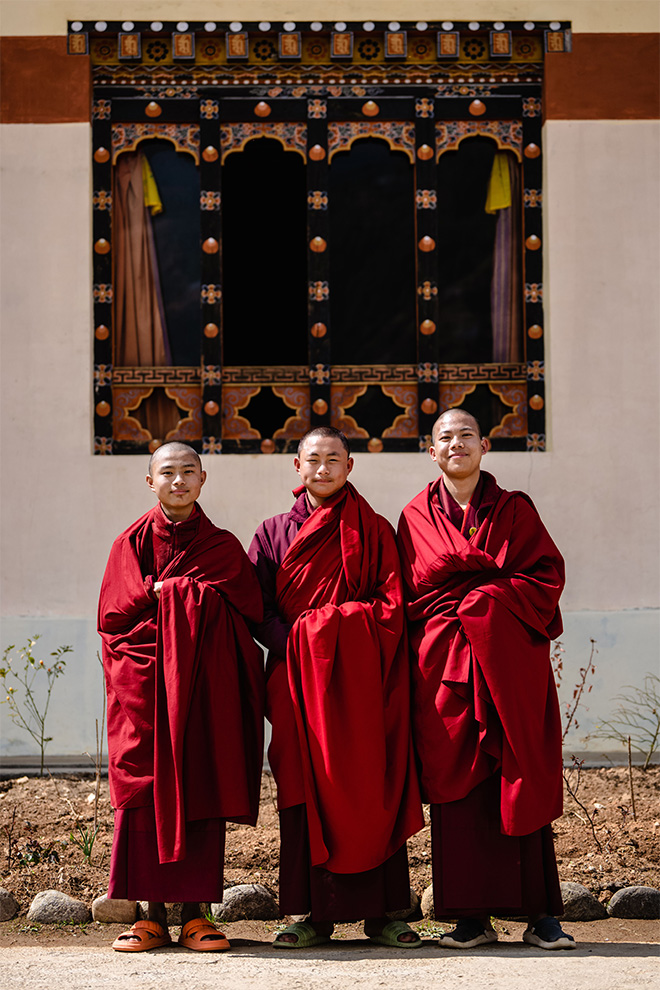
Seated cross-legged on the wooden floor in rows are a few dozen Buddhist monks dressed in maroon robes. The hall echoes with vibrations as they chant evening prayers. Occasionally, two of them beat ceremonial drums. Their deeply meditative state inspires me to reflect on my own awareness. How present am I? Is quieting my mind’s noise the key to happiness? Are my daily actions reflective of my values and goals?
But mostly, I feel extraordinarily fortunate to be witnessing this moment of melodic chanting and devotion. Though I wish my husband and children were here with me, I am travelling solo through this tiny Himalayan kingdom and finding that my solitude only heightens the country’s spirituality, which seems to pervade every aspect of life, society and even government. Bhutan’s allure is as much the culture and people as it is the journey inward that it promotes.
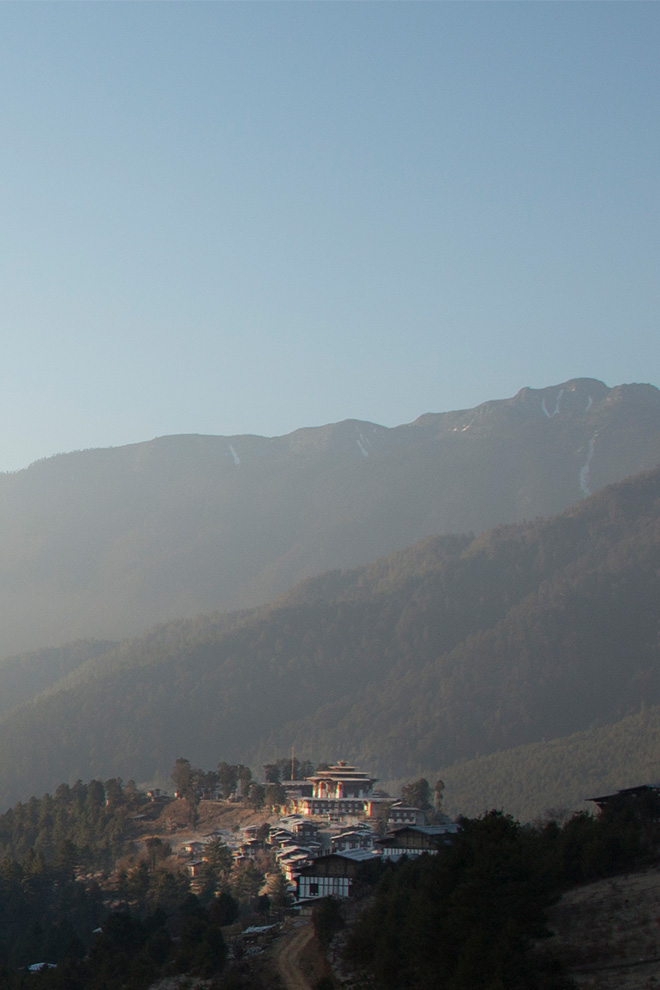
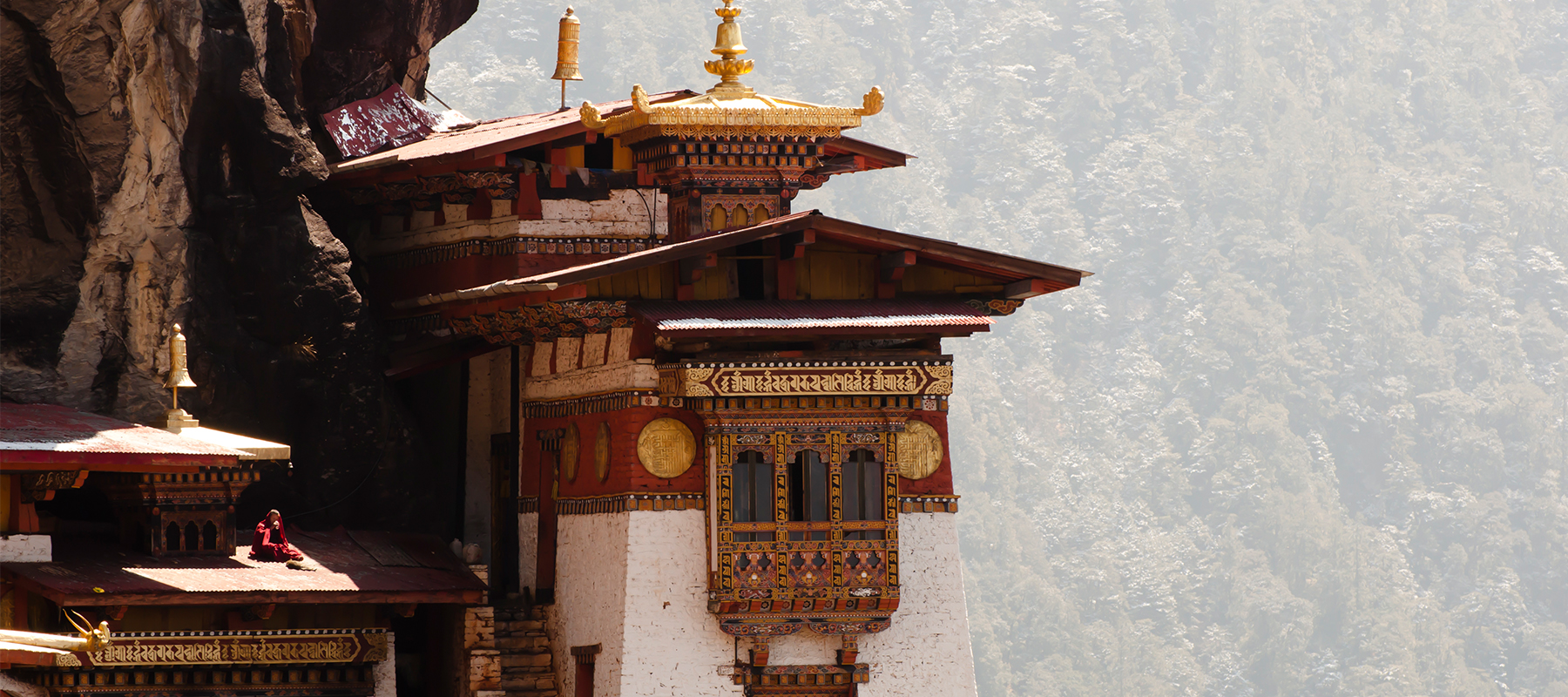
Built in 1613, the Gangtey Gonpa features the typical Bhutanese architecture of dzongs, or fortified monasteries: whitewashed stone walls, intricately carved wooden window frames and tiered roofs. Inside, soaring pillars not only support the structure, but are also decorated with religious and cultural themes, including dragons (Bhutan is known as the ‘Land of the Thunder Dragon’). All around are gorgeous, vibrantly painted frescoes depicting Buddhist deities and teachings. Before leaving, I walk about the exterior of the monastery and spin a few prayer wheels, resembling copper bells, clockwise, as a blessing.
The gonpa is a short distance on foot from Gangtey Lodge, a 12-room hilltop property inspired by the traditional farmhouses which dot the surrounding landscape. Remote and mountainous, Bhutan has long focused on a high-value, low-impact model of tourism which translates to a small number of travellers who are keen to experience its natural beauty and cultural richness. As a member of the Considerate Collection, Gangtey Lodge delivers on both fronts and then some.
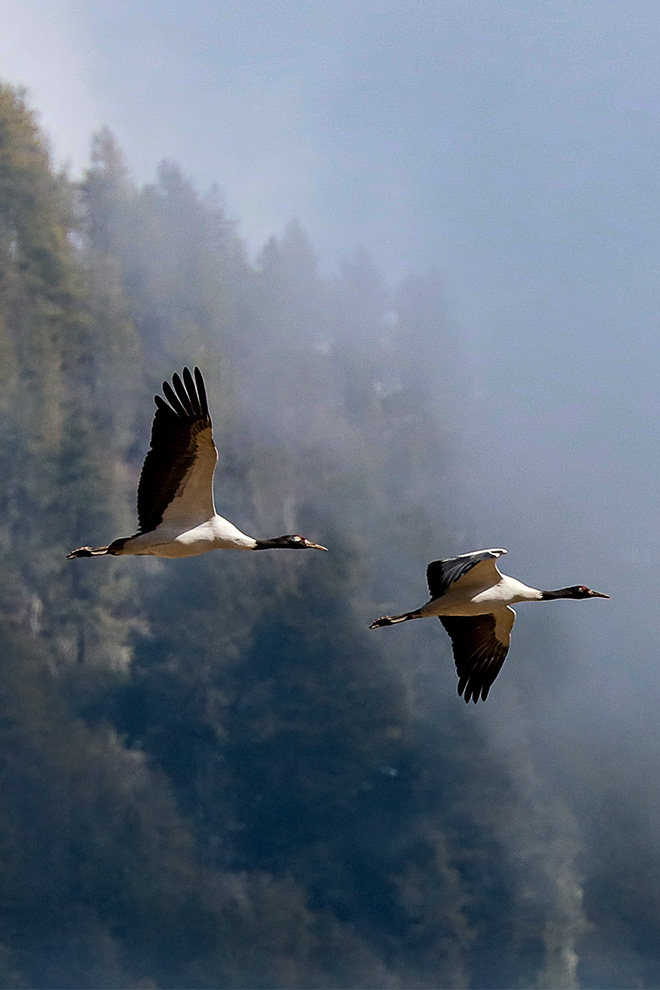
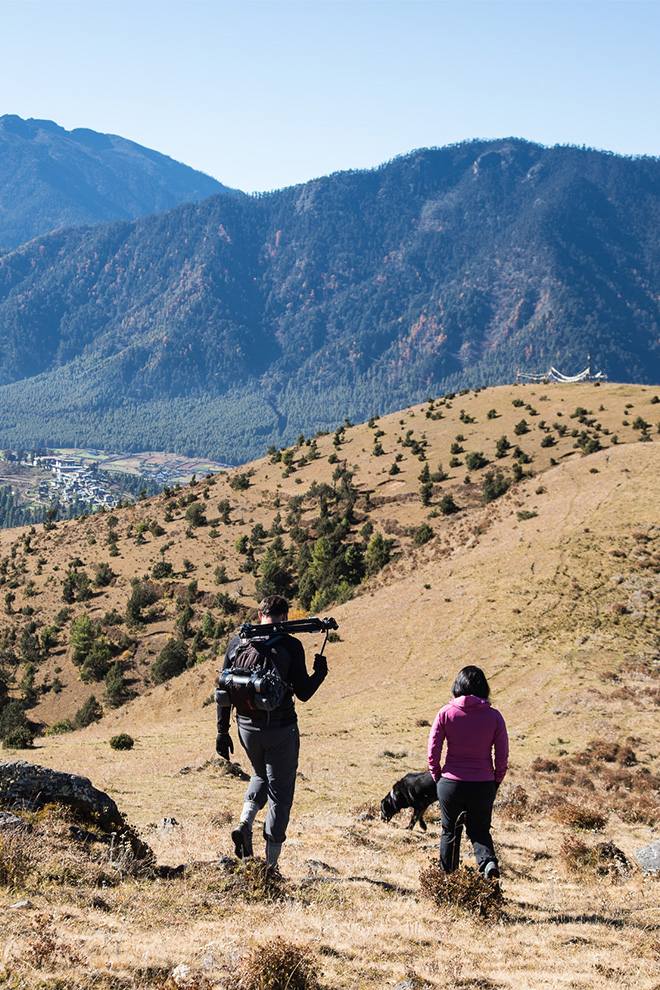
It’s no secret that Bhutan is a hiker’s paradise. In 2022, the Trans-Bhutan Trail, an ancient 250-mile-long route that runs through the country, was restored and reopened after 60 years. Gangtey Lodge, too, offers guided hikes from the property through the forests and valleys which unfold from its doorstep, including a full-day excursion that incorporates a village visit to a cheese maker as well as bird watching. Phobjikha Valley’s alpine meadows are home to majestic black-necked cranes, providing crucial wintering ground for these endangered beauties.
I am travelling solo through this tiny Himalayan kingdom and finding that my solitude only heightens the country’s spirituality.
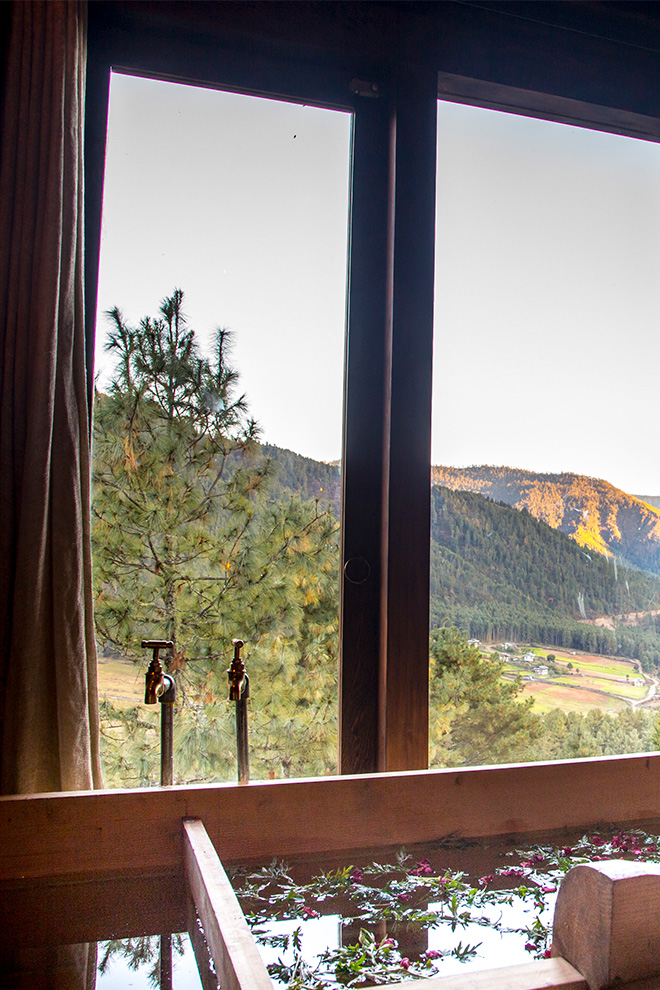
My sprawling room features a wood-burning fireplace and a freestanding soaking tub, thoughtfully placed by the window to take in the sweeping views of the valley below, where yaks and horses roam in the distance.
I don’t utilise the tub, however, instead visiting the spa house for a hot stone bath, or dotsho, a centuries-old Bhutanese tradition. The water in the rectangular pinewood ‘tub’ is heated by local river rocks that are baked over an open fire for hours and then dropped in an enclosed section at one end of the bath. Artemisia leaves are scattered on the water’s surface. The minerals from the rocks and botanicals in the forest leaves make for a soak that’s not only relaxing and calming, but also medicinally therapeutic. Any tension I had melts away as I sink into the scalding water. I make a mental note to pick up some artemisia essential oil before departing.
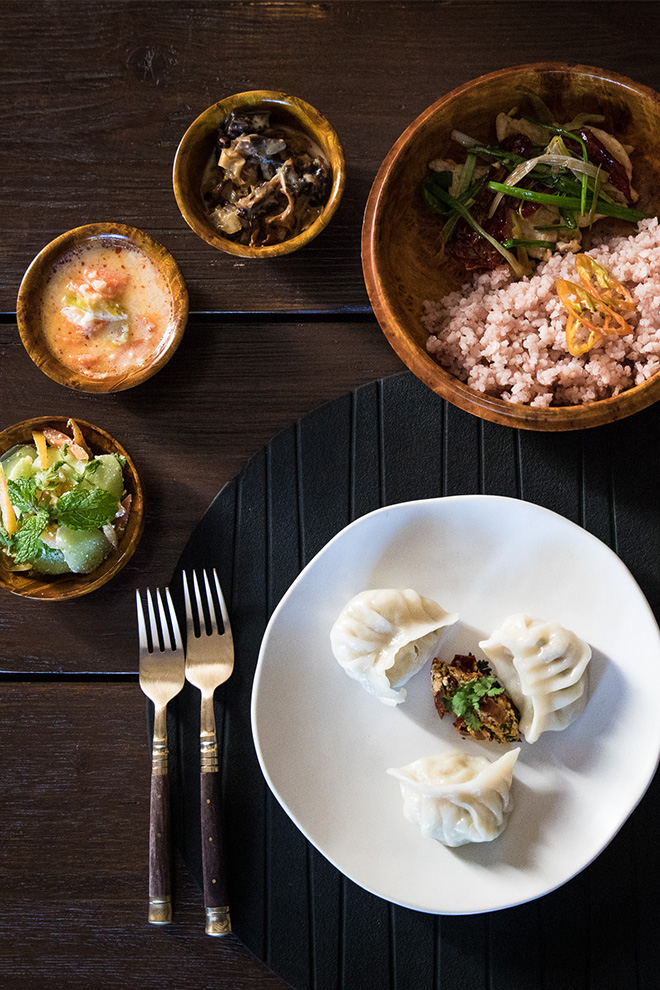
Come dinner, I tuck into grilled eggplant with beetroot and oranges; pumpkin with tahini; and coconut flan. The variety and flavours are welcome, though, I could have just as easily feasted on the traditional Bhutanese dishes — buckwheat noodles and ubiquitous ema datshi (a spicy side dish of stewed chili peppers and cheese) — I’d devoured all week.
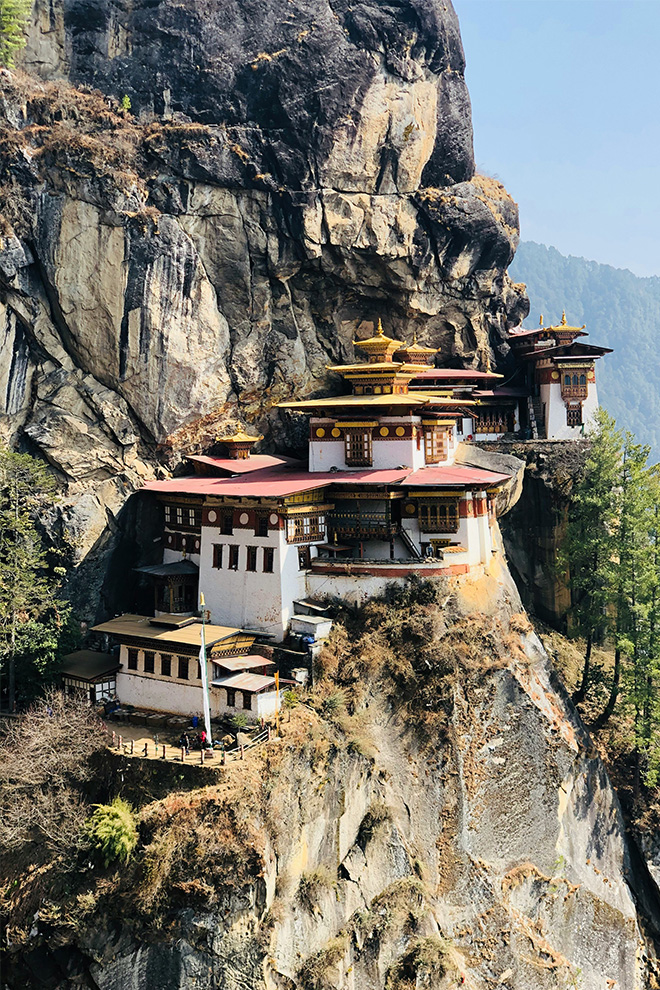
Tomorrow, I’ll journey toward Paro to hike the famed Tiger’s Nest, the iconic cliffside monastery built around a cave where Guru Rinpoche, the founder of Tibetan Buddhism in Bhutan, is believed to have meditated for three years, three months, three weeks and three days. But for now, I’m working on practising and appreciating stillness.
Share this article
Latest stories
Celebrating five years of the Considerate Collection
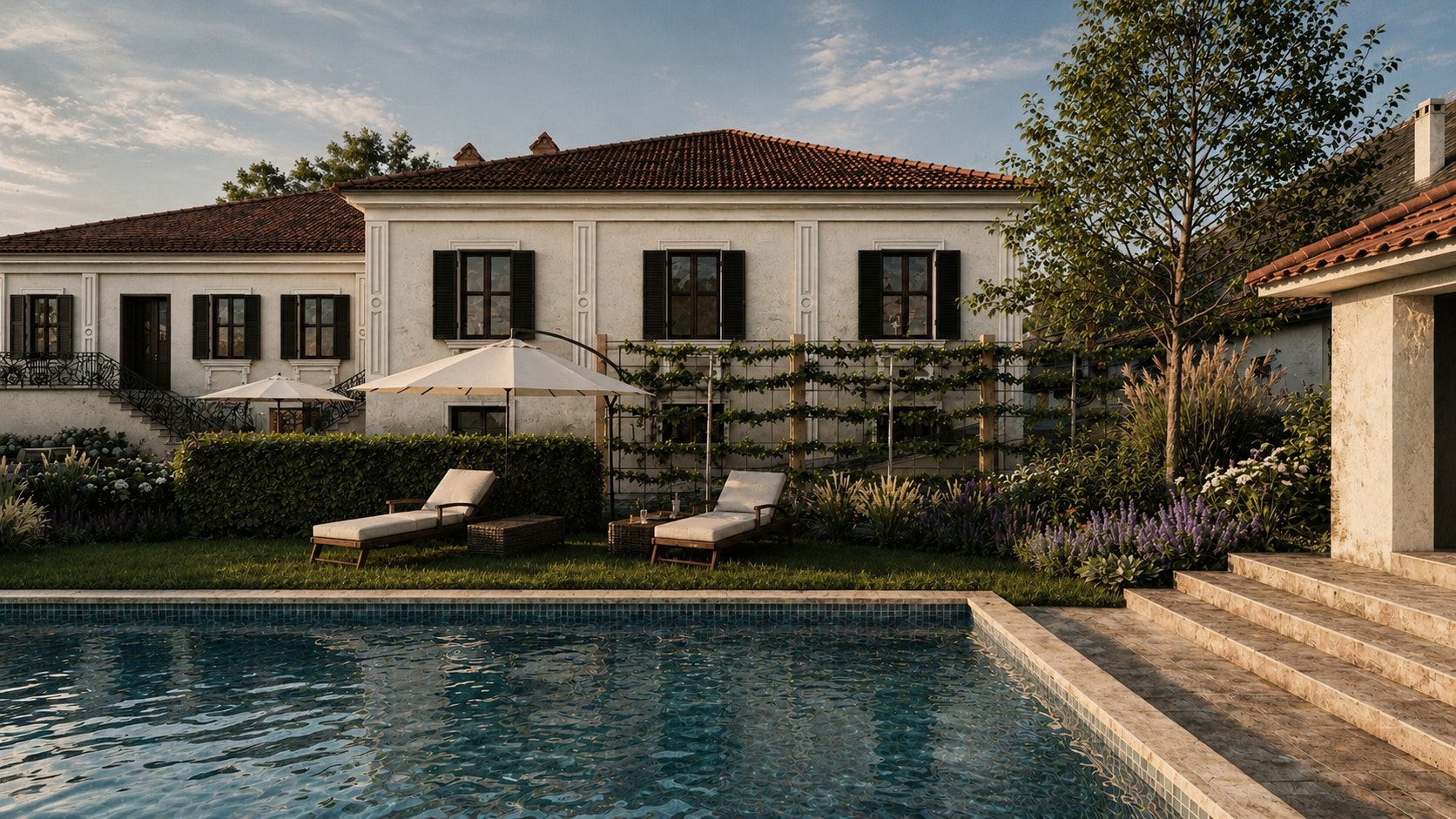
What does it mean to travel considerately? It might be a centuries-old farmhouse given a second lease of life in Transylvania; a Venetian landmark carefully restored with a heating and cooling system that uses lagoon water; or an island kitchen serving a plant-based feast made with seaweed gathered just offshore.
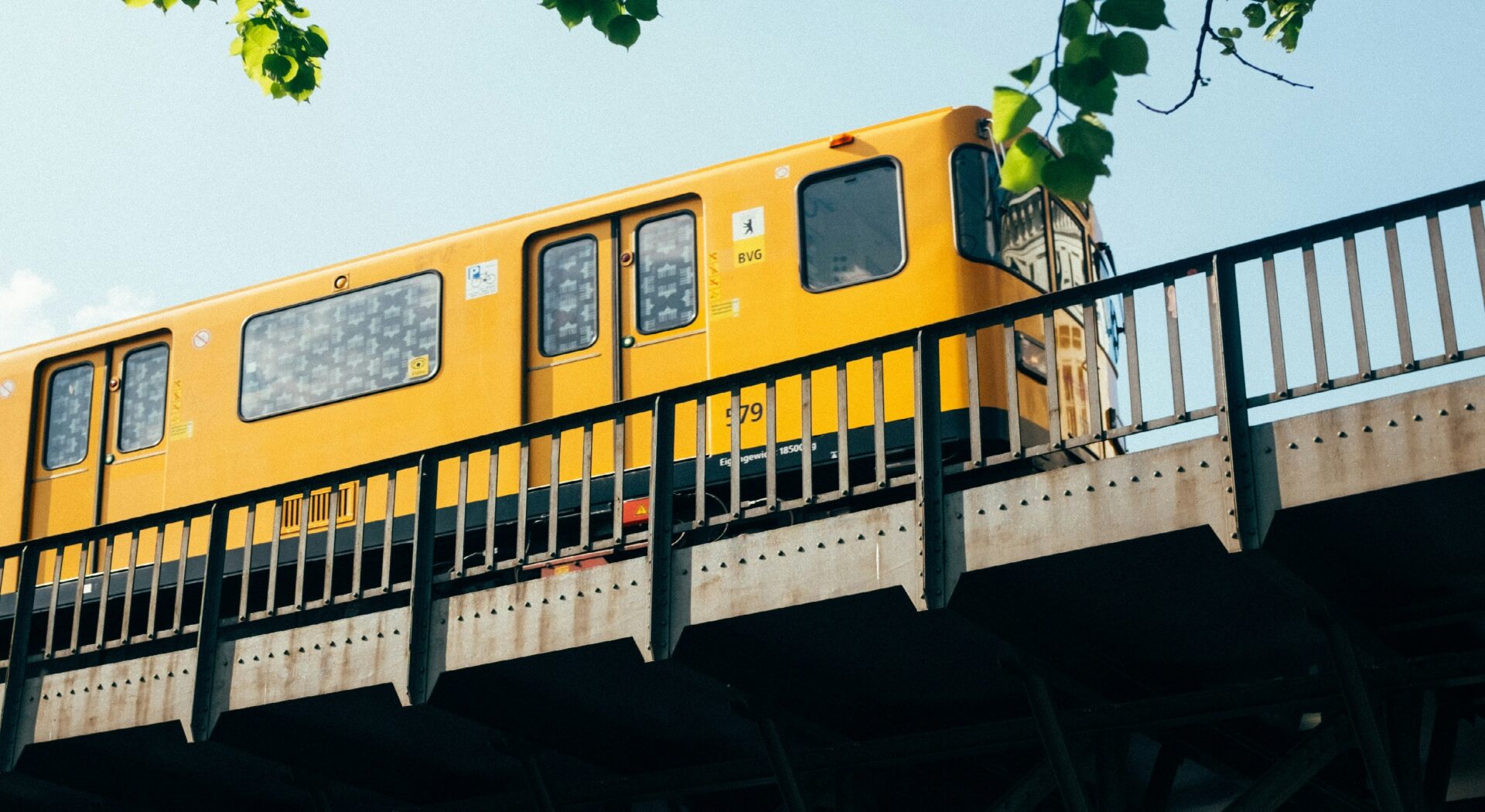
Making tracks: a train journey taking in six European cultural capitals
It’s official – inter-railing is back, as travellers increasingly swap flights for the speed and ease of Europe’s rail network. Think zippy connections, city-centre arrivals, and stress-free border crossings: train travel is one of the fastest, most convenient, and still sustainable ways to explore the continent. Get ready for a
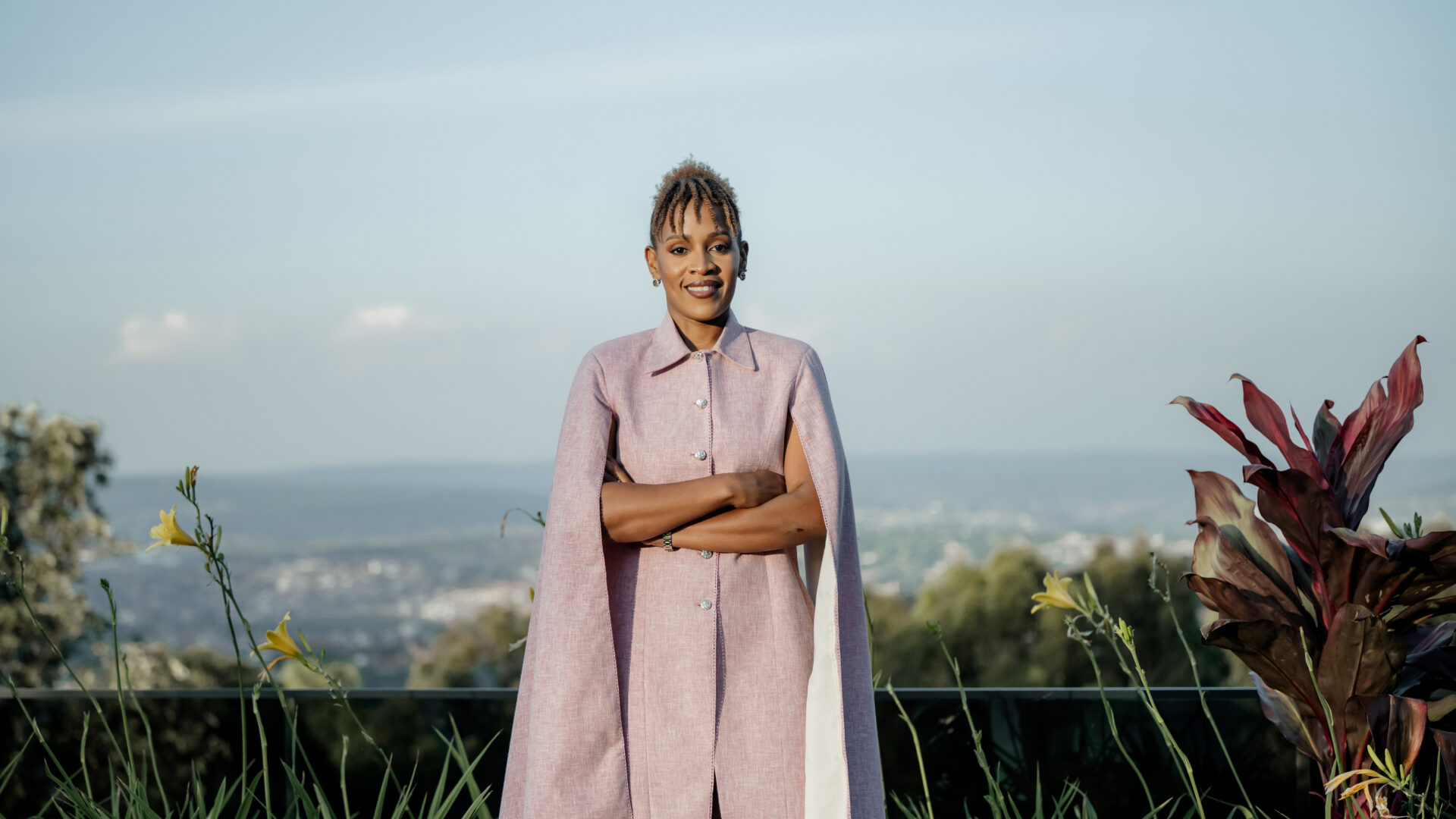
Independent Minds: Sheila Kyarisiima, The Pinnacle Kigali
High above Kigali on Rebero Hill, The Pinnacle offers sweeping views across the city, bringing contemporary luxury together with a strong sense of place. What began as a private family retreat has evolved into a destination that celebrates Rwanda’s culture, creativity and community. Here its founder, Sheila Kyarisiima, shares the
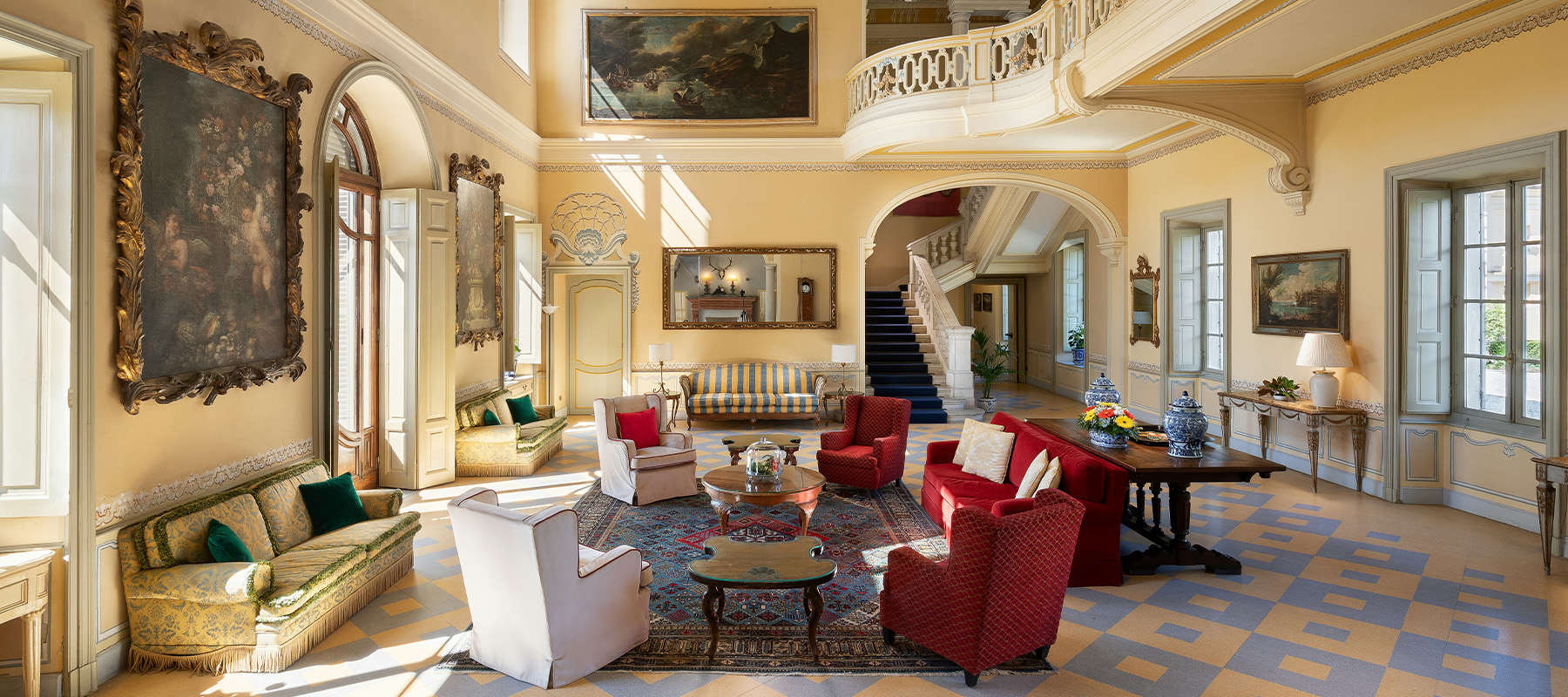
A postcard from: Piedmont with Sina Villa Matilde
Piedmont may be one of Italy’s less-travelled regions, and that is precisely part of its appeal. Sitting at the foot of the Alps, the landscape is a mix of rolling hills, family-run wineries and elegant country estates, with excellent food and wine at its heart – some might even say